

Conservation area
Kanchenjunga Conservation Area
Kanchenjunga Region
Kanchenjunga Conservation Area is a 2,035 km² protected landscape in eastern Nepal, home to Kanchenjunga, diverse Himalayan ecosystems, rare wildlife and culturally rich mountain communities. It is the heart of the Kanchenjunga trekking region

- Established: 1997
- Area: 2,035 km²
- District: Taplejung, Koshi Province, Nepal
- Elevation Range: Approx. 1,200–8,586 m
- Highest Peak: Mount Kanchenjunga – 8,586 m
- Major Rivers: Tamor, Ghunsa, Kabeli, Yangma
- Major Wildlife: Snow leopard, red panda, musk deer, Himalayan black bear
- Bird Species: 252 species recorded
Kanchenjunga Conservation Area – Heart of the Eastern Himalayas
The Kanchenjunga Conservation Area (KCA) is one of Nepal's most remarkable protected landscapes, extending across 2,035 square kilometres of Taplejung District in eastern Nepal. Established in 1997, the conservation area protects an extraordinary Himalayan environment surrounding Mount Kanchenjunga, the world's third-highest mountain at 8,586 metres.
For trekkers, the Kanchenjunga Conservation Area is more than a protected mountain landscape. It is an extensive wilderness of forests, rivers, glaciers, high valleys and traditional mountain settlements connected by some of Nepal's most remote trekking trails.
A Landscape of Extraordinary Elevation
The conservation area extends from approximately 1,200 metres to the summit of Mount Kanchenjunga at 8,586 metres, creating an exceptional range of ecological zones within a relatively compact region. Lower valleys are characterized by subtropical and temperate vegetation, while higher elevations transition through coniferous forests, alpine meadows, rocky terrain and permanent snow.
This dramatic change in elevation is one of the defining features of the Kanchenjunga region. A trek can begin in warm, forested valleys and gradually progress through increasingly rugged Himalayan terrain before reaching the glaciers and high mountain landscapes surrounding Kanchenjunga.
The Kanchenjunga Trekking Region
The conservation area contains the principal trekking routes leading toward both the northern and southern sides of Kanchenjunga. Settlements such as Sekathum, Amjilosa, Gyabla, Ghunsa, Khangpachen, Lhonak, Yamphudin, Tortong and Tseram form part of the network of communities and waypoints through which trekkers travel.
The northern route eventually leads toward Pang Pema, the North Base Camp area, while the southern route continues toward Oktang, offering spectacular views of the southern face of Kanchenjunga.
These routes are considerably quieter than Nepal's more established trekking destinations. The relative remoteness of the region is one of its greatest attractions, but it also means that trekkers need to be properly prepared for limited infrastructure, long walking days and rapidly changing mountain conditions.
Biodiversity and Wildlife
The Kanchenjunga Conservation Area is exceptionally rich in biodiversity. Official conservation information records 22 species of mammals and 252 species of birds, alongside numerous species of insects, fish and amphibians.
The protected area provides habitat for several threatened and protected Himalayan species, including the snow leopard, red panda, Himalayan black bear, musk deer, blue sheep and Tibetan wolf. The region is also home to birds such as the Himalayan monal and blood pheasant.
Wildlife encounters are never guaranteed on the trekking routes, but the conservation area's extensive forests and alpine habitats make the region particularly valuable for nature enthusiasts and wildlife researchers.
Forests and Plant Life
The forests of the Kanchenjunga region change significantly with altitude. Pine, hemlock, fir, juniper and birch are among the major tree species recorded within the conservation area, while rhododendron forests are particularly characteristic of the middle elevations.
The area is also rich in medicinal and non-timber forest plants. Species and products such as chiraito, kutki, panchaule, lokta and argeli have traditionally been important to local communities for medicinal, cultural and economic purposes.
The diversity of vegetation reflects the dramatic elevation range of the conservation area and provides important habitats for its wildlife.
Rivers, Glaciers and High Mountain Lakes
Water is a defining element of the Kanchenjunga landscape. Major rivers associated with the conservation area include the Tamor, Ghunsa, Kabeli and Yangma, while numerous glaciers and glacial lakes occupy the higher valleys.
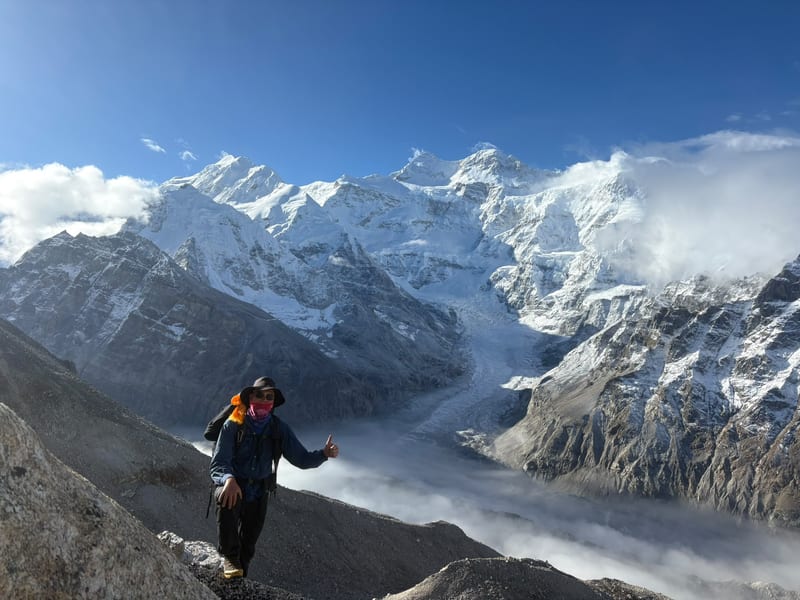
High-altitude lakes including Nangama, Tchherchen, Pabuk, Tiptala and Sinjema contribute to the remarkable scenery of the region. Glaciers, moraines and snow-covered mountain slopes become increasingly prominent as trekkers approach the higher sections of the Kanchenjunga trails.
Mountains of the Conservation Area
Mount Kanchenjunga dominates the landscape. Rising to 8,586 metres, it is the world's third-highest mountain and the central geographical feature of the conservation area.
The region also contains other major Himalayan peaks, including Jannu, also known as Kumbhakarna, which rises to approximately 7,710 metres. The combination of enormous peaks, glaciers and deep valleys creates some of the most dramatic mountain scenery in eastern Nepal.
People and Culture
The Kanchenjunga Conservation Area is not an uninhabited wilderness. It is home to communities whose lives, cultures and livelihoods are closely connected with the mountain environment.
The major ethnic communities recorded in the area include Limbu, Sherpa, Bhote and Rai communities. Their traditions, languages, architecture, religious practices and relationship with the land contribute to the cultural identity of the Kanchenjunga region.
Settlements such as Ghunsa, Olangchung Gola and Yangma provide particularly important examples of traditional Himalayan communities. Historic religious sites and monasteries are also found throughout the conservation area, including the centuries-old Diki Chholing Gumba at Olangchung Gola.
Community-Based Conservation
An important characteristic of the Kanchenjunga Conservation Area is its emphasis on conservation alongside the livelihoods of local communities. The region is widely recognized for its community-based approach to protecting biodiversity while supporting the people who live within the conservation landscape.
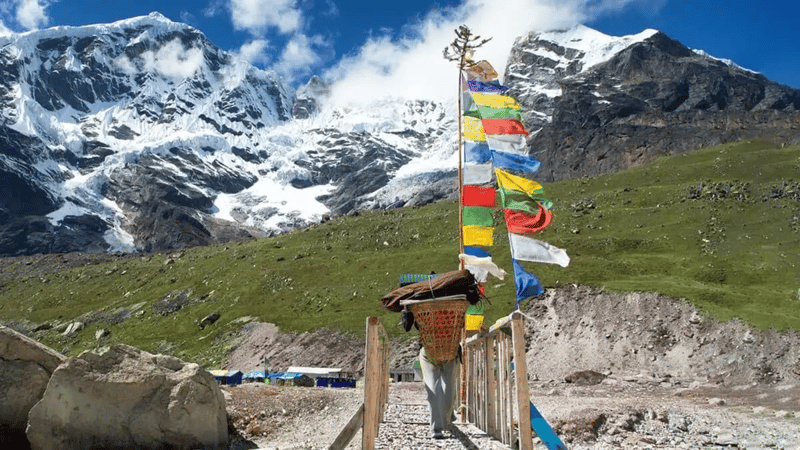
Tourism therefore plays an important role in the local economy. Trekking supports teahouses, guides, porters, transportation providers and other local businesses while creating an economic incentive for protecting the region's natural and cultural heritage.
Kanchenjunga Conservation Area and Responsible Trekking
Because the region is both environmentally sensitive and culturally diverse, responsible travel is particularly important.
Trekkers should follow designated trails, avoid disturbing wildlife, minimize plastic and other waste, respect local customs, and use local accommodation and services whenever possible. Visitors should also follow the regulations and permit requirements applicable to the conservation area.
The remote nature of Kanchenjunga means that environmental damage can have a greater impact than in heavily developed trekking destinations. Responsible trekking helps preserve the region for the communities and travelers who depend on it.
Best Time to Explore the Conservation Area
Spring and autumn are generally considered the most favorable seasons for trekking in the Kanchenjunga region. Spring brings warmer conditions and widespread rhododendron flowering, while autumn often provides clearer mountain views following the monsoon.
Weather becomes considerably more challenging during winter, particularly at high elevations, while the monsoon can bring heavy rainfall, slippery trails and difficult travel conditions in the lower valleys.
Conditions can change rapidly in the Himalayas, so trekkers should always obtain current local weather and trail information before starting their journey.
Our Best Seller Treks
Or, if you’re looking for a true Kanchenjunga-region expedition
Why Kanchenjunga Conservation Area Is Special
The Kanchenjunga Conservation Area brings together an extraordinary combination of high Himalayan peaks, glaciers, forests, wildlife, traditional communities and remote trekking trails within a single protected landscape.
Its importance extends beyond Mount Kanchenjunga itself. The conservation area protects a connected mountain ecosystem while preserving the cultural heritage and livelihoods of the communities that have lived in the region for generations.
For trekkers, the journey through the conservation area is an experience of gradual discovery. From the forested valleys around Sekathum and Yamphudin to the high settlements of Ghunsa and Lhonak and the spectacular mountain landscapes around Pang Pema and Oktang, every stage reveals another aspect of the eastern Himalayas.
The Kanchenjunga Conservation Area is ultimately what makes the Kanchenjunga trek so distinctive: it is not simply a route to a mountain, but a journey through one of Nepal's most diverse, remote and culturally significant Himalayan landscapes.