Stories from the Trail
How to Photograph the Milky Way During a Kanchenjunga Trek
Dark, high skies make Kanchenjunga ideal for astrophotography. Camera and phone settings, when to shoot, the best locations, composition, star trails and cold-weather tips.

On this page
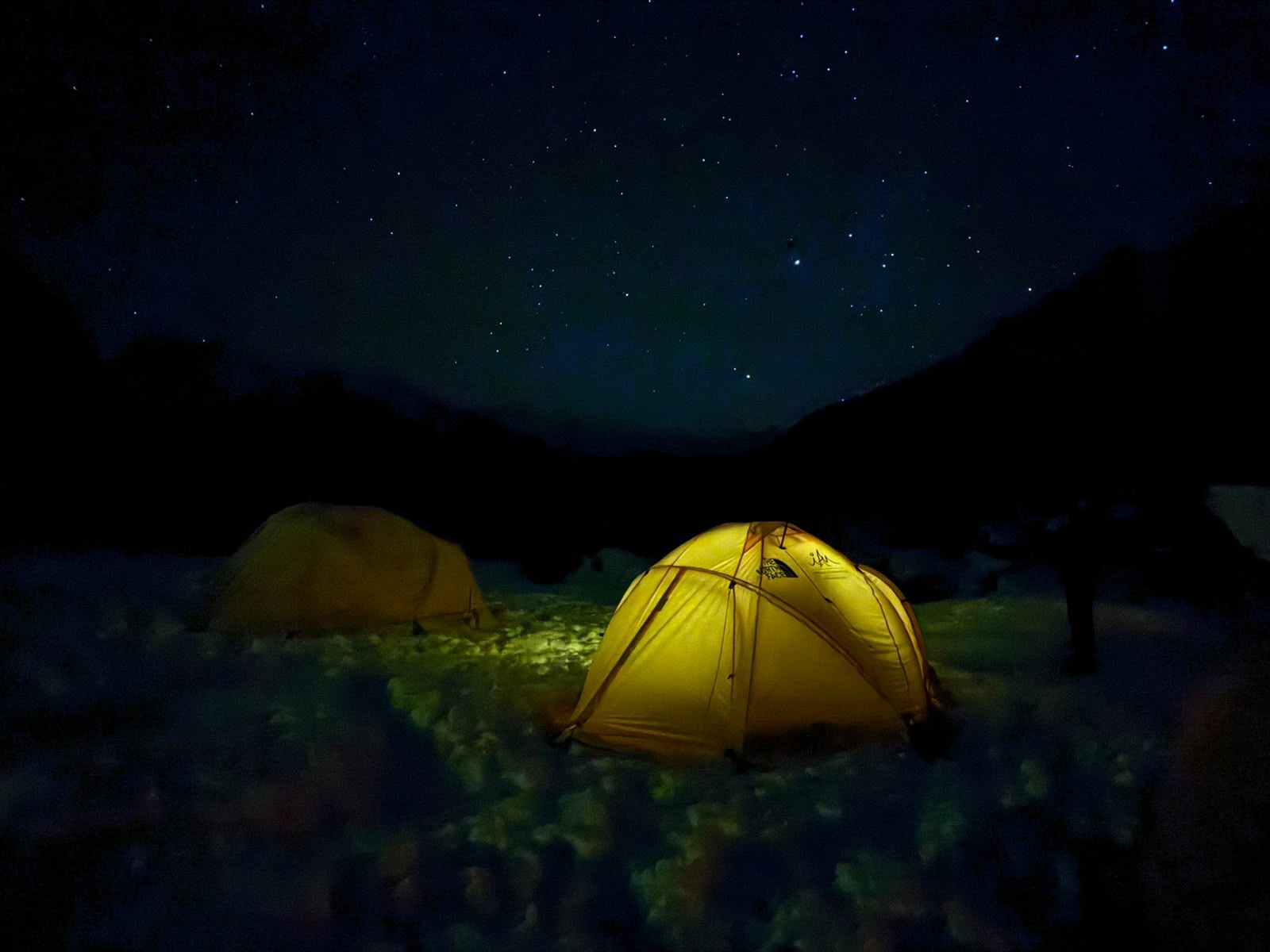
Far from any city lights and high in thin, clear air, the night skies over the Kanchenjunga region are some of the darkest in Nepal. On a clear, moonless night at Lhonak or Ramche, the Milky Way arches over the peaks so brightly it almost casts shadows. Here is how to photograph it.
Quick Settings Cheat Sheet
- Lens: wide angle (14–24 mm), as fast as possible (f/2.8 or faster)
- Aperture: wide open, f/1.8–f/2.8
- Shutter: about 15–25 seconds (use the "500 rule": 500 ÷ focal length)
- ISO: 3200–6400
- Focus: manual, on a bright star using live view zoom
- White balance: about 3,800–4,500 K
- File format: RAW
- Must have: a sturdy tripod and a remote or 2-second timer
When to Shoot
- Moon: plan around the new moon. A bright moon washes out the Milky Way.
- Season: the bright galactic core is best seen from about February to October. In the main autumn trekking season (October–November), the core sets in the south-west soon after dark, so shoot early in the evening. Spring nights (April–May) are also good, with the core rising before dawn.
- Weather: clear, dry nights after a sunny day are best, which is typical of autumn
Check a sky app before your trek to plan which nights are moonless.
Best Locations on the Kanchenjunga Trek
- Lhonak (about 4,780 m): a wide plain ringed by peaks, with almost no light pollution
- Kambachen: lodges and mountains with the stars behind
- Ghunsa: village roofs and prayer flags under the stars, a great foreground
- Ramche (south route): open meadows below the Yalung peaks
- Tseram: dark skies above the upper Simbuwa valley
Do not wander far from the lodge at night, especially at altitude. Stay close, tell someone where you are and take a headlamp.
Composition Tips
- Include a foreground: a lodge, prayer flags, a chorten or a mountain silhouette
- Light painting: gently light the foreground with a dim headlamp for a few seconds
- Lodge lights: a softly lit window adds warmth (ask your lodge before turning lights on or off)
- Vertical frames work well for the arch of the Milky Way rising over a peak
Phone Night Photography
Modern phones can capture surprisingly good star photos:
- Use Night mode or Astro mode with the phone on a small tripod or propped on a rock
- Set the longest exposure your phone allows
- Use the timer so touching the screen does not shake the photo
- Turn off the flash
Cold and Altitude Tips
- Batteries drain fast in the cold. Keep spares warm in an inside pocket.
- Condensation: put your camera in a sealed bag before bringing it into a warm room
- Dress warmly: down jacket, hat, gloves (with fingertips you can use) and warm boots
- Use a red light to protect your night vision and avoid disturbing others
- Don't overdo it: sleep matters for acclimatisation, so pick one or two nights to shoot
Star Trails
For star trails, take a series of 20–30 second shots continuously for 30–60 minutes with an intervalometer, then stack them later. Point towards the pole star (low in the northern sky) for circular trails.
Learn More
Read our guide to photographing prayer flags against the Himalaya, and see the best time to trek Kanchenjunga for clear-sky seasons.
Related reading: Protecting your electronics · Choosing a down jacket · Where to photograph Jannu · Photographing mountain reflections
Frequently Asked Questions
When is the best time for Milky Way photography?
Clear, moonless nights in autumn or spring, away from village lights.
What settings should I use?
A wide, fast lens, a high ISO and a long exposure on a tripod. Keep batteries warm.
Ready to see it yourself? Explore our Kanchenjunga Base Camp Trek with local guides.
Plan with local guides
Ready to walk the Kanchenjunga trail?
Tell us your dates and pace. We’ll sort permits, guides and a route that fits — straight from the people who live here.
Keep reading
Other Blogs
Remote Trekking in Nepal: The Best Off-the-Beaten-Path Treks
Madan NeupaneNovember 26, 20264 min read
Remote trekking in Nepal beyond Everest and Annapurna: why Kanchenjunga leads the list, the other remote treks of eastern Nepal compared, and how to prepare for permits, seasons and days offline.
Kanchenjunga Trek Map: Route Maps for Every Itinerary
Madan NeupaneNovember 26, 20263 min read
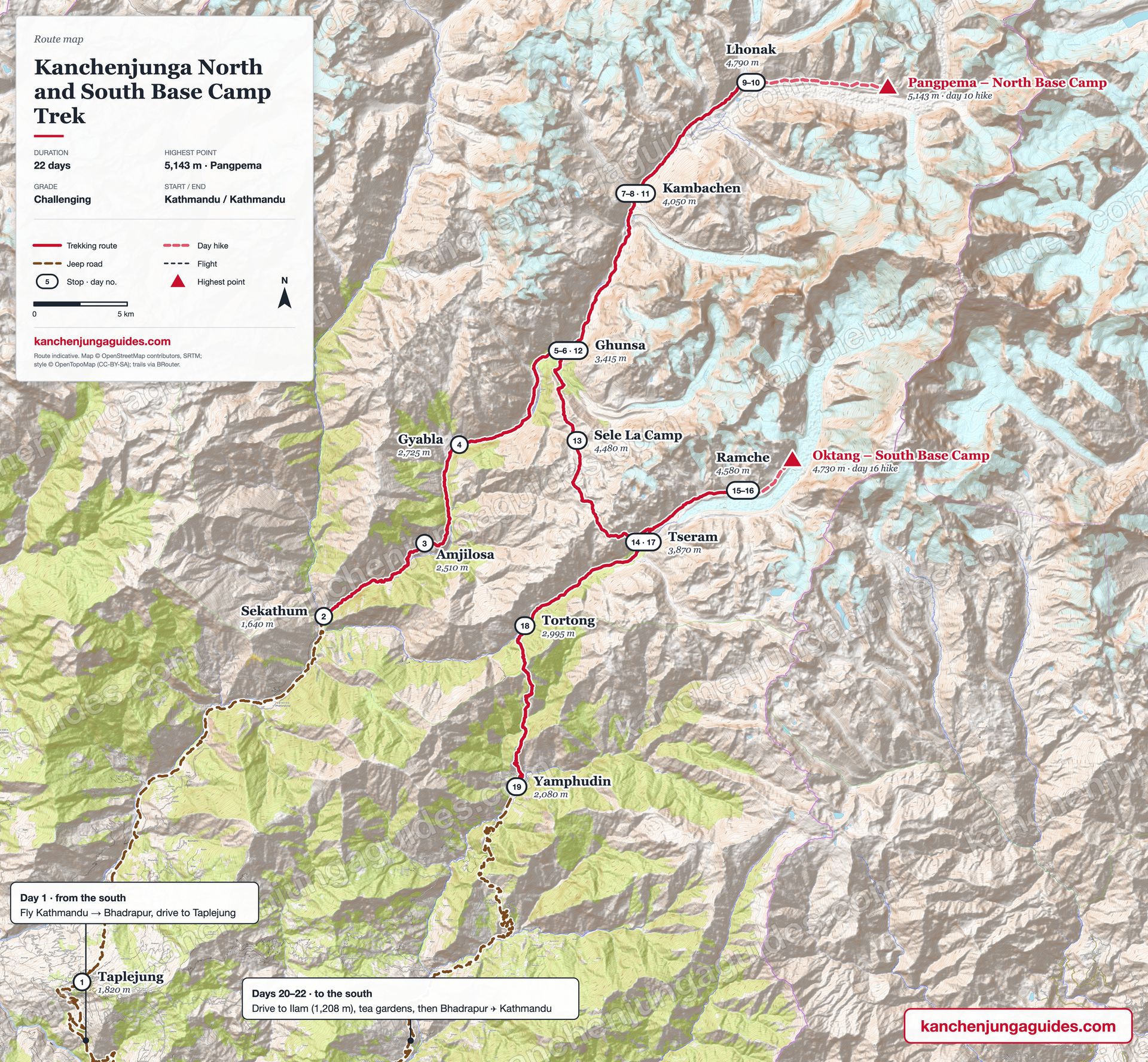
Kanchenjunga trek maps for the North Base Camp, South Base Camp, full circuit and express routes, with an altitude profile, the trail signs you will meet and tips for navigating offline.
Kanchenjunga Trek Route: Village-by-Village Trail Guide
Madan NeupaneNovember 26, 20265 min read
The Kanchenjunga trek route explained: the northern trail to Pangpema, the southern trail to Oktang, the Sele La crossing that links them, and the altitude and distance of every stop.