Gear & Packing
How to Reduce Single-Use Plastic During a Kanchenjunga Trek
Simple ways to cut plastic on the Kanchenjunga trek: skip bottled water, repack snacks, carry out batteries and pack reusables, with a low-plastic kit list.

On this page
In remote villages like Ghunsa and Lhonak, there is no rubbish collection and no recycling plant. Every plastic bottle and wrapper carried up the trail either gets burned, buried or carried all the way back down. The good news is that cutting your plastic footprint on the Kanchenjunga trek is easy, and it often saves you money too.
Why Plastic Is a Problem in the Mountains
- No waste systems: most rubbish is burned in pits or left in dumps near villages.
- Burning plastic releases toxic smoke in the clean mountain air.
- Wind and rivers carry litter into streams that feed the Tamor River and the villages below.
- Every bottle is carried up by porters or mules, and then has to come down again.
1. Skip Bottled Water
This is the single biggest change you can make. Bottled water gets more expensive the higher you go and creates hundreds of empty bottles per trekker. Instead:
- Bring two reusable bottles (1 litre each), or a bottle plus a hydration bladder
- Purify tap or stream water with tablets, drops, a filter or a UV pen
- Ask lodges for boiled water (there is usually a small charge)
Never drink untreated water from streams or taps.
2. Repack Your Snacks
- Buy snacks in bulk in Kathmandu and repack them into reusable containers or bags
- Choose local foods along the way, such as Tibetan bread, boiled potatoes and local biscuits from village shops
- Avoid individually wrapped bars where you can
3. Carry Out What You Carry In
- Keep a small rubbish bag in your daypack for wrappers and tissues
- Pack out used batteries, which are toxic and cannot be disposed of safely in the mountains
- Use rechargeable batteries and a power bank instead of disposables
- Take empty sunscreen, medicine and toiletry containers home
4. Bring Reusables
- A reusable cup or mug for tea stops
- A cloth or mesh shopping bag
- Solid toiletries (shampoo bars, soap bars) instead of small plastic bottles
- A small travel towel instead of packs of wet wipes, or biodegradable wipes if you must
5. Choose Responsible Lodges and Companies
- Support lodges that offer boiled or filtered water refills
- Ask your trekking company about their waste policy
- Do not leave anything at camps, viewpoints or on passes, not even food scraps
Your Low-Plastic Kanchenjunga Kit
- 2 reusable water bottles
- Water purification (tablets, filter or UV pen)
- A reusable mug
- Snack containers or bags
- A small rubbish bag
- Rechargeable batteries and a power bank
- Solid toiletries
Respect the Conservation Area
The Kanchenjunga Conservation Area is managed by local communities who work hard to protect its forests, rivers and wildlife. By keeping your plastic use low, you help them keep the region clean for the people who live here and the trekkers who follow.
Learn More
Pack smart with our Kanchenjunga packing list, learn about porter welfare, or explore our treks.
Related reading: What happens to mountain waste · Choosing an ethical operator
Frequently Asked Questions
How can I cut plastic on the trek?
Carry a refillable bottle and purification tablets or a filter, and avoid bottled water.
What should I do with my rubbish?
Carry it out to Kathmandu, especially batteries and wrappers.
Ready to see it yourself? Explore our Kanchenjunga Base Camp Trek with local guides.
Plan with local guides
Ready to walk the Kanchenjunga trail?
Tell us your dates and pace. We’ll sort permits, guides and a route that fits — straight from the people who live here.
Keep reading
Other Blogs
Remote Trekking in Nepal: The Best Off-the-Beaten-Path Treks
Madan NeupaneNovember 26, 20264 min read
Remote trekking in Nepal beyond Everest and Annapurna: why Kanchenjunga leads the list, the other remote treks of eastern Nepal compared, and how to prepare for permits, seasons and days offline.
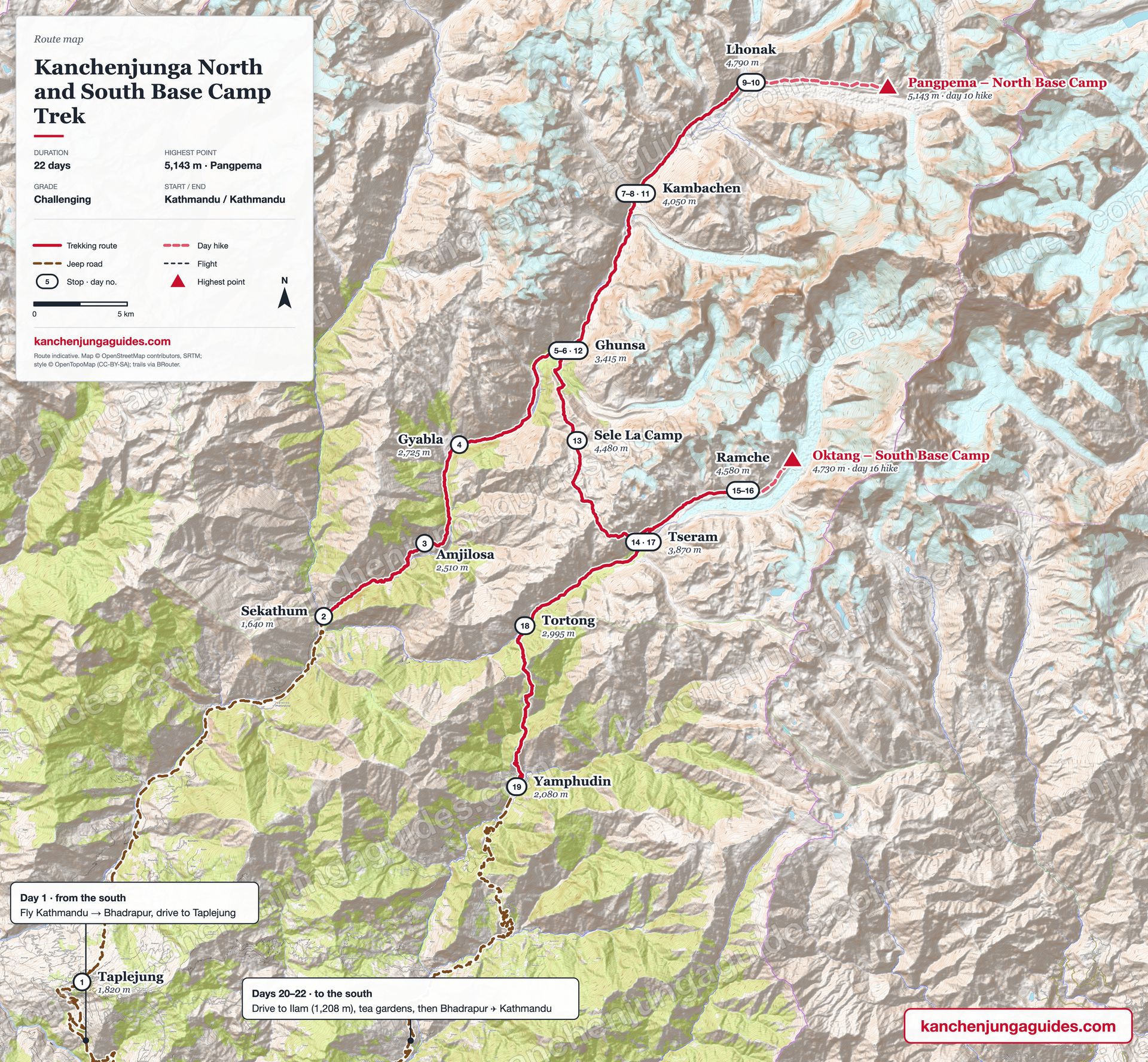
Kanchenjunga Trek Map: Route Maps for Every Itinerary
Madan NeupaneNovember 26, 20263 min read
Kanchenjunga trek maps for the North Base Camp, South Base Camp, full circuit and express routes, with an altitude profile, the trail signs you will meet and tips for navigating offline.
Kanchenjunga Trek Route: Village-by-Village Trail Guide
Madan NeupaneNovember 26, 20265 min read
The Kanchenjunga trek route explained: the northern trail to Pangpema, the southern trail to Oktang, the Sele La crossing that links them, and the altitude and distance of every stop.