Stories from the Trail
What Happens to Waste in Remote Mountain Villages?
Follow one plastic bottle from the lowlands to a high Kanchenjunga teahouse and beyond: where mountain waste really ends up, what causes the most harm, and simple things trekkers can do.

On this page
Imagine you buy a bottle of water at a teahouse high on the Kanchenjunga trail. It's worth following that bottle, because its journey says a lot about how mountain villages deal with waste.
The Journey In
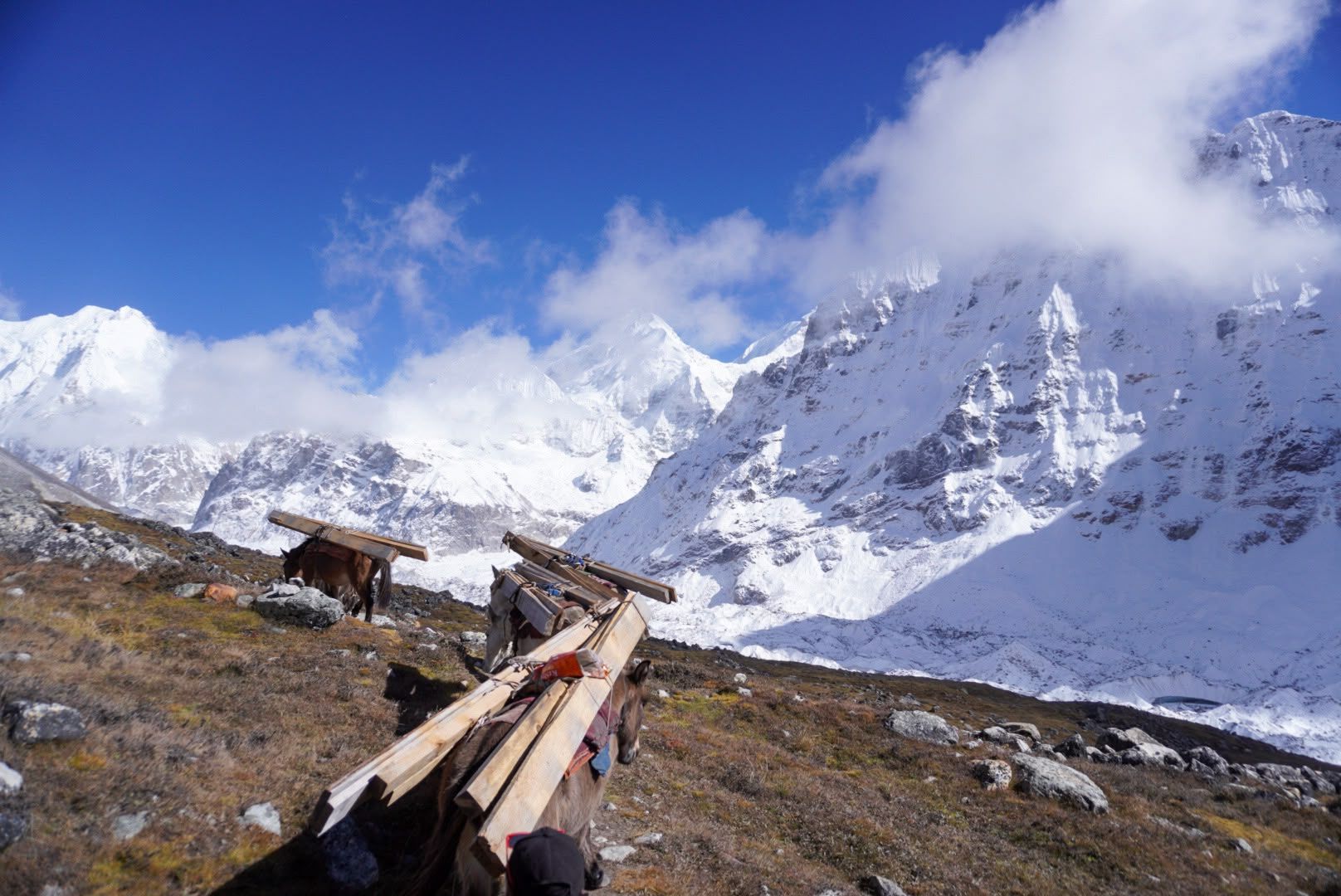
The bottle didn't appear by magic. It was trucked from a factory in the lowlands to Taplejung, driven on by jeep as far as the road goes, and then carried for days on a porter's back or a mule to reach the village where you bought it. That is why a bottle costs more the higher you go. You're paying for the walk.
The Moment You Finish It
Now it's empty. In a city it would go in a bin, onto a truck and away. Up here there is no truck and no road. There is no recycling plant for days in any direction.
Where It Usually Ends Up
In most remote villages, waste ends up in one of a few places:
- Burned: the most common option. Burning plastic releases toxic smoke into the air the family breathes.
- Buried or dumped in a pit: it doesn't rot. It stays in the ground for hundreds of years, and pits can wash out in the monsoon.
- Left by the trail or in a stream: the worst outcome, washing downstream towards rivers and fields.
- Carried out: the best outcome, but it means someone has to carry waste back down the same long trail. Some community and conservation programmes do this, but it takes money and effort.
No option in the mountains is truly good. The only really clean option is that the bottle never arrives.
The Things That Cause the Most Trouble
- Plastic bottles: bulky, and multiplied by every trekker every day
- Snack wrappers: small, light and easily blown away
- Batteries: toxic metals leak into soil and water, and they are one of the most important things to carry home
- Toilet paper and wet wipes: wet wipes contain plastic and don't break down
- Gas canisters and broken gear: hard to deal with anywhere, impossible up here
What You Can Do
- Refill, don't buy. Use teahouse boiled water, or purify tap water with a filter, tablets or a UV pen
- Pack out your batteries and any broken electronics to Kathmandu or home
- Unwrap at home. Take snacks out of extra packaging before you leave Kathmandu
- Carry a small rubbish bag in your daypack, and take your wrappers down to the lowlands
- Skip wet wipes, or carry used ones out
- Choose an operator who cares, one with a real plan for waste. See how to recognise an ethical trekking operator.
A Different Ending
Here's the better version of the story: you fill your own bottle with boiled water at the teahouse, purify it, and drink it on the trail. No bottle was carried up, and no bottle has to be burned. Multiply that by every trekker in a season, and the mountains notice.
For more practical ways to cut plastic, read how to reduce plastic on the Kanchenjunga trek, and see how your money can support local businesses.
Frequently Asked Questions
Why is waste a problem in mountain villages?
There is little road access or recycling, so plastic and batteries pile up or are burned. Carrying out your rubbish helps.
What can I do to reduce waste?
Bring a refillable bottle with purification tablets or a filter, avoid single-use plastic, and pack out batteries and wrappers.
Ready to see it yourself? Explore our Kanchenjunga Base Camp Trek with local guides.
Plan with local guides
Ready to walk the Kanchenjunga trail?
Tell us your dates and pace. We’ll sort permits, guides and a route that fits — straight from the people who live here.
Keep reading
Other Blogs
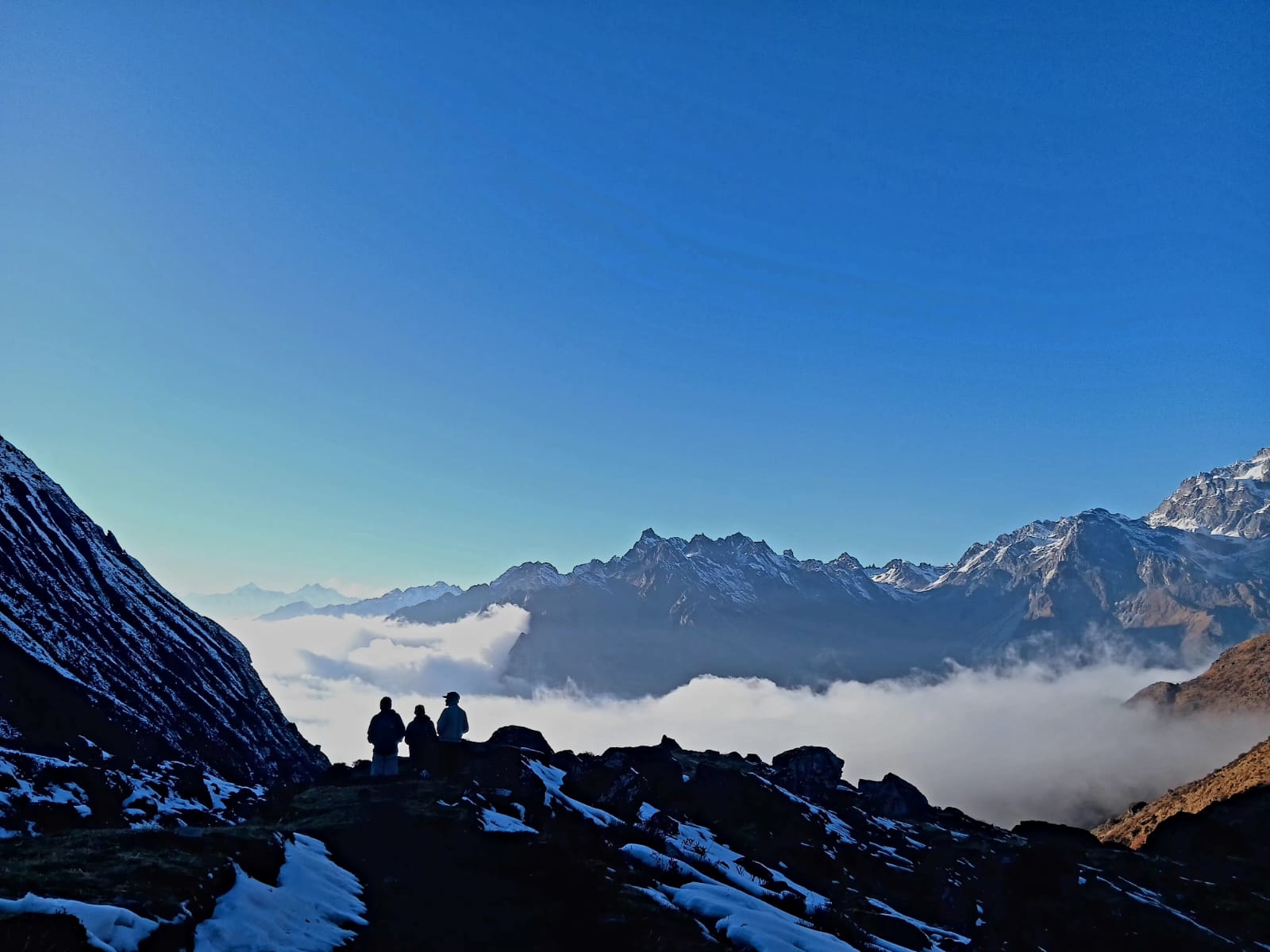
Remote Trekking in Nepal: The Best Off-the-Beaten-Path Treks
Madan NeupaneNovember 26, 20264 min read
Remote trekking in Nepal beyond Everest and Annapurna: why Kanchenjunga leads the list, the other remote treks of eastern Nepal compared, and how to prepare for permits, seasons and days offline.
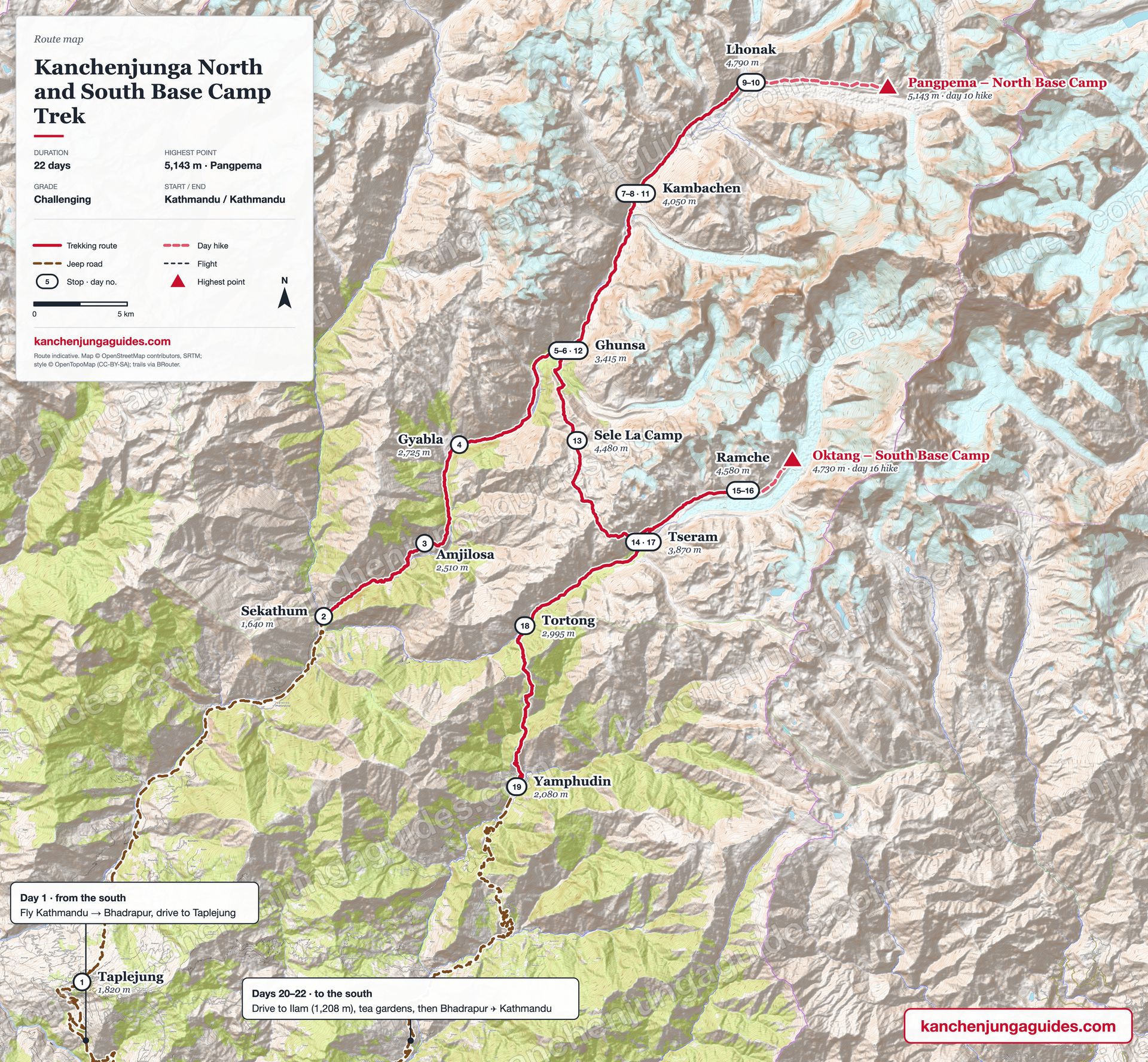
Kanchenjunga Trek Map: Route Maps for Every Itinerary
Madan NeupaneNovember 26, 20263 min read
Kanchenjunga trek maps for the North Base Camp, South Base Camp, full circuit and express routes, with an altitude profile, the trail signs you will meet and tips for navigating offline.
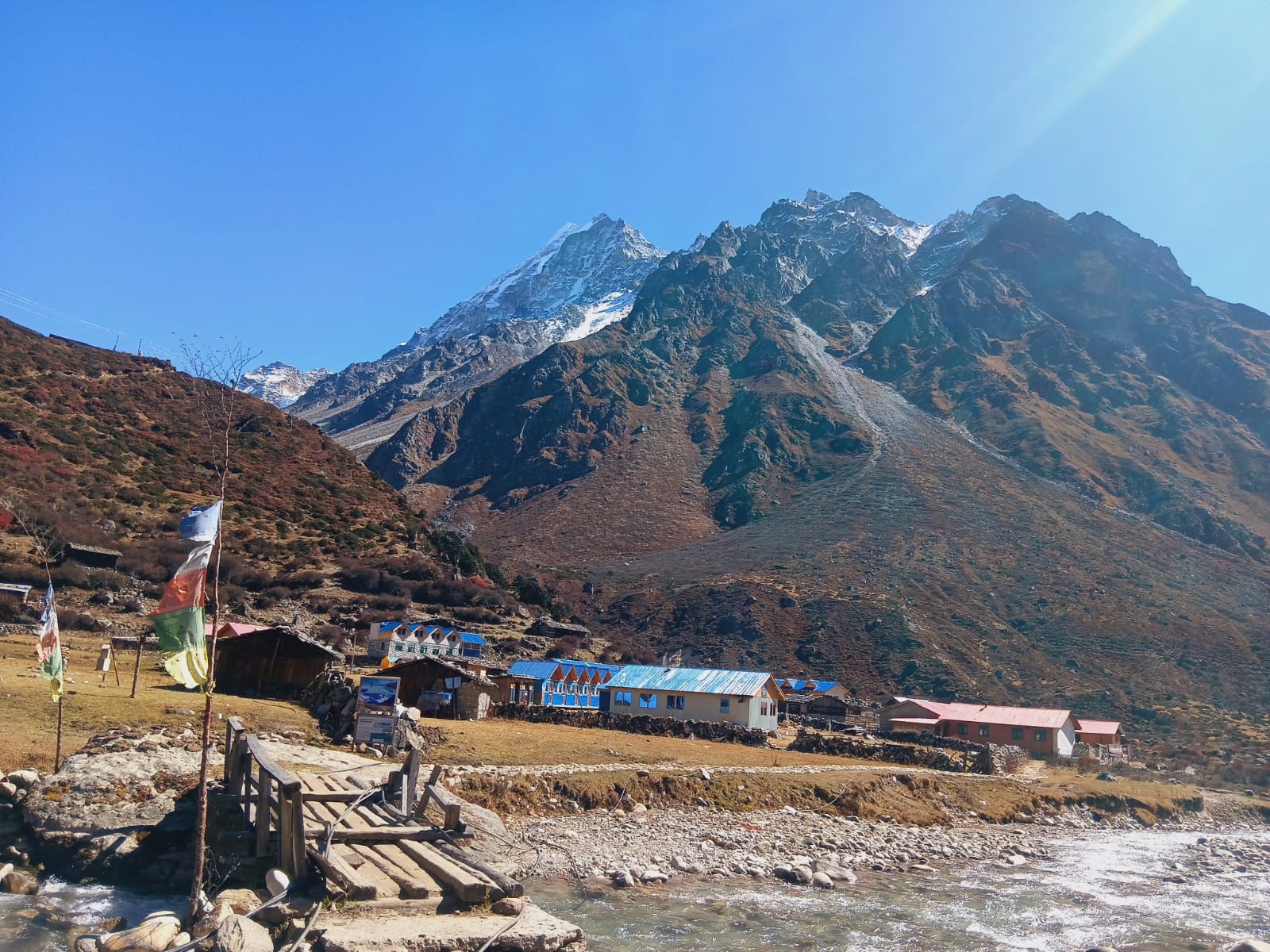
Kanchenjunga Trek Route: Village-by-Village Trail Guide
Madan NeupaneNovember 26, 20265 min read
The Kanchenjunga trek route explained: the northern trail to Pangpema, the southern trail to Oktang, the Sele La crossing that links them, and the altitude and distance of every stop.