Permits & Practical
How to Recognise Ethical Trekking Operations in Nepal
Two groups, the same pass, and very different porters. A practical checklist for choosing an ethical trekking company in Nepal, and the questions to ask before you book Kanchenjunga.

On this page
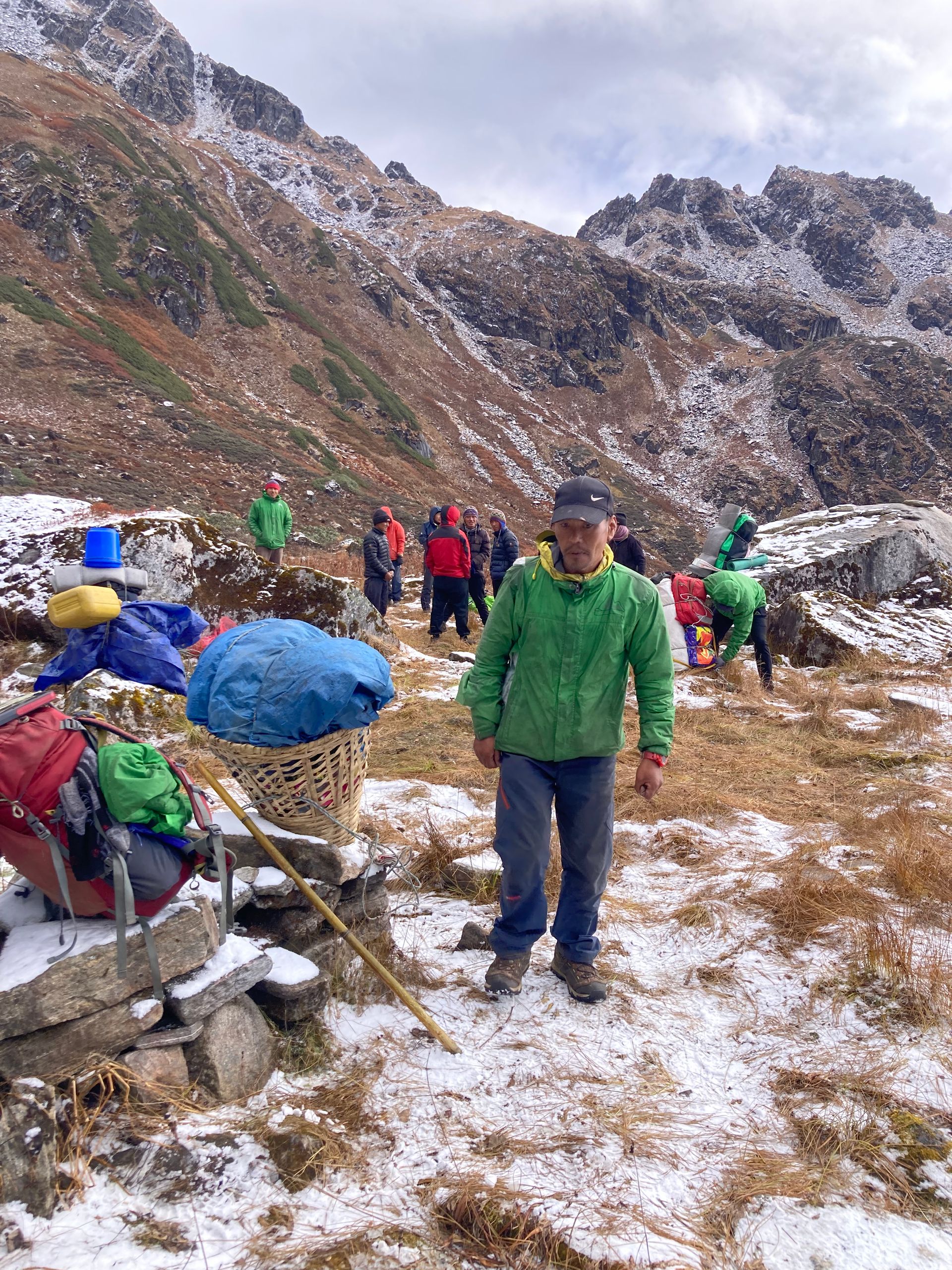
Two groups leave the same lodge on the same cold morning, heading for the same pass. In the first, the porters wear borrowed sandals and thin jackets, carry loads stacked high above their heads, and will sleep in a corner of the kitchen tonight. In the second, the porters have boots, down jackets and loads they can carry safely, and eat at the same table as the trekkers.
Both trekkers paid a company. Only one of them chose carefully. The difference rarely shows on a website, so here is how to tell before you book.
The Ethical Operator Checklist
Legal and licensed
- Registered with Nepal's Department of Tourism, and ideally a member of TAAN (Trekking Agencies' Association of Nepal)
- Uses licensed guides, which is a legal requirement in a restricted area like Kanchenjunga
- Gets your permits properly, in your name, before you leave Kathmandu
Fair to porters and guides
- Sets a sensible weight limit for porters, around 20–25 kg, or 10–12 kg per trekker when shared
- Provides porters with proper boots, warm clothing, sunglasses and shelter at night
- Insures guides and porters, including for rescue
- Pays fair wages, on time, and doesn't rely on tips to make up a living wage
- Never leaves a sick or injured porter behind on the trail
Local and community-minded
- Employs guides and porters from the region where possible
- Uses family-run teahouses and local transport
- Respects local culture and briefs trekkers on village etiquette
Honest with you
- Gives a clear list of what's included and what isn't, with no surprise extras
- Has a realistic itinerary with acclimatisation days, not a rushed one to cut costs
- Explains what happens in an emergency: who decides on descent, and how evacuation works
Light on the land
- Has a plan for waste and encourages refillable bottles and purification over plastic
- Follows conservation area rules and keeps groups on the trail
Questions to Ask Before You Book
Send these to any company, including us:
- "How many kilograms does each porter carry, and how do you check?"
- "What gear do you give your porters for the high section?"
- "Are your guides and porters insured, including for helicopter rescue?"
- "Where are your guides and porters from?"
- "What happens if a porter gets sick at Lhonak?"
If a company is vague, defensive or simply doesn't answer, take that as your answer.
Why the Cheapest Price Can Cost More
A very low price has to come from somewhere, and it's usually from the people carrying your bags. Cheap operators may skip insurance, overload porters, or rush the itinerary and skip acclimatisation days. On a trek as remote as Kanchenjunga, choosing ethically is also choosing safely.
Read more on porter welfare, how to support local businesses, and what makes a good trekking company for Kanchenjunga.
Related reading: What happens to mountain waste · Why local employment matters
Frequently Asked Questions
Can I check that a Nepal trekking agency is licensed?
Yes. Ask for the company registration and its Nepal Tourism Board licence number, and for the tourism authority number of your guide. A genuine operator will share them readily.
Is a guide compulsory for the Kanchenjunga trek?
Yes. It is a restricted area, so you need a licensed guide and a registered agency to obtain the permits, even if you trek alone.
How should I tip guides and porters?
Tip at the end of the trek, pooled for the team, and ask your operator for local norms. Our guides are local, paid fairly and insured. See how we run the Kanchenjunga Circuit trek.
Plan with local guides
Ready to walk the Kanchenjunga trail?
Tell us your dates and pace. We’ll sort permits, guides and a route that fits — straight from the people who live here.
Keep reading
Other Blogs
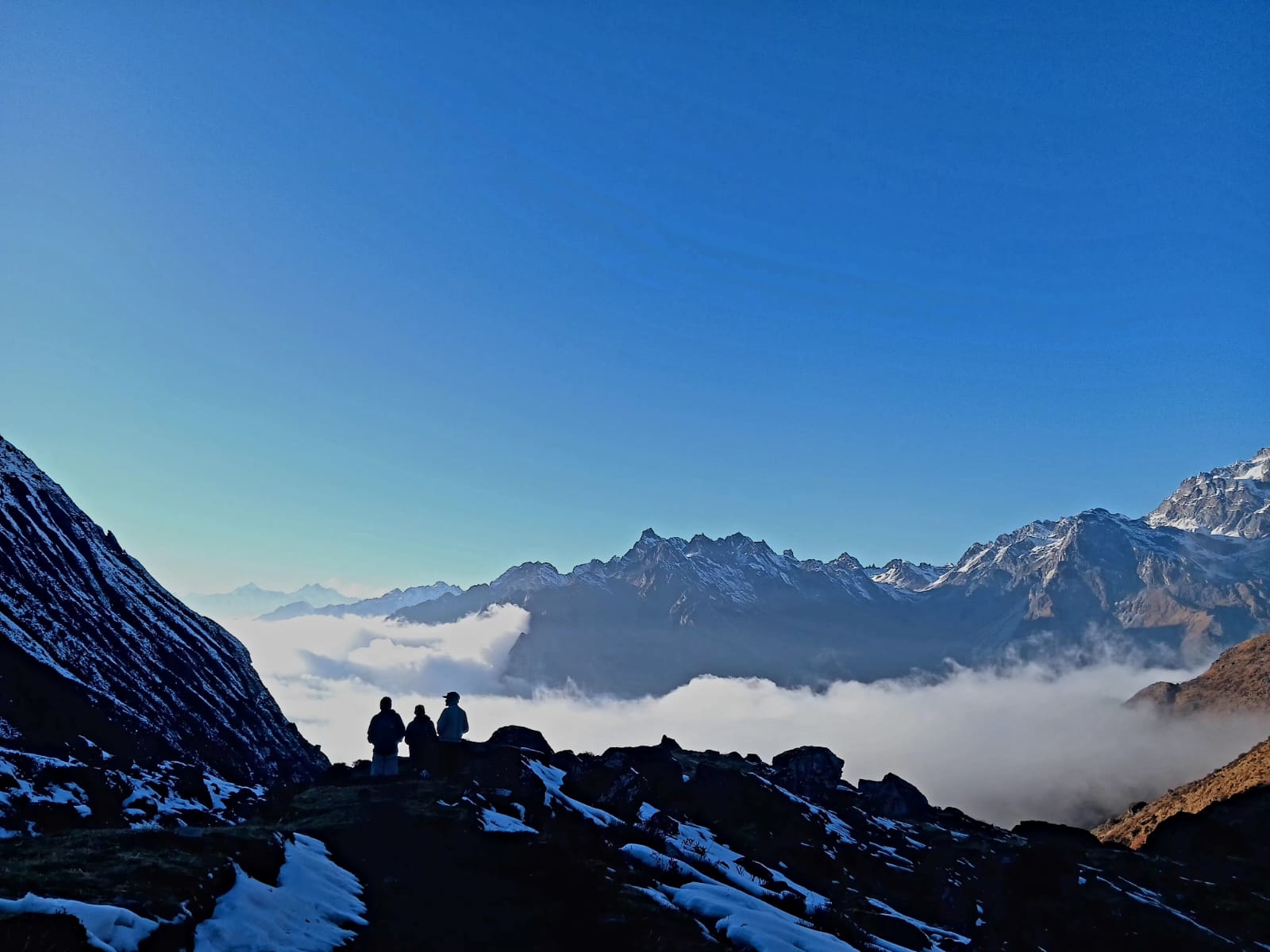
Remote Trekking in Nepal: The Best Off-the-Beaten-Path Treks
Madan NeupaneNovember 26, 20264 min read
Remote trekking in Nepal beyond Everest and Annapurna: why Kanchenjunga leads the list, the other remote treks of eastern Nepal compared, and how to prepare for permits, seasons and days offline.
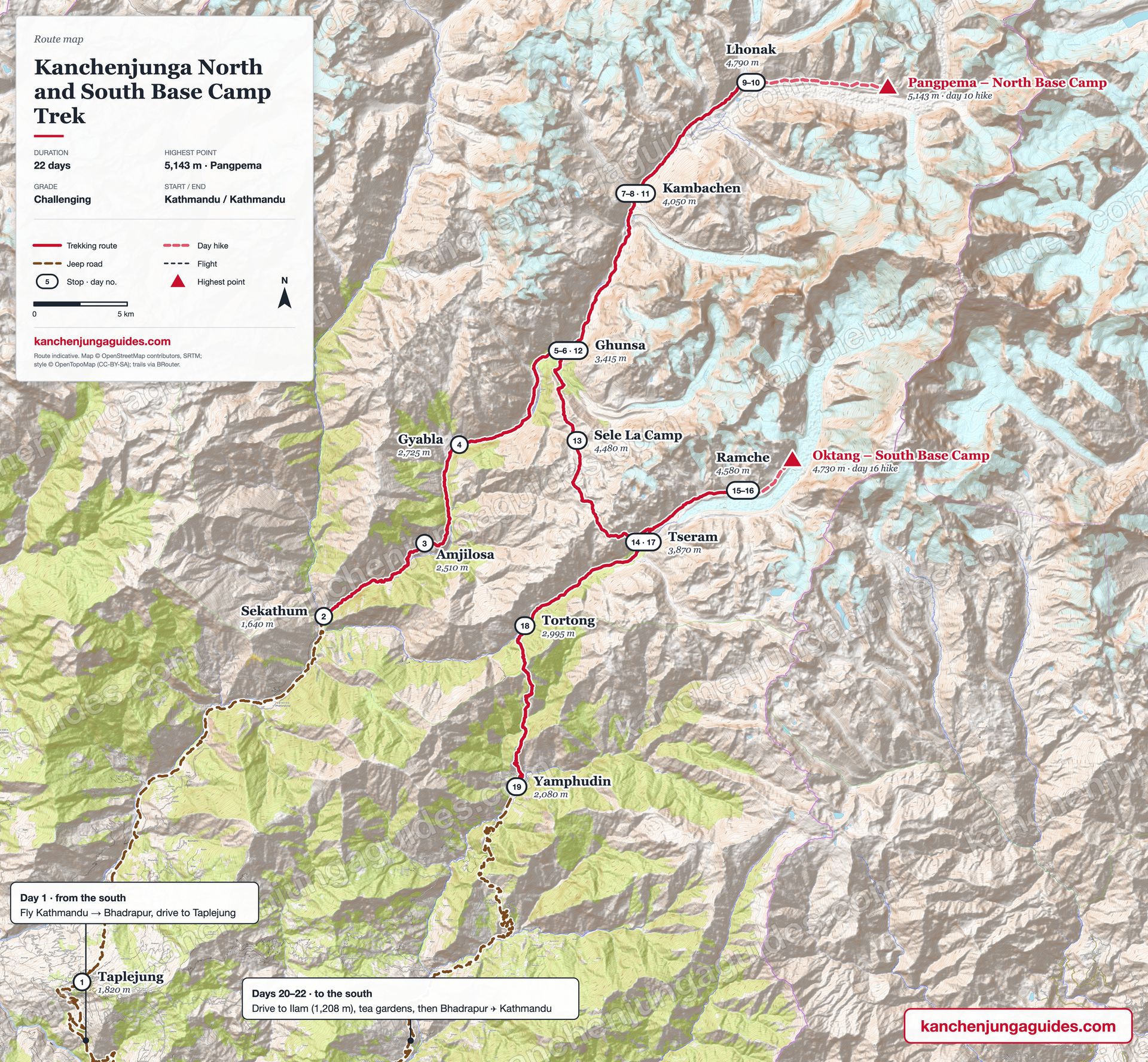
Kanchenjunga Trek Map: Route Maps for Every Itinerary
Madan NeupaneNovember 26, 20263 min read
Kanchenjunga trek maps for the North Base Camp, South Base Camp, full circuit and express routes, with an altitude profile, the trail signs you will meet and tips for navigating offline.
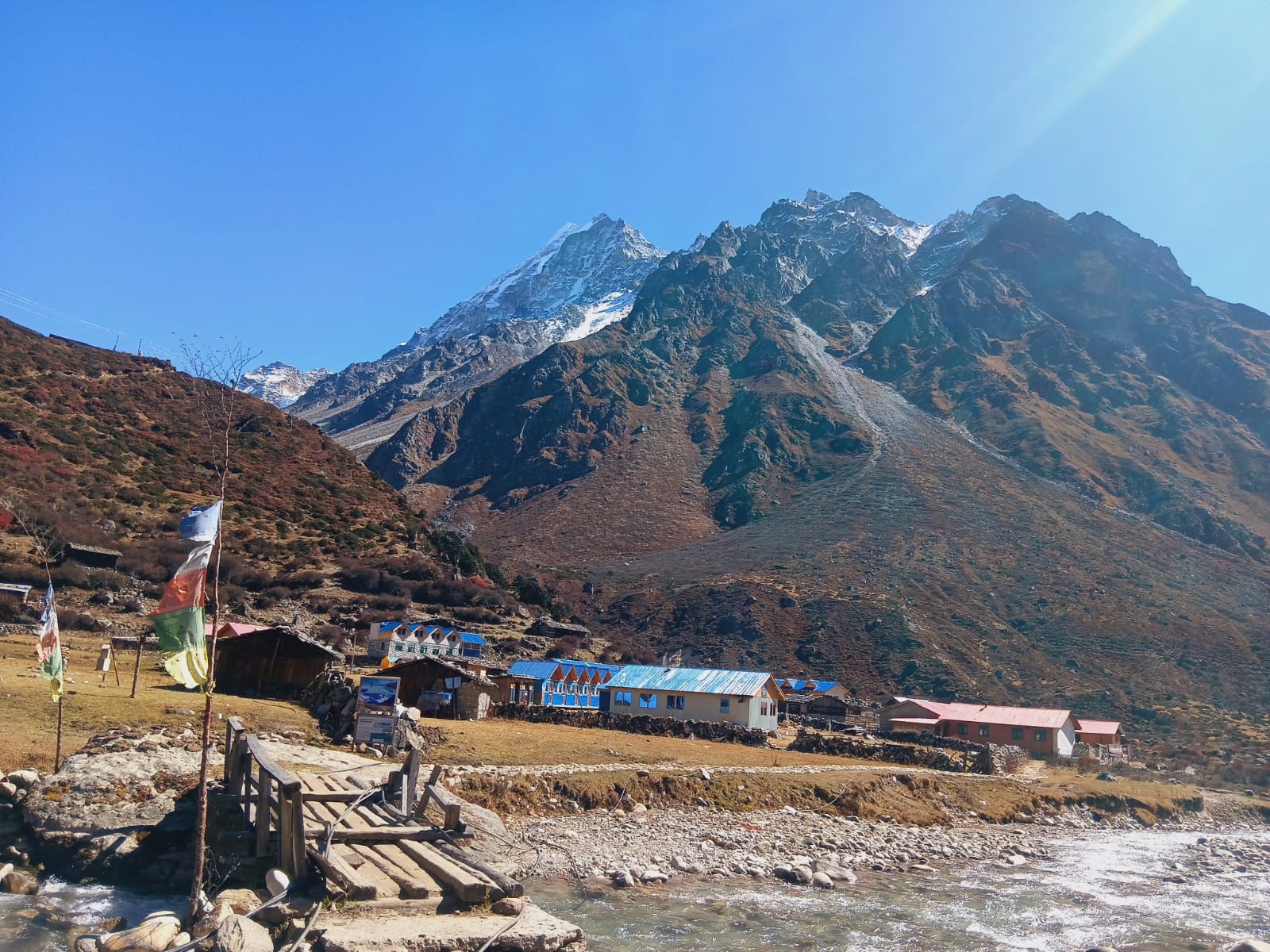
Kanchenjunga Trek Route: Village-by-Village Trail Guide
Madan NeupaneNovember 26, 20265 min read
The Kanchenjunga trek route explained: the northern trail to Pangpema, the southern trail to Oktang, the Sele La crossing that links them, and the altitude and distance of every stop.