Culture & Villages
Snow Leopard Habitat in the Kanchenjunga Region
Snow leopards live in the high valleys around Kambachen, Lhonak and Pangpema. Their habitat, prey, the signs to look for on the trek, and how communities protect them.

On this page
High above the treeline, among the boulders and cliffs around Kambachen, Lhonak and Pangpema, lives the most elusive cat on Earth. The snow leopard is known locally as the "ghost of the mountains". You are very unlikely to see one, but you will walk right through its home.
Snow Leopard Quick Facts
- Scientific name: Panthera uncia
- Status: Vulnerable (IUCN)
- Habitat: rocky alpine terrain, cliffs and ridges, roughly 3,000–5,500 m
- Main prey: blue sheep (bharal) and Himalayan tahr, plus marmots and pikas
- Behaviour: solitary and most active at dawn and dusk, with huge territories
- Camouflage: smoky-grey fur with dark rosettes, almost invisible against rock
Snow Leopards in the Kanchenjunga Region
The upper valleys of the Kanchenjunga Conservation Area, around Kambachen, Lhonak, Pangpema and the high slopes above Ghunsa, are classic snow leopard country: steep cliffs, broken rock, high pastures and plenty of blue sheep. The area also connects to snow leopard habitat across the border in Sikkim and Tibet, making it part of a wider landscape for the species.
Kanchenjunga has been an important site for snow leopard research in Nepal, including tracking studies using GPS collars, and local communities take part in monitoring.
How to Recognise Snow Leopard Signs
You are more likely to find signs than see the cat itself. Your guide can help you look for:
- Scrapes: shallow scratches in the ground made with the hind feet, often on ridges, trails and below cliffs
- Pugmarks: round paw prints about 8–10 cm across, with no claw marks, best seen in snow or soft mud
- Scent marks: sprays on overhanging rocks, which sometimes leave dark stains
- Scat: droppings on trails and ridgelines, often containing blue sheep hair
- Prey behaviour: blue sheep suddenly alert and staring in one direction
Scan the slopes when you see blue sheep. Where there is prey, there may be a predator watching.
Where to Look on the Trek
- Kambachen to Lhonak: rocky slopes and moraine beside the Kanchenjunga Glacier
- Around Lhonak and Pangpema: the cliffs and ridges above the plain, where blue sheep graze
- Above Ghunsa: the high grazing slopes in winter and spring
Living with Snow Leopards
Snow leopards sometimes kill livestock, which can make herders resent them. Community programmes in the conservation area help with predator-proof corrals, insurance schemes for lost livestock and local monitoring, so that people and snow leopards can share the mountains.
How Trekkers Can Help
- Stay on trails and keep noise low in high valleys
- Never disturb blue sheep or other wildlife
- Support local lodges and guides: tourism income gives value to living wildlife
- Do not buy fur, bones or other wildlife products
- Report any sightings or signs to your guide
Best Season for Signs
Late autumn and winter, when snow leopards follow prey to lower slopes and tracks show clearly in snow. Even then, sightings remain very rare. Seeing one would be a once-in-a-lifetime moment.
Explore Kanchenjunga's Wildlife
Lower down, the forests shelter the red panda and Nepal's national bird, the Danphe. Walk into snow leopard country on our North Base Camp Trek.
Frequently Asked Questions
Can I see a snow leopard on the trek?
Sightings are extremely rare. The animal is elusive and lives at high altitude, so most trekkers never see one.
How can I help protect it?
Respect wildlife, avoid disturbing habitat and support responsible local operators.
Ready to see it yourself? Explore our Kanchenjunga Base Camp Trek with local guides.
Plan with local guides
Ready to walk the Kanchenjunga trail?
Tell us your dates and pace. We’ll sort permits, guides and a route that fits — straight from the people who live here.
Keep reading
Other Blogs
Remote Trekking in Nepal: The Best Off-the-Beaten-Path Treks
Madan NeupaneNovember 26, 20264 min read
Remote trekking in Nepal beyond Everest and Annapurna: why Kanchenjunga leads the list, the other remote treks of eastern Nepal compared, and how to prepare for permits, seasons and days offline.
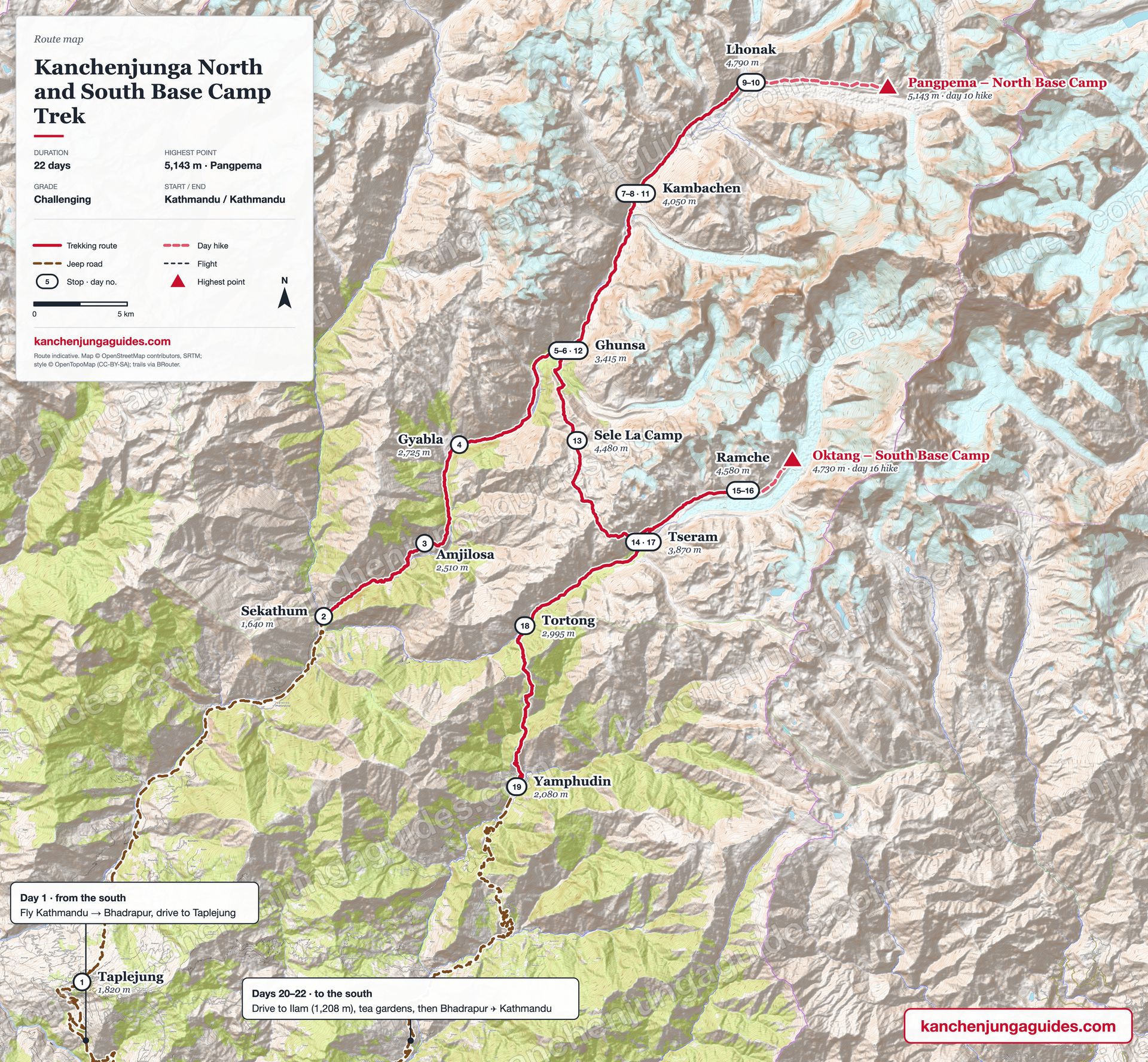
Kanchenjunga Trek Map: Route Maps for Every Itinerary
Madan NeupaneNovember 26, 20263 min read
Kanchenjunga trek maps for the North Base Camp, South Base Camp, full circuit and express routes, with an altitude profile, the trail signs you will meet and tips for navigating offline.
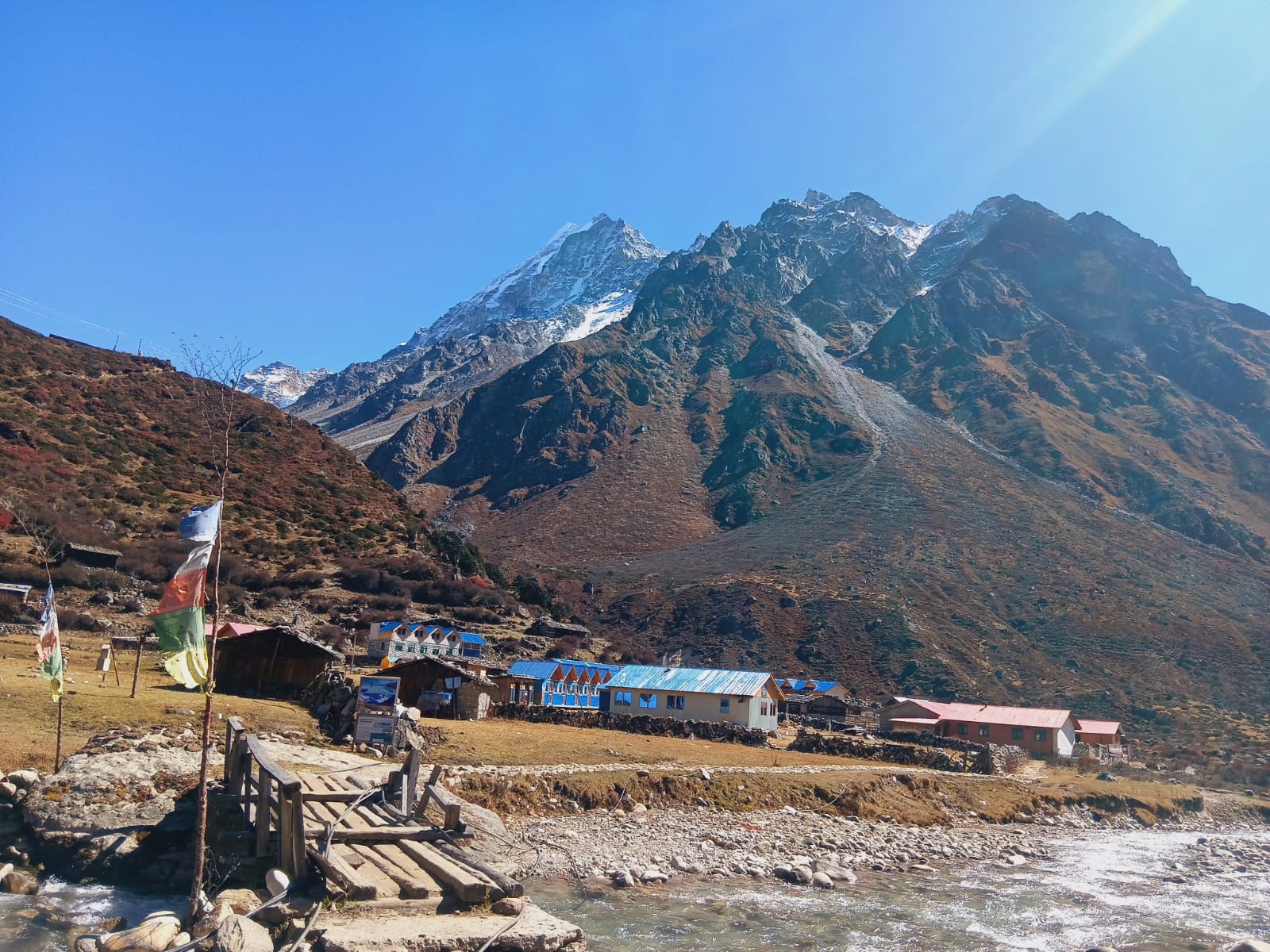
Kanchenjunga Trek Route: Village-by-Village Trail Guide
Madan NeupaneNovember 26, 20265 min read
The Kanchenjunga trek route explained: the northern trail to Pangpema, the southern trail to Oktang, the Sele La crossing that links them, and the altitude and distance of every stop.