Culture & Villages
Red Panda Habitat in the Kanchenjunga Conservation Area
The forests of Kanchenjunga are key red panda habitat. Where red pandas live on the trek, your real chances of seeing one, the threats they face and how trekkers can help.

On this page
The red panda is one of the most loved animals of the Himalaya: shy, rust-red, with a striped tail and a face like a teddy bear. The forests of the Kanchenjunga region in Taplejung are among the most important red panda habitats in eastern Nepal. Here is where they live, why this area matters, and your realistic chances of seeing one on the trek.
Red Panda Quick Facts
- Scientific name: Ailurus fulgens
- Status: Endangered (IUCN)
- Size: about the size of a large house cat, with a long ringed tail
- Diet: mainly bamboo leaves and shoots, plus fruit, acorns and insects
- Habitat: temperate forests with a thick bamboo understorey, roughly 2,200–4,000 m
- Behaviour: solitary and mostly active at dawn and dusk, spending much of the day in trees
Why Kanchenjunga Is Important for Red Pandas
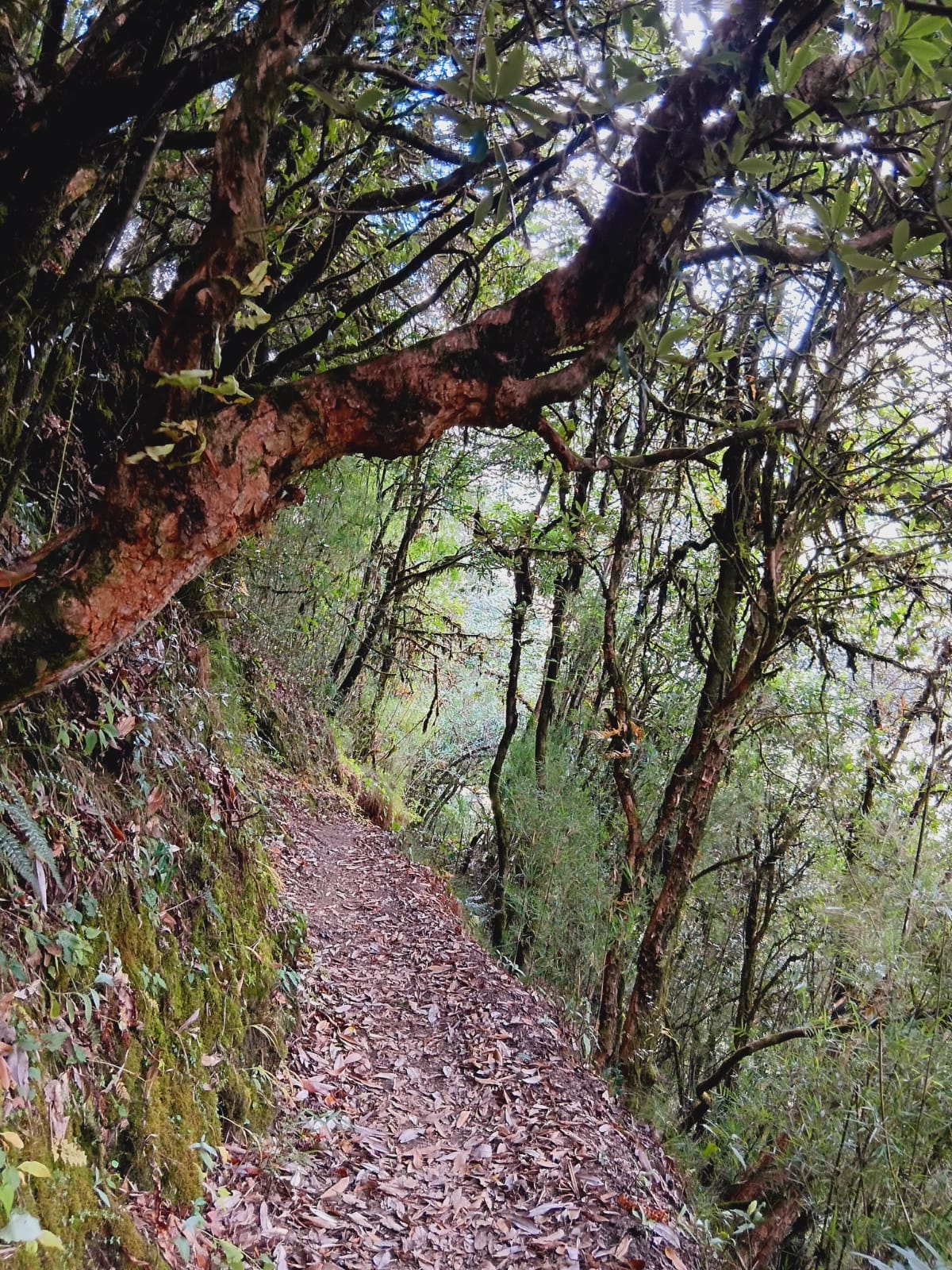
The Kanchenjunga Conservation Area (about 2,035 km²) protects a continuous belt of forest from the subtropical valleys up to the treeline. The mid-altitude zone of oak, maple, fir and rhododendron forest with bamboo below is exactly what red pandas need.
Since 2006 the conservation area has been managed by local communities, which makes it a good example of people and wildlife sharing the same landscape. Local forest groups help monitor wildlife, control grazing and protect habitat.
Where Do Red Pandas Live Around Kanchenjunga?
Red pandas live in the temperate forest belt that the trail passes through on both routes:
- North route: the forested slopes between Amjilosa, Gyabla and Phale, below Ghunsa
- South route: the bamboo and rhododendron forests around Tortong and below Tseram
They are rarely seen near villages and keep to quiet, steep forest with dense bamboo.
Can You See a Red Panda on the Trek?
Honestly, sightings are rare. Most trekkers never see one. Red pandas are shy, well camouflaged and active mainly in the early morning and evening. Your best chance is:
- Walking quietly through bamboo forest in the early morning
- Asking your guide and lodge owners about recent sightings
- Looking up into tree branches, where red pandas often rest curled in a ball, with the tail hanging down
Threats to Red Pandas
- Habitat loss from tree felling and land clearing
- Overgrazing of the bamboo understorey by livestock
- Dogs that chase and attack wildlife
- Illegal hunting and trade
How Trekkers Can Help
- Stay on the trail and keep noise down in the forest
- Never feed or chase wildlife, and keep a distance
- Choose local guides and lodges, so tourism income gives communities a reason to protect forests
- Avoid buying products made from wild animals or forest timber
- Report sightings to your guide. Local monitoring helps conservation.
Explore the Wild Side of Kanchenjunga
The forests of Kanchenjunga are also home to musk deer, Himalayan black bears, langur monkeys and many birds, including Nepal's national bird, the Danphe. Higher up lives the elusive snow leopard. Walk through it all on our North and South Base Camp Trek.
Related reading: Rhododendrons of Taplejung · Birdwatching on the trek
Quick Facts
The red panda is a small, tree-climbing mammal of the eastern Himalaya. It has dense reddish-brown fur, a ringed tail and white-lined ears, and it is not closely related to the giant panda. The IUCN has listed the species as Endangered since 2015. It is active at dusk and at night and sleeps for much of the day, which is why trekkers rarely see one.
Frequently Asked Questions
Can I see a red panda on the Kanchenjunga trek?
Sightings are rare. The species lives in forest with bamboo, is shy and mostly active at night, so most visitors never see one. Quiet walking and a local guide improve the odds.
How can trekkers help protect red pandas?
Stay on the trail, keep dogs away from forest, avoid loud noise, and use operators that support local conservation groups.
See these animals in their own habitat on our Kanchenjunga Circuit trek, where guides know the quiet side valleys and the best hours for watching.
Plan with local guides
Ready to walk the Kanchenjunga trail?
Tell us your dates and pace. We’ll sort permits, guides and a route that fits — straight from the people who live here.
Keep reading
Other Blogs
Remote Trekking in Nepal: The Best Off-the-Beaten-Path Treks
Madan NeupaneNovember 26, 20264 min read
Remote trekking in Nepal beyond Everest and Annapurna: why Kanchenjunga leads the list, the other remote treks of eastern Nepal compared, and how to prepare for permits, seasons and days offline.
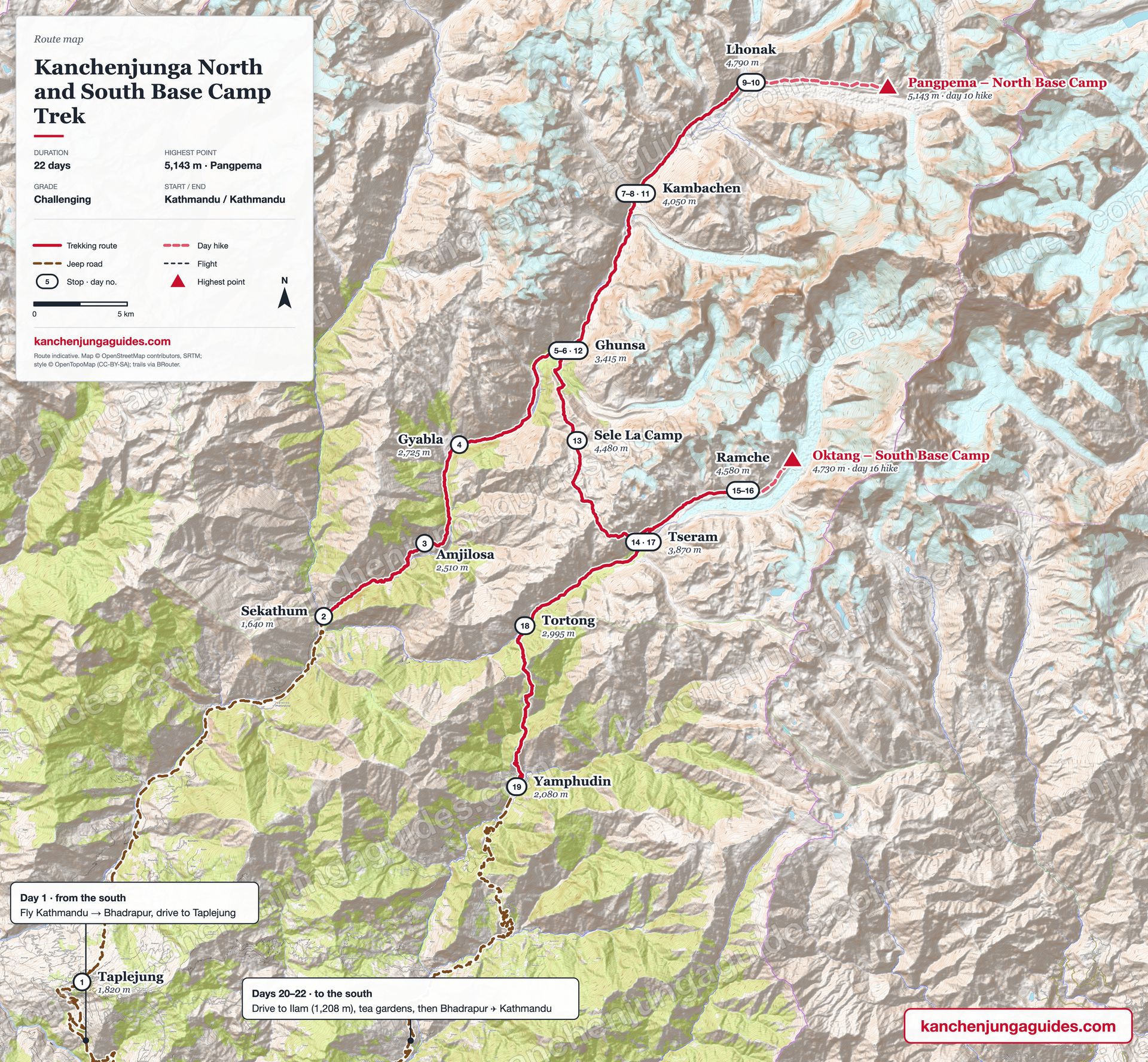
Kanchenjunga Trek Map: Route Maps for Every Itinerary
Madan NeupaneNovember 26, 20263 min read
Kanchenjunga trek maps for the North Base Camp, South Base Camp, full circuit and express routes, with an altitude profile, the trail signs you will meet and tips for navigating offline.
Kanchenjunga Trek Route: Village-by-Village Trail Guide
Madan NeupaneNovember 26, 20265 min read
The Kanchenjunga trek route explained: the northern trail to Pangpema, the southern trail to Oktang, the Sele La crossing that links them, and the altitude and distance of every stop.