Culture & Villages
Understanding Local Customs Before Entering a Buddhist Monastery
Visiting a monastery on the Kanchenjunga trek? Shoes, clockwise walking, photography, offerings, khata scarves and what to do during a puja: a simple guide.

On this page
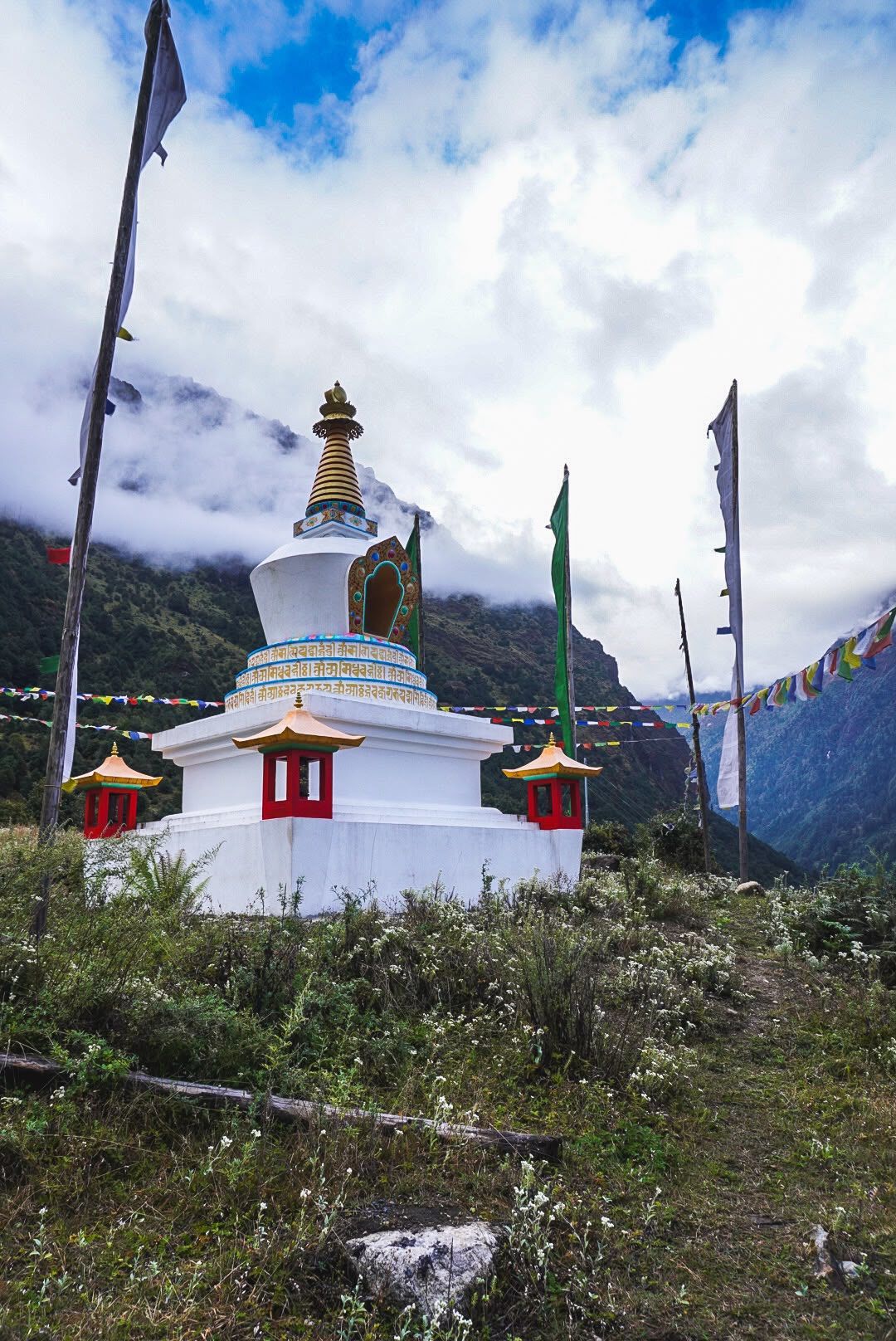
In the upper Kanchenjunga valleys, small Buddhist monasteries (gompas) sit above villages like Ghunsa and Phale, with butter lamps flickering beside painted walls and statues. Visitors are usually welcome, and a few simple customs show respect and make the visit far more meaningful.
Quick Monastery Etiquette
- Remove your shoes and hat before entering the prayer hall
- Walk clockwise inside and around the monastery
- Ask before taking photos. Many prayer halls do not allow them.
- Dress modestly, covering shoulders and knees
- Speak quietly, especially during prayers
- Leave a small donation in the offering box if you wish
Before You Go In
- Ask your guide or the caretaker whether visitors are welcome at that time. Some monasteries are locked when the lama is away, and the caretaker may open them for you.
- Take off your shoes at the door and leave them neatly outside, along with your hat and sunglasses.
- Cover up: no shorts, vests or bare shoulders.
Inside the Prayer Hall
- Move clockwise around the hall, the altar and any statues
- Do not touch statues, thangka paintings, ritual objects or musical instruments
- Never point your feet at the altar or at monks. If you sit, tuck your feet under you or to the side.
- Do not sit on the monks' seats or cushions. Ask where visitors may sit.
- Keep your head lower than statues of the Buddha, and do not climb on anything to take a photo
- Turn off your phone and keep your voice low
If a prayer ceremony (puja) is taking place, sit quietly at the back. Listening to the chanting and drums is an unforgettable experience.
Photography Rules
- Always ask permission before photographing inside a monastery, and never use flash.
- Do not photograph monks or nuns without asking.
- Outside courtyards, chortens and prayer wheels are usually fine to photograph.
Offerings and Donations
- A small cash donation in the offering box helps maintain the monastery.
- Some visitors offer a khata, a white silk scarf symbolising respect and good wishes. Your guide can show you how to present it with both hands.
- You may see butter lamps being lit. Ask if you can light one and leave a small donation.
- Receive anything offered to you (such as blessed water or a sweet) with your right hand, or both hands.
Prayer Wheels and Chortens Outside
- Spin prayer wheels clockwise with your right hand as you walk past.
- Walk around chortens and mani walls clockwise, keeping them on your right.
- Read more in the meaning of mani walls and prayer flags explained.
Monasteries on the Kanchenjunga Trek
- Phale: a Tibetan refugee village with a small monastery, between Gyabla and Ghunsa
- Ghunsa: the village monastery and chortens, which are easy to visit on your acclimatisation day
- Along the trail: stupas, chortens and mani walls mark the entrances to Sherpa villages
Quick Do's and Don'ts
Do:
- Remove your shoes and hat
- Walk clockwise
- Ask before photographing
- Speak softly
Don't:
- Touch sacred objects
- Point your feet at the altar
- Use flash
- Sit on monks' seats
Learn More
See our guide to greetings and etiquette in Himalayan villages, or visit these monasteries yourself on our North Base Camp Trek.
Frequently Asked Questions
What should I wear in a monastery?
Dress modestly, covering shoulders and knees, and remove your hat and shoes when asked.
What should I avoid?
Do not touch sacred objects, point your feet at altars or photograph inside without permission.
Ready to see it yourself? Explore our Kanchenjunga Base Camp Trek with local guides.
Plan with local guides
Ready to walk the Kanchenjunga trail?
Tell us your dates and pace. We’ll sort permits, guides and a route that fits — straight from the people who live here.
Keep reading
Other Blogs
Remote Trekking in Nepal: The Best Off-the-Beaten-Path Treks
Madan NeupaneNovember 26, 20264 min read
Remote trekking in Nepal beyond Everest and Annapurna: why Kanchenjunga leads the list, the other remote treks of eastern Nepal compared, and how to prepare for permits, seasons and days offline.
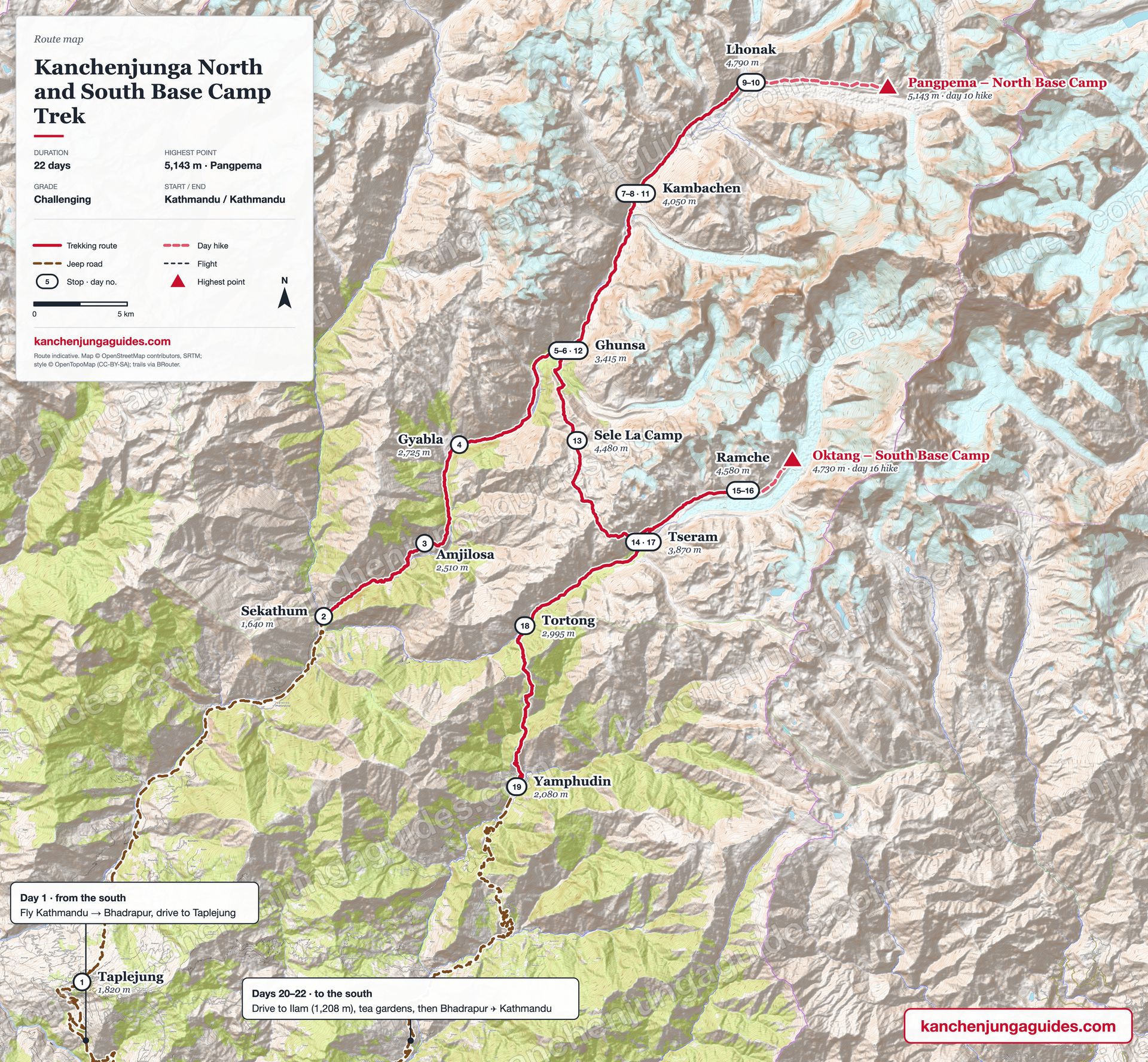
Kanchenjunga Trek Map: Route Maps for Every Itinerary
Madan NeupaneNovember 26, 20263 min read
Kanchenjunga trek maps for the North Base Camp, South Base Camp, full circuit and express routes, with an altitude profile, the trail signs you will meet and tips for navigating offline.
Kanchenjunga Trek Route: Village-by-Village Trail Guide
Madan NeupaneNovember 26, 20265 min read
The Kanchenjunga trek route explained: the northern trail to Pangpema, the southern trail to Oktang, the Sele La crossing that links them, and the altitude and distance of every stop.