Stories from the Trail
Himalayan Wildflowers Found Along the Kanchenjunga Trail
From spring rhododendron forests to the summer alpine meadows of Kambachen and Lhonak: the wildflowers of the Kanchenjunga trail by altitude and season, with photo tips.

On this page
The Kanchenjunga trail climbs from subtropical farmland to glacial moraine, and the flowers change at every stage. In spring the lower forests are full of rhododendrons and orchids. In summer and early autumn the high meadows around Kambachen and Lhonak turn blue, yellow and purple with alpine flowers.
Quick Answer
- Best time for alpine flowers: July to September, with some gentians and late flowers still out in October
- Best time for forest flowers: March to May, when rhododendrons, magnolias and primulas bloom
- Best places: the forests below Ghunsa, and the meadows around Kambachen, Lhonak and Ramche
- Rule: look and photograph, but never pick or dig up plants inside the Kanchenjunga Conservation Area
Flowers by Altitude
Lower Valleys (below about 2,500 m)
Warm, wet forests with orchids, wild begonias, balsams and ferns. Many plants flower during the monsoon.
Temperate Forests (about 2,500–3,500 m)
Rhododendron, oak, maple and fir forests. In spring look for tree rhododendrons in red, pink and white, plus primulas and anemones in clearings.
Subalpine Zone (about 3,500–4,000 m)
Dwarf rhododendrons and juniper shrubs, with primulas, irises and potentillas. Crush a leaf of the low aromatic rhododendron here and you'll smell the scent used in local incense.
Alpine Meadows (about 4,000–5,000 m)
The meadows around Kambachen and Lhonak are the highlight. Look for:
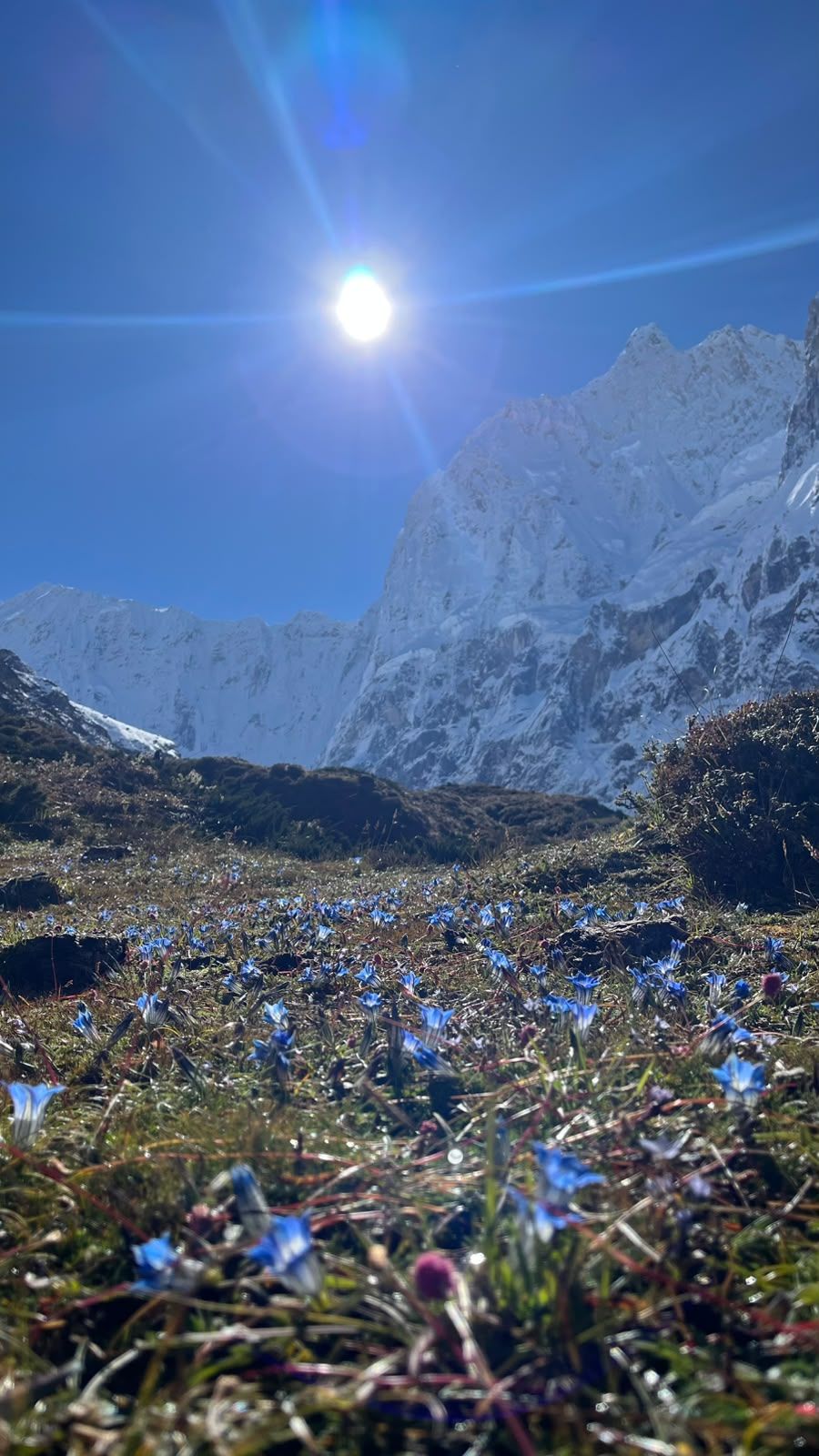
- Gentians: small, intensely blue trumpets, often flowering into autumn
- Primulas: many species, in pink, purple and yellow
- Himalayan blue poppies: rare and spectacular, on rocky slopes in summer
- Edelweiss: woolly, grey-white stars on dry ground
- Saxifrages and cushion plants: tiny flowers in tight mats among the rocks
Which Season Should You Choose?
The best trekking seasons and the best flower seasons don't overlap perfectly:
- Spring (March to May): great forest flowers and good views. The high meadows are just starting to green.
- Monsoon (June to August): the meadows are at their peak, but there is rain, leeches and cloud. Only for experienced trekkers.
- Autumn (September to November): clear views. Late-flowering gentians in September and early October, then the meadows turn gold.
For most trekkers, spring gives the best mix of flowers and mountain views. See our guide to the best time to trek Kanchenjunga for more on each season.
Photographing Wildflowers
- Get low, at flower level, and use the mountains as a background
- Shoot in soft morning light or under light cloud, which brings out colour
- Use your phone's portrait mode or a wide aperture to blur the background
- Stay on the path, and don't trample the meadow for one shot
Respect the Plants
Many alpine plants grow very slowly in a short summer. Some, such as aromatic rhododendrons and medicinal herbs, are also used by local communities. Picking flowers or digging up plants is not allowed in the conservation area.
Learn More
Read about the rhododendrons of Taplejung, the region's orchids and the birds you can spot on the trek.
Related reading: Butterflies of the region · Medicinal plants of Taplejung
Frequently Asked Questions
When are wildflowers at their best?
Late spring and early summer bring the most colour in the meadows.
Where should I look?
Open meadows, forest edges and the lower trail around Gyabla, Ghunsa and Sekathum.
Ready to see it yourself? Explore our Kanchenjunga Base Camp Trek with local guides.
Plan with local guides
Ready to walk the Kanchenjunga trail?
Tell us your dates and pace. We’ll sort permits, guides and a route that fits — straight from the people who live here.
Keep reading
Other Blogs
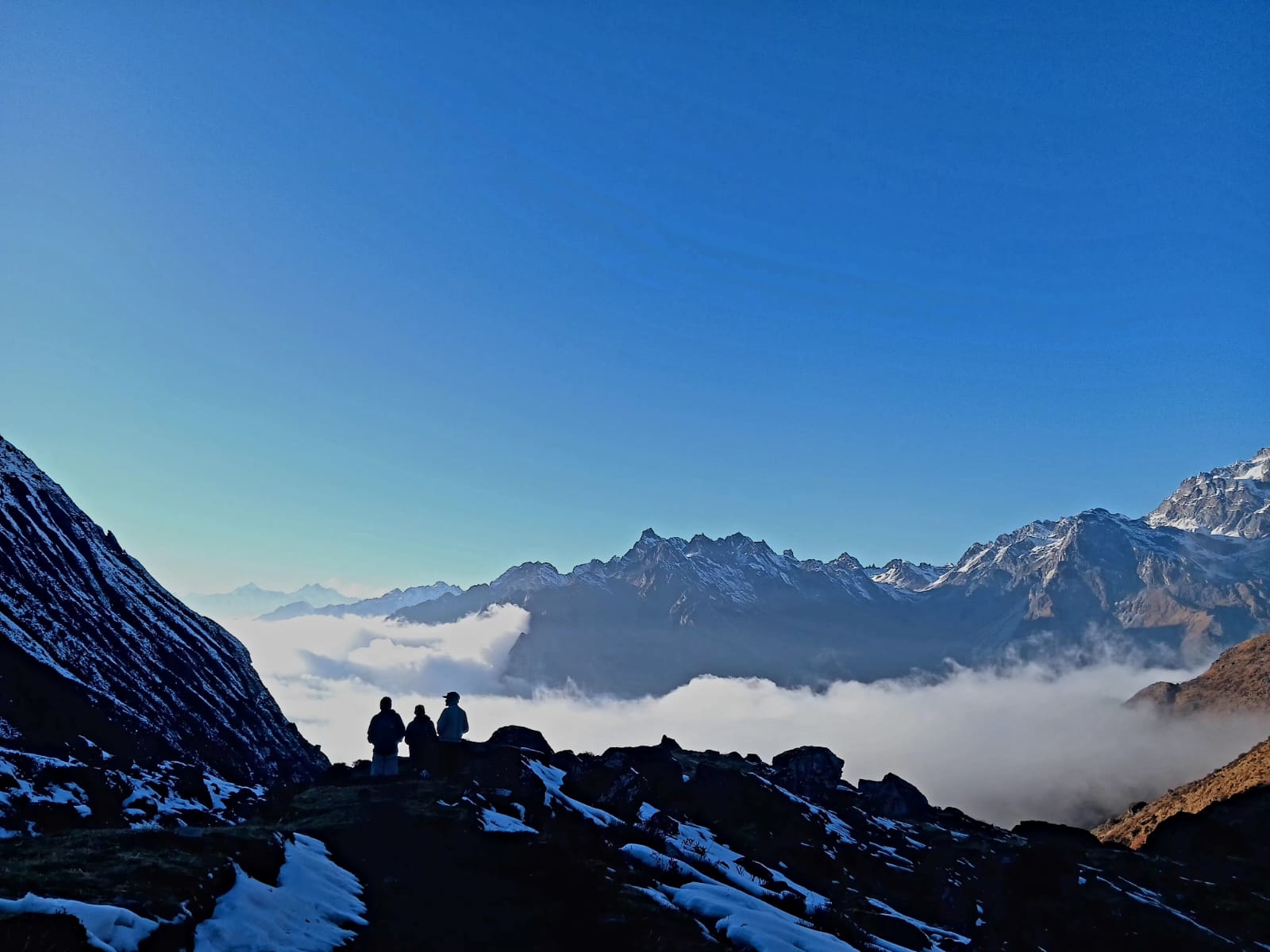
Remote Trekking in Nepal: The Best Off-the-Beaten-Path Treks
Madan NeupaneNovember 26, 20264 min read
Remote trekking in Nepal beyond Everest and Annapurna: why Kanchenjunga leads the list, the other remote treks of eastern Nepal compared, and how to prepare for permits, seasons and days offline.
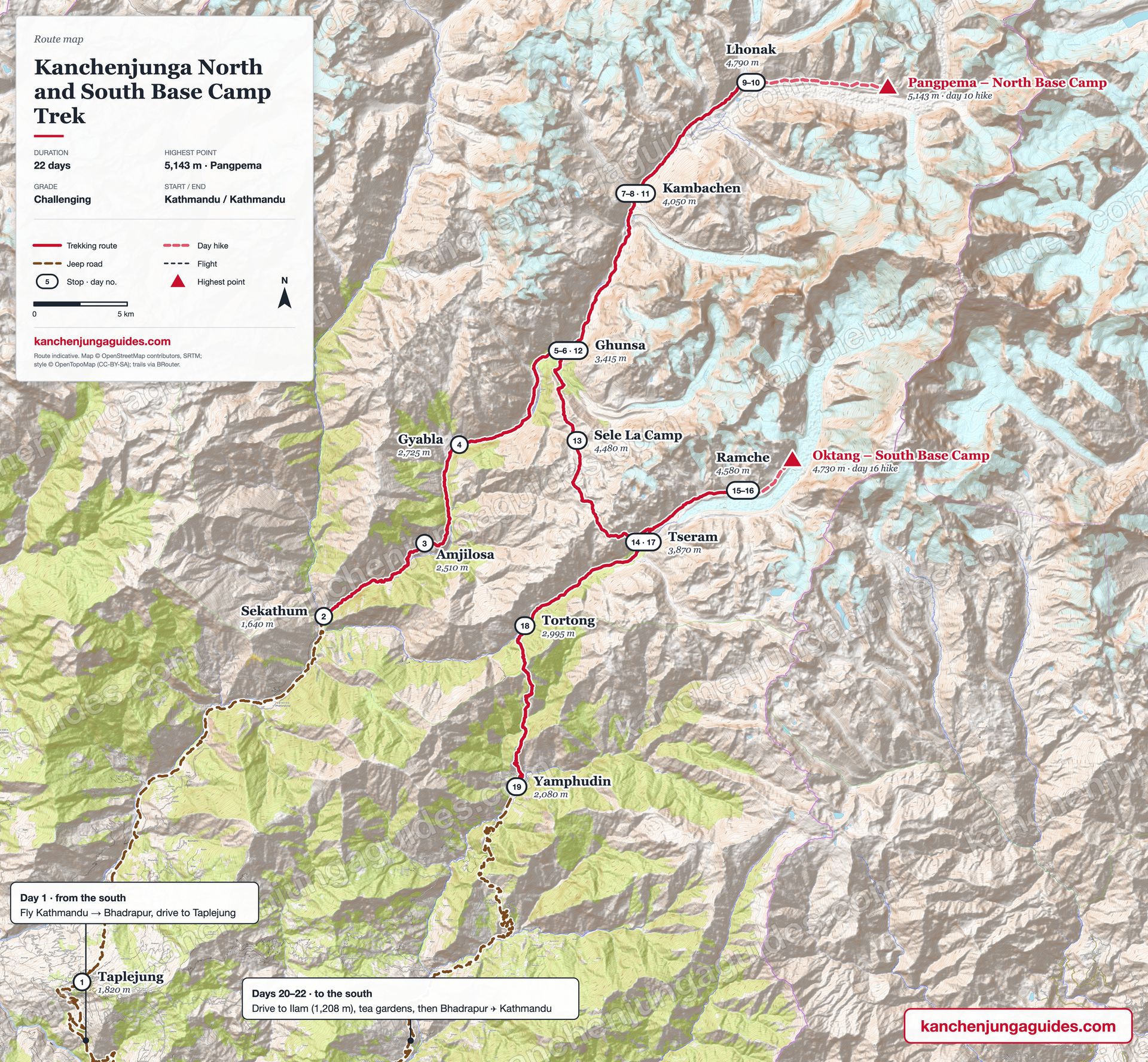
Kanchenjunga Trek Map: Route Maps for Every Itinerary
Madan NeupaneNovember 26, 20263 min read
Kanchenjunga trek maps for the North Base Camp, South Base Camp, full circuit and express routes, with an altitude profile, the trail signs you will meet and tips for navigating offline.
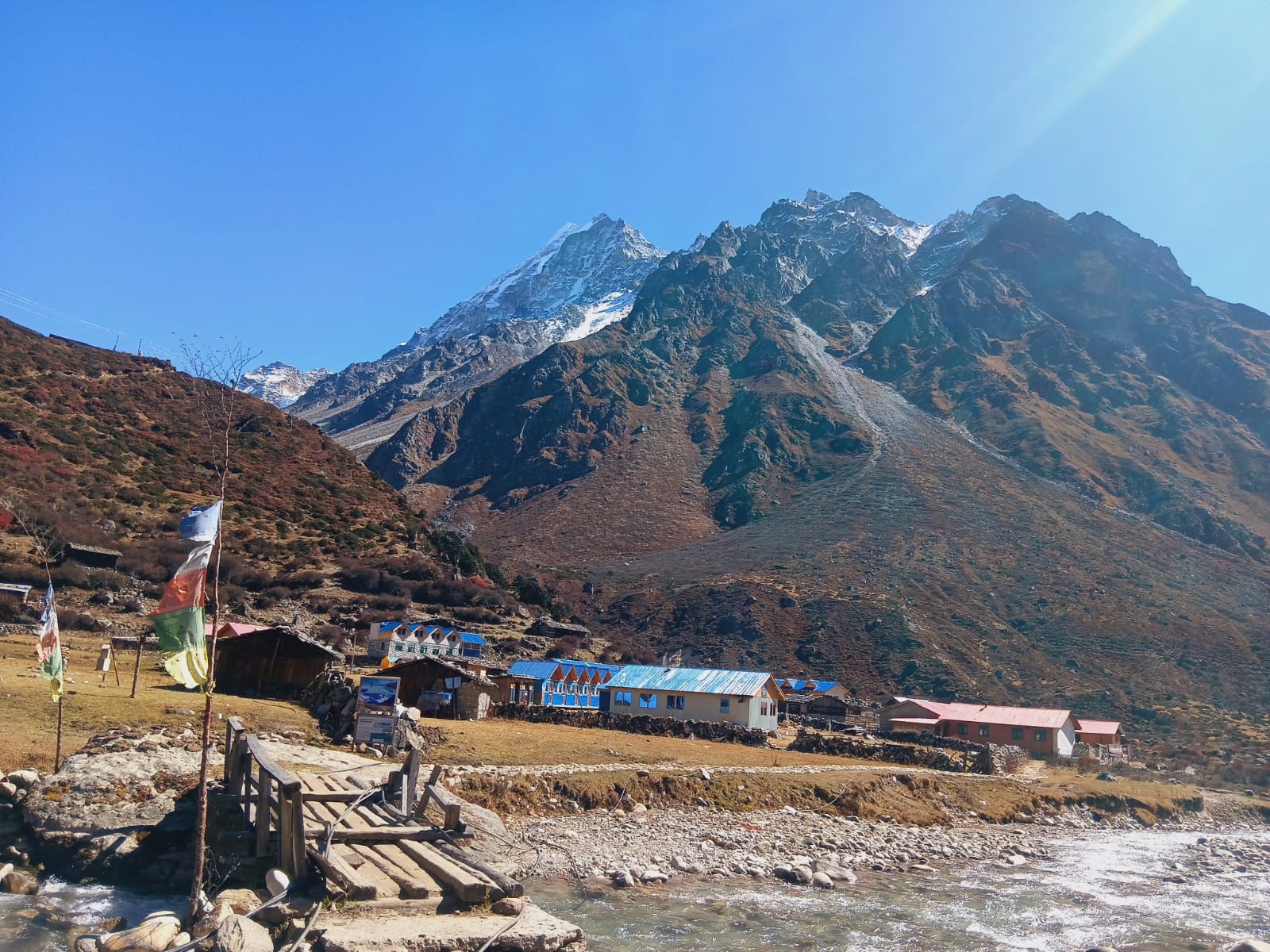
Kanchenjunga Trek Route: Village-by-Village Trail Guide
Madan NeupaneNovember 26, 20265 min read
The Kanchenjunga trek route explained: the northern trail to Pangpema, the southern trail to Oktang, the Sele La crossing that links them, and the altitude and distance of every stop.