Culture & Villages
Medicinal Plants Used by Traditional Communities in Taplejung
Chiraito, yarsagumba, sunpati, timur, jatamansi and panch aunle: profiles of the medicinal plants traditionally used in Taplejung, why they matter, and how trekkers can respect them.

On this page
Long before there were health posts in the hills of Taplejung, families treated fevers, coughs and stomach problems with plants from the forest and pasture. Limbu healers, Sherpa households and Tibetan amchi medicine all draw on this knowledge, and some of these plants are still collected and sold today.
Here are some of the plants you may hear about, or even see drying on a rooftop, as you walk through the region.
This is cultural information, not medical advice. Don't take wild plants without expert guidance, and never pick or dig up plants in the conservation area.
Chiraito (Swertia chirayita)
What it is: a small herb with a famously bitter taste
Traditional use: a bitter tonic for fever, digestion and general health
Where: hill forests and grassland, and eastern Nepal, including Taplejung, is one of its best-known sources
Today: an important cash crop, now grown on farms as well as collected wild
Yarsagumba (Ophiocordyceps sinensis)
What it is: not really a plant, but a fungus that grows from a caterpillar underground
Traditional use: highly valued in Tibetan and Chinese medicine as a tonic
Where: high alpine pastures, collected in late spring and early summer
Today: one of the most valuable natural products in the Himalaya, and an important but risky income for high-altitude families
Sunpati (Rhododendron anthopogon)
What it is: a low, aromatic dwarf rhododendron of the subalpine zone
Traditional use: the leaves are burned as incense in homes and monasteries, and used in traditional remedies
Where: above the treeline. You'll smell it on the trail if you brush past it.
Timur (Zanthoxylum armatum)
What it is: a spiny shrub with peppercorn-like fruit, a relative of Sichuan pepper
Traditional use: for toothache and stomach problems, and as a spice that makes your mouth tingle
Where: lower hill forests. You'll taste it in pickles (achar) at teahouse meals.
Jatamansi (Nardostachys jatamansi)
What it is: a small alpine plant with a strongly scented root
Traditional use: in incense, perfumes and traditional calming remedies
Today: over-harvesting made it scarce, so its trade is now controlled by law and international rules
Panch Aunle (Dactylorhiza hatagirea)
What it is: an alpine orchid whose root looks like a hand with five fingers
Traditional use: a tonic in traditional medicine
Today: protected in Nepal, because collection has made it rare. Read more about the region's orchids.
Why This Knowledge Matters
These plants are part of local culture, healing traditions and income. But demand from outside the region has put some, such as jatamansi, panch aunle and yarsagumba, under real pressure. Conservation rules and community forest groups now try to balance harvesting with keeping the plants alive for the future.
How Trekkers Can Respect It
- Ask your guide about the plants you pass, since many guides grew up using them
- Try timur pickle with your dal bhat, but buy plant products only from legal, local sources
- Never dig up or pick plants, and don't buy wild-collected orchids or protected species
- Don't take plants or seeds out of Nepal
Learn More
Read about the Limbu people of Taplejung, Sherpa communities in the region, and the wildflowers of the trail.
Frequently Asked Questions
Can I collect plants on the trek?
No. The area is protected, so do not pick or dig up plants. Photograph them instead.
Are traditional herbal remedies safe for altitude sickness?
They are no substitute for descent, rest and medical advice. Tell your guide at once if symptoms appear.
Ready to see it yourself? Explore our Kanchenjunga Base Camp Trek with local guides.
Plan with local guides
Ready to walk the Kanchenjunga trail?
Tell us your dates and pace. We’ll sort permits, guides and a route that fits — straight from the people who live here.
Keep reading
Other Blogs
Remote Trekking in Nepal: The Best Off-the-Beaten-Path Treks
Madan NeupaneNovember 26, 20264 min read
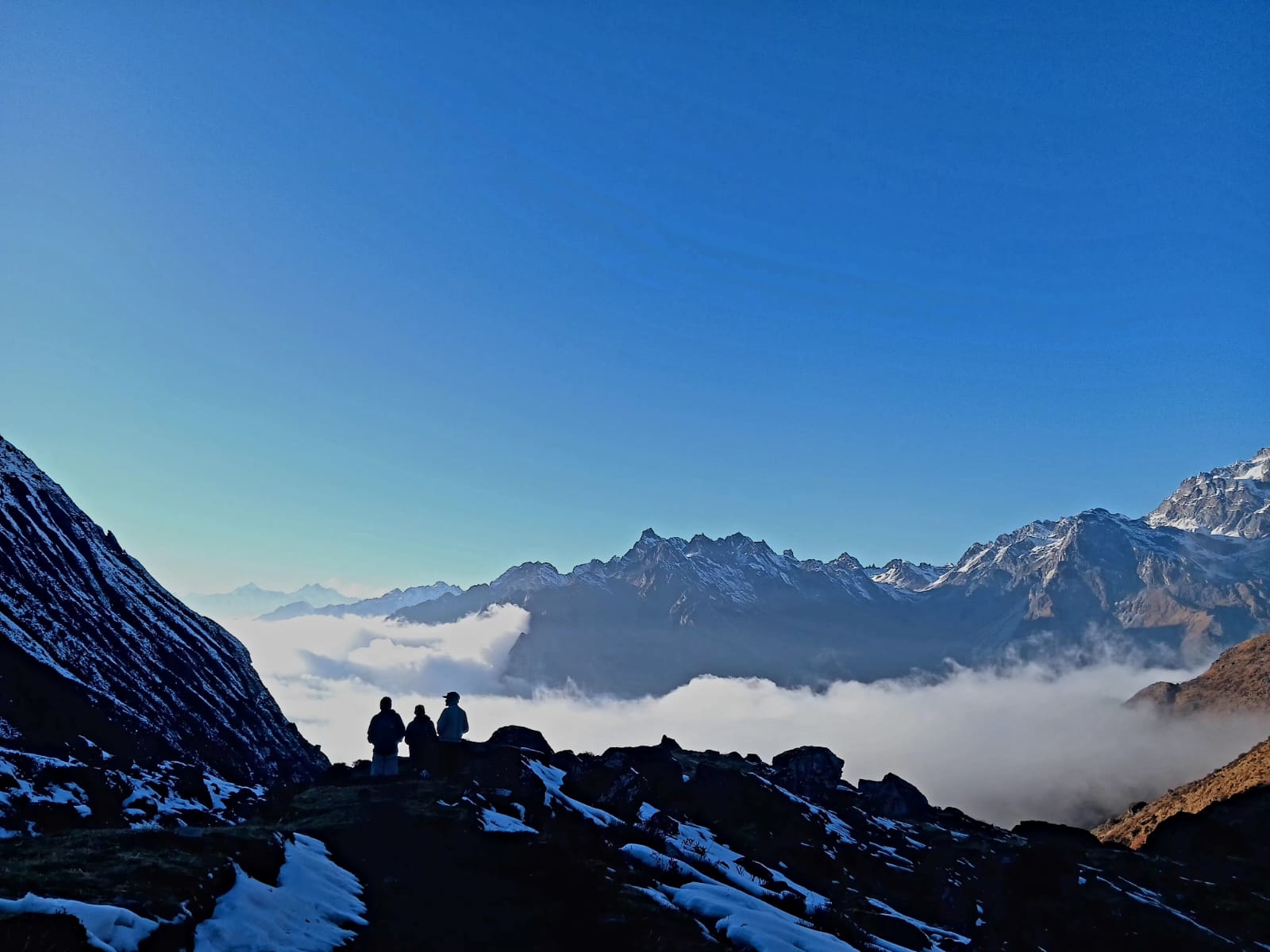
Remote trekking in Nepal beyond Everest and Annapurna: why Kanchenjunga leads the list, the other remote treks of eastern Nepal compared, and how to prepare for permits, seasons and days offline.
Kanchenjunga Trek Map: Route Maps for Every Itinerary
Madan NeupaneNovember 26, 20263 min read
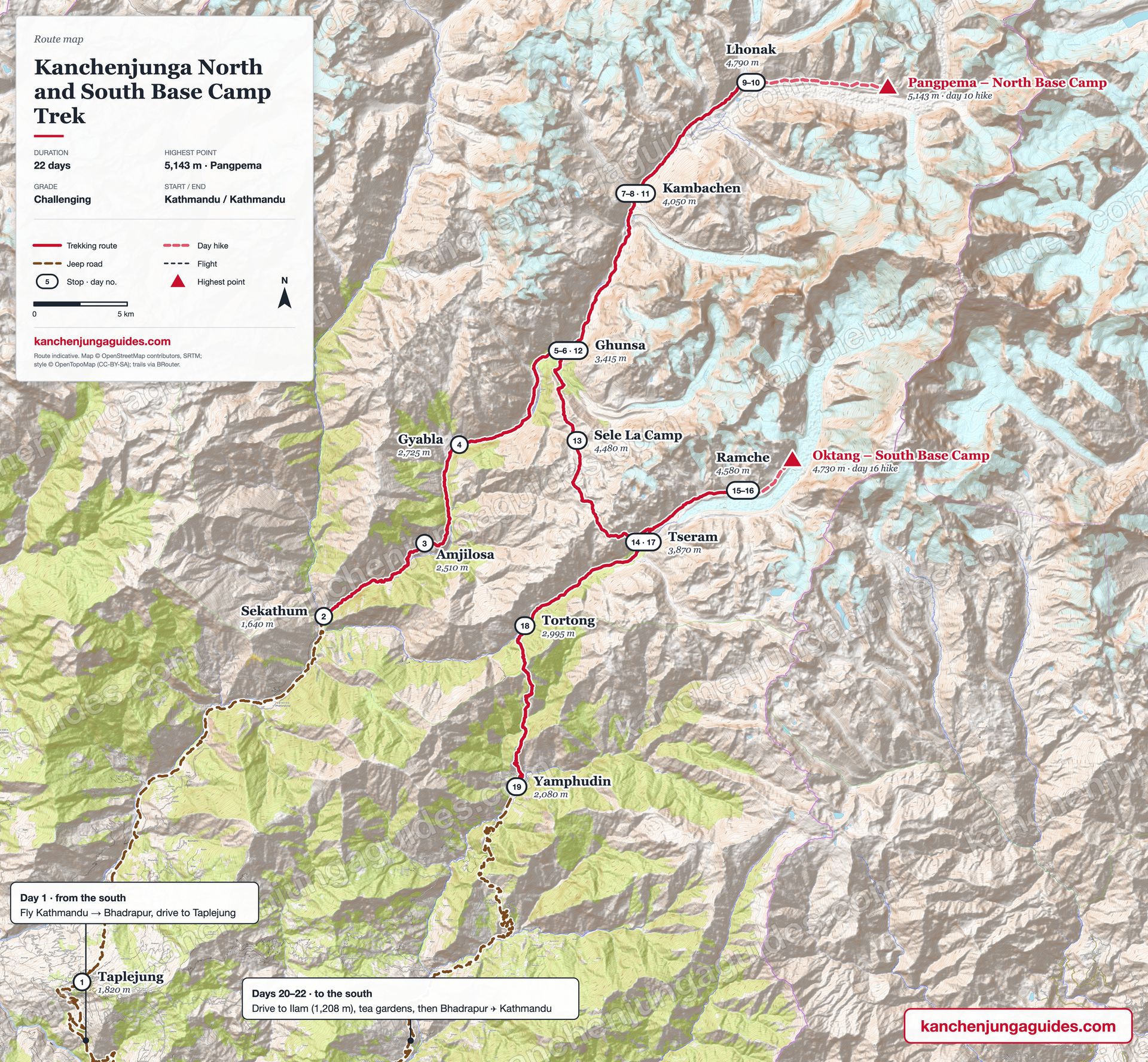
Kanchenjunga trek maps for the North Base Camp, South Base Camp, full circuit and express routes, with an altitude profile, the trail signs you will meet and tips for navigating offline.
Kanchenjunga Trek Route: Village-by-Village Trail Guide
Madan NeupaneNovember 26, 20265 min read
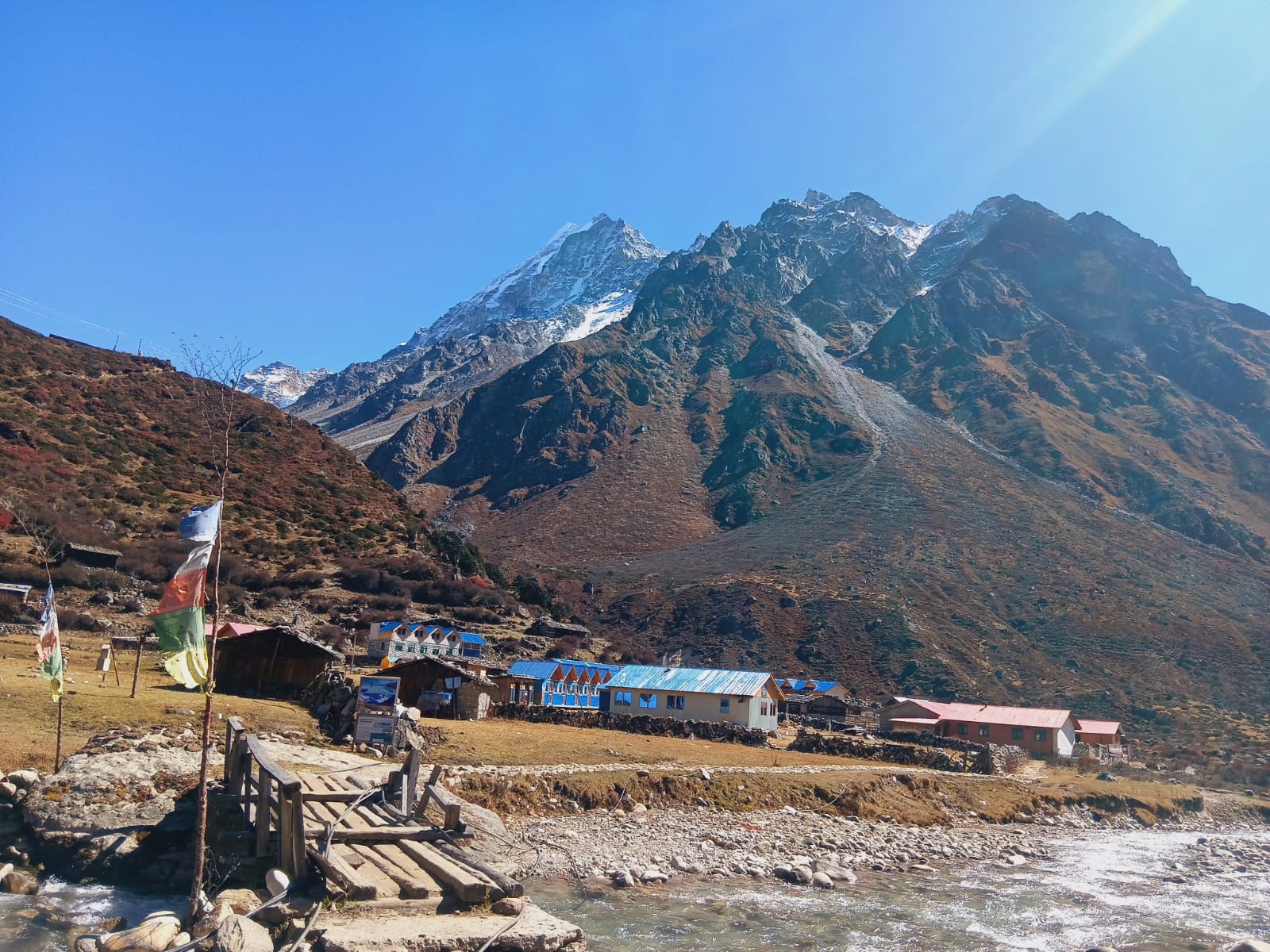
The Kanchenjunga trek route explained: the northern trail to Pangpema, the southern trail to Oktang, the Sele La crossing that links them, and the altitude and distance of every stop.