Culture & Villages
Losar Celebrations in the Kanchenjunga Region
Losar is the Sherpa and Tibetan New Year. How it is celebrated in Kanchenjunga's Buddhist villages, when it falls, the food, the customs and how trekkers can experience it.

On this page
Losar is the Tibetan and Sherpa New Year, the most important festival in the Buddhist villages of the Himalaya. In the Sherpa communities of the upper Kanchenjunga region, Losar means cleaning homes, hanging new prayer flags, visiting the monastery and days of feasting with family.
Losar at a Glance
- What: the Tibetan and Sherpa New Year (Gyalpo Losar)
- When: usually February or early March, following the lunar calendar, so the date changes every year
- Celebrated by: Sherpa and Tibetan Buddhist communities, such as those around Ghunsa, Phale and Olangchung Gola
- Length: the main celebrations last about three days, often longer with family visits
- Mood: joyful, social and spiritual
Other communities in Nepal have their own new year festivals. For example, the Tamang celebrate Sonam Losar, and the Gurung celebrate Tamu Losar.
How Losar Is Celebrated
Before New Year: Cleaning Out the Old
In the days before Losar, families clean their homes from top to bottom to sweep away bad luck from the old year. On the eve of Losar, many families eat guthuk, a special noodle soup with dough balls hiding small objects. What you find in yours is said to reveal something about your character, which causes plenty of laughter.
Day 1: Family
The first day is spent with close family. People wear their best traditional clothes, make offerings at the home shrine and share special food and drink.
Day 2: Monastery and Community
Families visit the monastery to make offerings, light butter lamps and receive blessings from the lama. Friends and neighbours visit each other's homes with greetings of "Losar Tashi Delek!"
Day 3: New Prayer Flags
New prayer flags are hung on rooftops, passes and hilltops to carry fresh blessings for the year ahead. Read more about prayer flags and their meaning.
Traditional Losar Food and Drink
- Khapse: crispy fried pastries in twisted and decorative shapes
- Guthuk: the New Year's Eve noodle soup
- Chhang: a mild home-brewed barley or millet beer
- Butter tea and sweet tea, served constantly to guests
- Feasts of meat, rice, potatoes and local specialities
Can Trekkers Experience Losar?
Losar falls in late winter, when the high Kanchenjunga trails are cold and snowy and few trekkers visit. Some families from the high villages spend the winter in lower settlements, so celebrations may not take place in the upper valley every year.
Winter treks above Ghunsa need experience, warm gear and a check on conditions first.
Want to experience Losar? Spend it in Kathmandu around Boudhanath Stupa, where the Sherpa and Tibetan community celebrates in style, then trek in spring.
Losar Etiquette for Visitors
- Greet people with "Losar Tashi Delek!"
- Accept food and drink with both hands. A small sip or taste is polite even if you do not want more.
- Ask before photographing celebrations or people in traditional dress
- Follow monastery etiquette. See our monastery customs guide.
Learn More About Local Culture
Read about greetings and etiquette in Himalayan villages and the languages spoken in Taplejung, or explore our Kanchenjunga treks.
Frequently Asked Questions
What is Losar?
Losar is the Tibetan Buddhist New Year, celebrated in late winter with prayers, food and family gatherings.
Can visitors join the celebrations?
Visitors are welcome when invited. Be respectful and ask before photographing rituals.
Ready to see it yourself? Explore our Kanchenjunga Base Camp Trek with local guides.
Plan with local guides
Ready to walk the Kanchenjunga trail?
Tell us your dates and pace. We’ll sort permits, guides and a route that fits — straight from the people who live here.
Keep reading
Other Blogs
Remote Trekking in Nepal: The Best Off-the-Beaten-Path Treks
Madan NeupaneNovember 26, 20264 min read
Remote trekking in Nepal beyond Everest and Annapurna: why Kanchenjunga leads the list, the other remote treks of eastern Nepal compared, and how to prepare for permits, seasons and days offline.
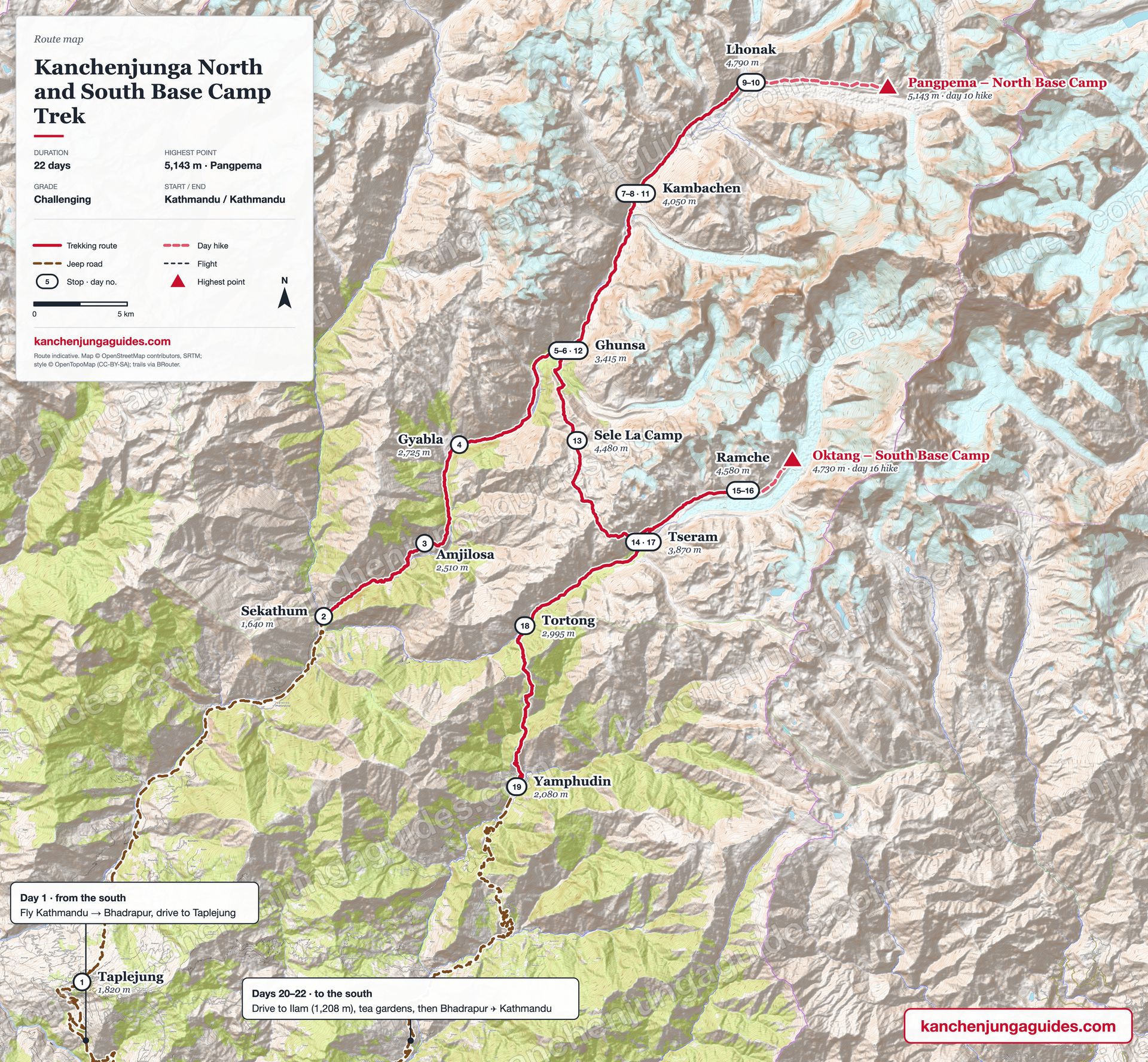
Kanchenjunga Trek Map: Route Maps for Every Itinerary
Madan NeupaneNovember 26, 20263 min read
Kanchenjunga trek maps for the North Base Camp, South Base Camp, full circuit and express routes, with an altitude profile, the trail signs you will meet and tips for navigating offline.
Kanchenjunga Trek Route: Village-by-Village Trail Guide
Madan NeupaneNovember 26, 20265 min read
The Kanchenjunga trek route explained: the northern trail to Pangpema, the southern trail to Oktang, the Sele La crossing that links them, and the altitude and distance of every stop.