Gear & Packing
Trekking Boots, Socks, Gaiters and Poles for Kanchenjunga
Choosing boots for the Kanchenjunga trek: mid vs high cut, waterproofing, soles, fit, how to break them in, socks and gaiters, and caring for boots on the trail.

On this page
Your boots are the single most important piece of gear on the Kanchenjunga trek. Over two to three weeks you will walk stone staircases, muddy forest trails, rocky moraine and possibly snow on the passes, often for 6–8 hours a day. The right boots, properly broken in, make the difference between enjoying the trek and limping through it.
This guide covers the four things that look after your feet and knees on the trail: boots first, then socks, gaiters and trekking poles.
Footwear and poles at a glance
- Boot type
- High-cut
- Break-in walking
- 50 km+
- Trekking socks
- 4–5 pairs
- Cotton socks
- Never
- Gaiters
- Optional
- Trekking poles
- Two
Quick Answer
- Type: high-cut (mid-to-high ankle) waterproof hiking boots
- Sole: stiff enough for rocky moraine, with a deep, grippy tread (Vibram or similar)
- Fit: a thumb's width of space in front of your toes for long descents
- Weight: light to medium leather or synthetic, not heavy mountaineering boots
- Break-in: at least 50 km of walking before the trek
What the Kanchenjunga Trail Demands
- Stone steps and steep climbs on the lower trail, like the climb from Sekathum to Amjilosa
- Wet, muddy and leech-prone forest in spring and after the monsoon
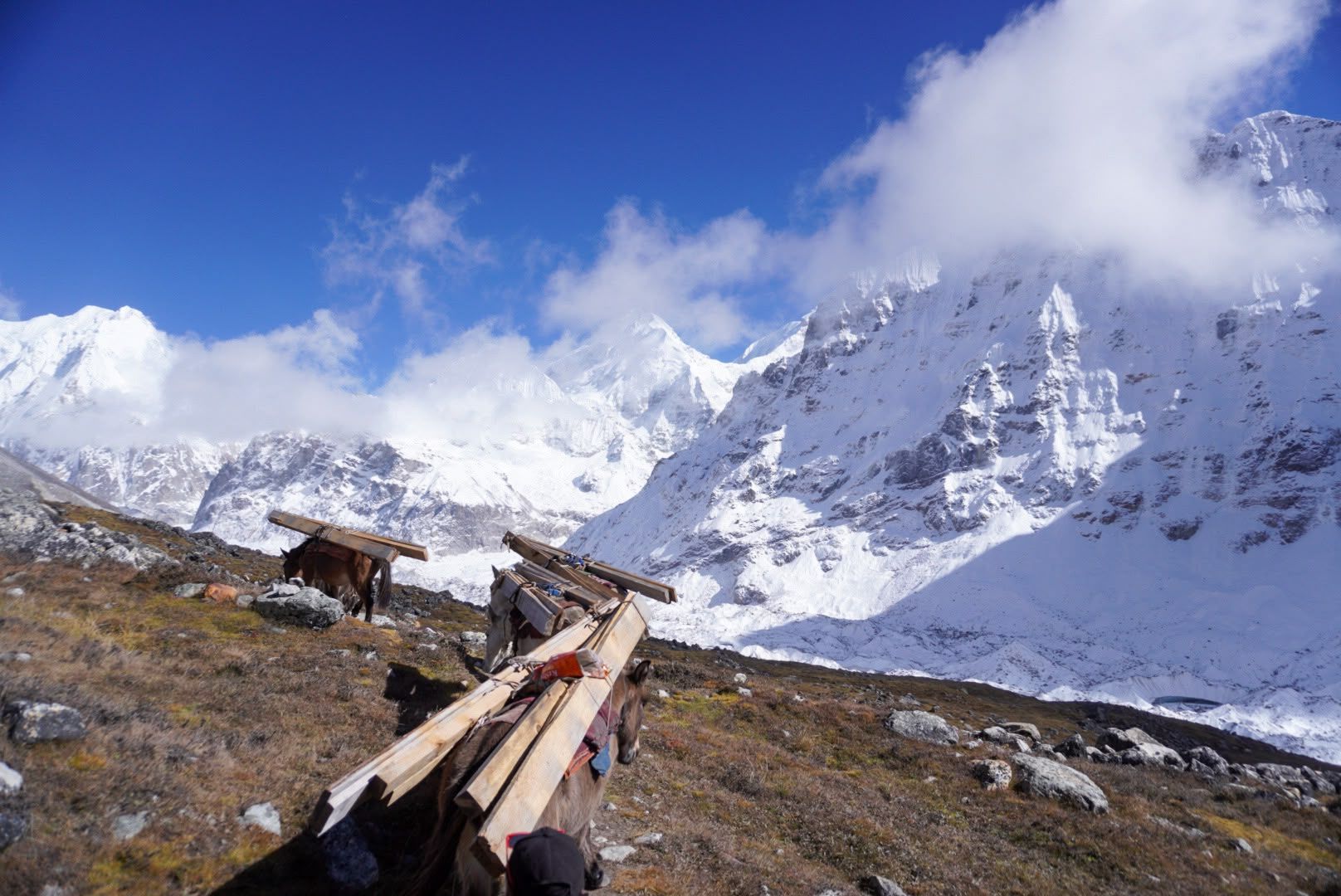
- Rocky moraine and boulder fields between Kambachen, Lhonak and Pangpema
- Snow and ice on the Sele La passes and at high camps in shoulder seasons
- Long descents that punish your toes and knees
Mid-Cut vs High-Cut Boots
- Mid-cut: lighter and more flexible, good for fit trekkers with strong ankles on the lower trail
- High-cut: more ankle support and protection on moraine, scree and snow
For Kanchenjunga we recommend high-cut boots, or at least sturdy mid-cuts with good support. The rocky upper trail is hard on ankles.
Trail runners and light shoes are not suitable for the full trek, especially above Ghunsa and on the passes.
Key Features to Look For
- Waterproof membrane (Gore-Tex or similar) for wet trails and snow
- A grippy sole with deep lugs for mud, wet rock and scree
- A medium-stiff midsole, so rocks do not bruise your feet
- A protective toe cap against stubbed rocks
- Good lacing that locks your heel on descents
- Comfortable padding at the ankle and tongue
Getting the Right Fit
- Try boots on in the afternoon, when your feet are slightly swollen.
- Wear your trekking socks when fitting.
- You should be able to slide one finger behind your heel when your toes touch the front of the unlaced boot.
- Walk downhill on a ramp in the shop. Your toes should not hit the front.
- Choose comfort over brand or looks.
How to Break In New Boots
Never start the Kanchenjunga trek in brand-new boots.
- Week 1: wear them around the house and on short walks.
- Weeks 2–4: go on longer walks of 5–10 km, including hills.
- Weeks 4–8: do full-day hikes with a loaded daypack, ideally on back-to-back days.
- Note any hot spots and adjust the lacing or socks, or try different insoles.
Caring for Boots on the Trek
- Dry them near (not on) the stove in the evening
- Take out the insoles to air
- Re-tighten your laces before long descents
- Treat hot spots immediately with blister plasters
Can You Buy Boots in Kathmandu?
Yes, Thamel has many gear shops, but there is no time to break in new boots there. Buy and break in your boots at home, then rent other gear, such as down jackets and sleeping bags, in Kathmandu.
Trekking Socks
Most trekkers spend weeks choosing boots and five minutes choosing socks. On a two-to-three-week trek like Kanchenjunga, the right socks prevent blisters, keep your feet warm above 4,000 m and dry in the wet lower forests. Here is what to bring and how many pairs you need.
- Material: merino wool or a merino-synthetic blend, never cotton
- Weight: midweight trekking socks for daytime, and a thick warm pair for nights at altitude
- How many: 4–5 pairs of trekking socks, 1–2 pairs of liners and 1 thick sleeping pair
- Fit: snug with no wrinkles, and tall enough to sit above your boot collar
Best Sock Materials
- Merino wool: warm even when damp, naturally resists odour so you can wear it for several days, soft and comfortable. Our top choice for Kanchenjunga.
- Merino-synthetic blend: more durable and quicker drying, a great all-round option
- Synthetic (nylon, polyester): dries fast and lasts long, but can smell after a day or two
- Cotton: avoid it. It holds sweat, causes blisters and gets cold.
Sock Types to Pack
- Midweight trekking socks (4–5 pairs): cushioned at the heel and toe, for daily walking
- Liner socks (1–2 pairs): thin synthetic or silk socks worn under trekking socks to reduce friction, useful if you blister easily
- Thick warm socks (1 pair): heavy wool socks kept dry only for sleeping and evenings at altitude
- Optional waterproof socks: handy in monsoon or very wet conditions
How Many Pairs You Need
For a typical 14–22 day trek:
- 4–5 pairs of trekking socks, rotated and washed when possible
- 1–2 pairs of liners
- 1 pair of dedicated sleeping socks
Tip: wear one pair while drying another pair hanging on the outside of your pack on sunny days.
Getting the Fit Right
- Socks should be snug with no wrinkles, since wrinkles cause blisters
- The heel cup should sit exactly on your heel
- The cuff should be higher than your boot collar to prevent rubbing
- Test socks with your boots on training hikes before the trek
Preventing Blisters
- Treat hot spots immediately with blister plasters or tape
- Keep toenails short before the trek
- Re-tighten your laces before long descents
- Use liner socks if you are prone to blisters
Gaiters: Useful but Optional
Short answer: gaiters are useful on the Kanchenjunga trek, but they're not essential for most people. Whether you should pack them depends on when you trek and how much you mind gravel in your boots.
Gaiters are fabric covers that wrap around your lower leg and the top of your boot. They keep out three things: stones and grit, snow, and mud. On Kanchenjunga, you'll meet all three, just not every day.
Where Gaiters Help
The biggest reason to bring gaiters is the moraine. Above Lhonak, and on the way to Oktang and Ramche, the trail crosses loose glacial rubble, sand and scree. Small stones and grit find their way into your boots, and a single sharp pebble can start a blister. Low "scree gaiters", the short ones that only cover the ankle, solve this nicely and weigh almost nothing.
The second reason is snow. In a normal autumn the trail is mostly dry, but early-season storms, late spring snow and winter trips can leave snow on the higher sections and the passes. Walking through calf-deep snow without gaiters means wet socks and cold feet within minutes. If you're trekking in winter or early spring, knee-high waterproof gaiters are worth packing.
Gaiters also help in the lower valleys in the wet months, keeping mud off your trousers and slowing down leeches, though they don't stop them completely.
When You Can Skip Them
If you're trekking in October or November, with good boots and trousers whose cuffs fit snugly over them, you can manage fine without. Many of our guides don't wear them in autumn. Shake your boots out at lunch, and that's that.
Which Kind to Choose
For autumn and spring, choose light, low scree gaiters. For winter or snow, choose knee-high gaiters in a waterproof, breathable fabric, with a strong strap or cable under the boot and a front zip or Velcro so you can put them on without taking your boots off. Make sure they fit your particular boots before you leave home.
Light scree gaiters weigh a few hundred grams and cost little, so if you hate stones in your shoes, bring them. Bring proper snow gaiters if you're trekking from December to April. Otherwise, put the money towards better boots and socks. They matter more.
Trekking Poles
The Kanchenjunga trail is full of long, steep descents: down stone staircases into the gorge, off the Sele La passes and back down from Lhonak to Ghunsa. Trekking poles take a big share of the load off your knees on these descents, and give you extra balance on rocky moraine and river crossings.
- Do you need them? Strongly recommended, especially for knees and descents
- One or two? Two poles for most trekkers, for balance and to spread the load evenly
- Type: adjustable, collapsible aluminium or carbon poles with lever locks
- Grips: cork or foam, with an extended grip below the handle
- Tips: carbide tips for rock and ice, plus rubber caps for stone steps and villages
One Pole or Two
- Two poles: better balance, even support for both knees, and the best choice for the steep and rocky Kanchenjunga trail
- One pole: lighter, and leaves a hand free for photos, but gives uneven support
Most trekkers on Kanchenjunga use two. Carry them strapped to your pack on flat or easy sections if you prefer.
Choosing Poles
- Adjustable length: shorten for climbs and lengthen for descents
- Lever locks are easier to use with cold hands than twist locks
- Aluminium: strong, cheaper and bends rather than snapping
- Carbon: lighter, but can snap under a sudden heavy load
- Folding vs telescopic: folding poles pack smaller, while telescopic poles are more adjustable
- Baskets: small trekking baskets for normal trails, larger snow baskets if there is snow on the passes
Using Poles on Descents
- Lengthen the poles
- Plant both poles slightly ahead and below you
- Step down, letting your arms take some of the load
- Keep your knees soft and take small steps
On stone staircases, shorten your grip by holding the extended foam section below the handle.
Rent or Buy
Poles are easy to buy or rent in Kathmandu. Some of our packages provide trekking poles on request, so check your inclusions.
Put your boots to work: Kanchenjunga North & South Base Camp
Learn More
See the complete Kanchenjunga packing list and read how difficult the trek is.
Boots, socks, gaiters and poles: FAQs
What boots do I need?
Sturdy, waterproof boots with ankle support and a stiff sole. Break them in well before the trek.
Can I trek in trail runners?
They suit some warm lower sections but are not enough for snow and the high passes.
How many pairs of socks should I bring?
4–5 pairs of merino or synthetic trekking socks, 1–2 pairs of liners, and a warm pair kept only for sleeping.
Do I need gaiters for Kanchenjunga?
Not every day. Light scree gaiters help on the moraine and on snow in colder months, but many October–November trekkers skip them.
Do I need trekking poles?
They are strongly recommended. Two poles reduce strain on your knees on long descents and help on moraine and snow.
Ask our guides about your gear
Plan with local guides
Ready to walk the Kanchenjunga trail?
Tell us your dates and pace. We’ll sort permits, guides and a route that fits — straight from the people who live here.
Keep reading
Other Blogs
Kanchenjunga Trek Packing List - What to Pack for the Himalayas
Pasang SherpaSeptember 29, 20268 min read
The complete Kanchenjunga Trek packing list: a layering system, footwear, bags, sleeping gear, first aid, documents, seasonal extras, what we provide and what to leave at home.
How to Layer Clothing for Changing Mountain Temperatures
Pasang SherpaNovember 21, 202610 min read
How to layer clothing for the Kanchenjunga trek: base, mid, insulation and shell layers, merino vs synthetic base layers, and how to adjust your layers through a cold, sunny, windy day.
Sleeping Bag and Down Jacket for the Kanchenjunga Trek
Pasang SherpaNovember 21, 20269 min read
Which sleeping bag do you need for the Kanchenjunga trek? Recommended ratings, comfort vs limit, how cold nights get at each village, down vs synthetic and tips for warm nights.