Stories from the Trail
Blood Pheasant in the Kanchenjunga Highlands
A guide's field note on the blood pheasant: the grey-and-red bird of the high fir forests around Ghunsa, where to find it, how to watch without disturbing it, and why you should stop when you hear it.

On this page
You usually hear them before you see them. A soft, squeaky call in the fir forest above Ghunsa, a rustle in the dry leaves, and then a small grey bird steps out onto the trail as if it owns it. When it turns, you see the red: a splash across the throat and chest, a red ring around the eye, and bright red legs. That is the blood pheasant.
I have walked this trail more times than I can count, and I still stop for them. Most trekkers walk straight past a flock without noticing. So here is what to look for.
A Bird Made for the Cold
The blood pheasant (Ithaginis cruentus) lives high, in the forests of fir, birch, rhododendron and bamboo between about 3,000 and 4,500 metres. It doesn't fly south for the winter. When the snow comes it simply moves a little lower down the slope and keeps feeding on moss, ferns, shoots and seeds.
The males are the colourful ones: grey and green, streaked with white, with that blood-red wash on the chest and tail. The females are a warm brown, made to disappear into dead leaves while they sit on their nests. Across the border in Sikkim it is the state bird, and on our side of Kanchenjunga it is one of the birds you are most likely to meet in the high forest.
How to Find Them
Walk quietly in the early morning, in the forest sections between Ghunsa and the treeline. Blood pheasants move in small groups, often eight to fifteen birds, scratching at the ground like village chickens. They are surprisingly calm. If you stand still, a flock will often keep feeding just a few metres away.
In autumn I look for them on mossy ground under the firs. In spring, when the males call more, listen for their thin, repeated squeak. Your guide will usually hear them first, so don't be shy to ask us to stop.
Watching Without Disturbing
Don't chase them for a closer photo. They will run uphill and disappear, and in winter every bit of energy matters to them. Crouch down, keep your voice low and let them come to you. A phone zoom is usually enough, because they come so close.
The Kanchenjunga Conservation Area protects them, and in the villages people don't hunt them. Like the red panda and the musk deer, they depend on the high forest staying healthy.
Other Birds on the Same Trail
The same forests are home to the Himalayan monal, Nepal's shining national bird, along with partridges, rosefinches and laughingthrushes. If birds interest you, read our birdwatching guide to the Kanchenjunga trek before you come.
Next time you hear that quiet squeak in the trees, stop. Give it a minute. The red will show.
Related reading: How to identify Himalayan birds
Frequently Asked Questions
Where can I see the blood pheasant?
It lives in high forest and rhododendron scrub, often on the ground in small groups. Early morning is the best time.
Is it rare?
It is secretive but not hard to find for patient watchers with a local guide.
Ready to see it yourself? Explore our Kanchenjunga Base Camp Trek with local guides.
Plan with local guides
Ready to walk the Kanchenjunga trail?
Tell us your dates and pace. We’ll sort permits, guides and a route that fits — straight from the people who live here.
Keep reading
Other Blogs
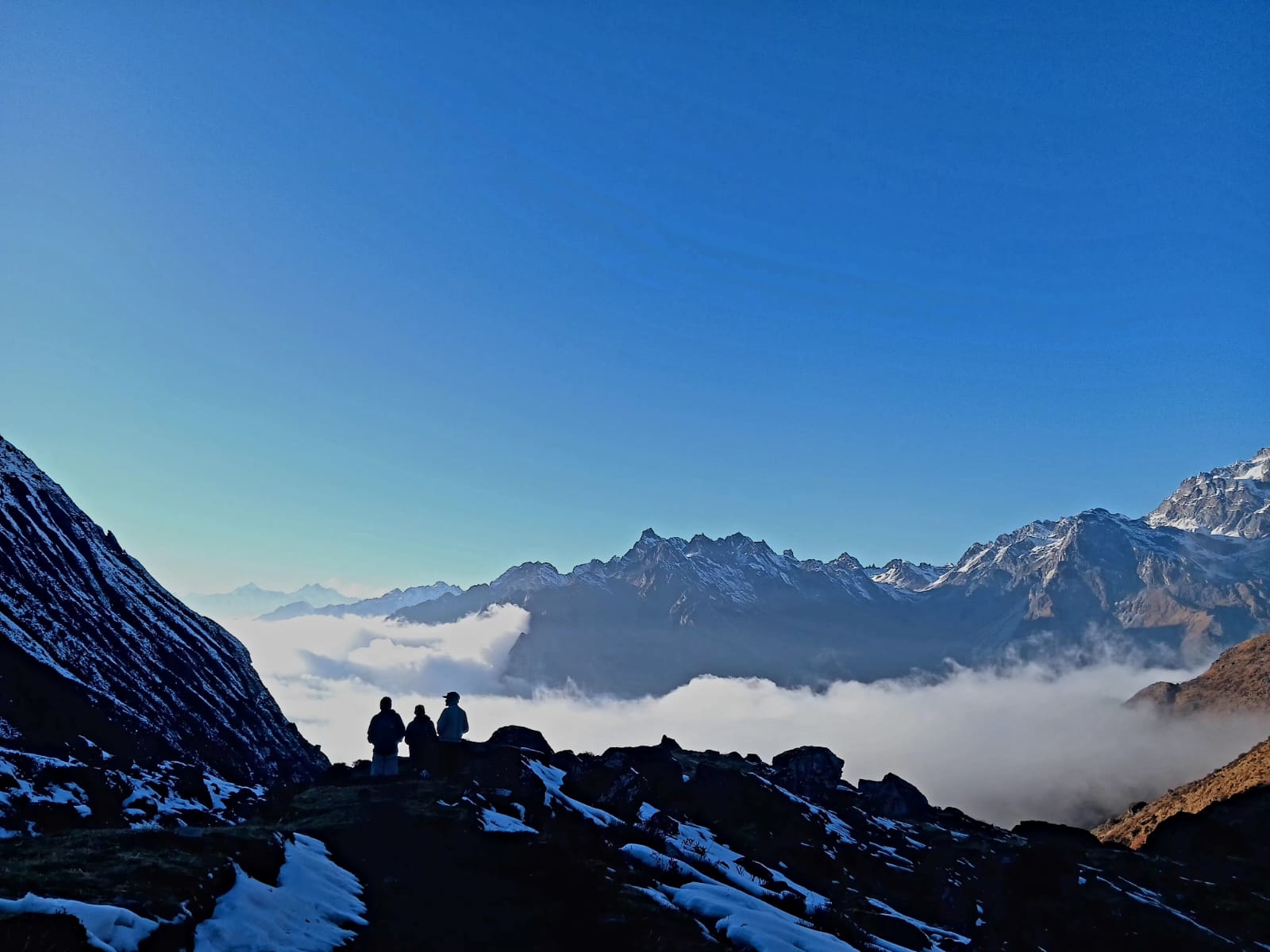
Remote Trekking in Nepal: The Best Off-the-Beaten-Path Treks
Madan NeupaneNovember 26, 20264 min read
Remote trekking in Nepal beyond Everest and Annapurna: why Kanchenjunga leads the list, the other remote treks of eastern Nepal compared, and how to prepare for permits, seasons and days offline.
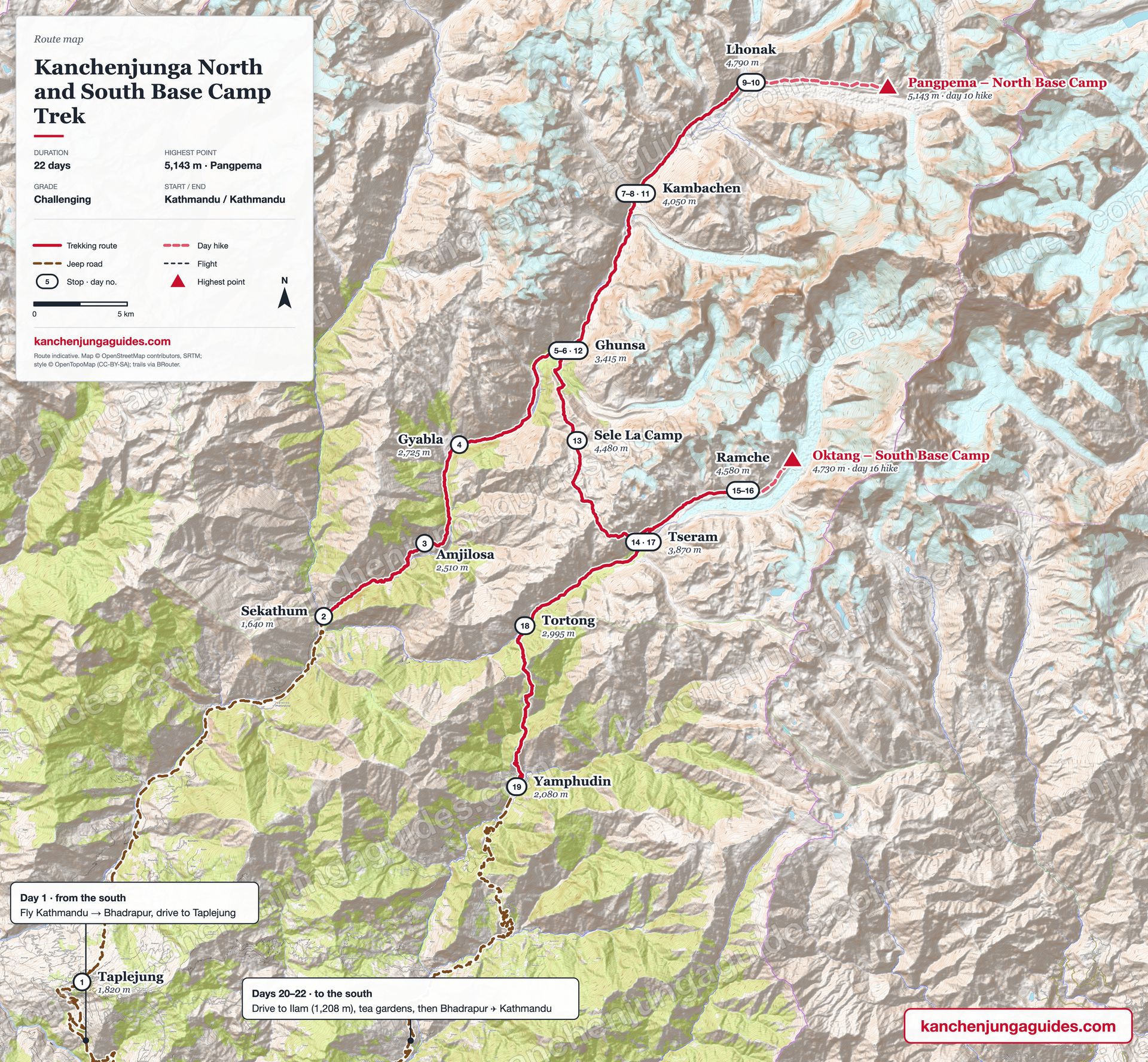
Kanchenjunga Trek Map: Route Maps for Every Itinerary
Madan NeupaneNovember 26, 20263 min read
Kanchenjunga trek maps for the North Base Camp, South Base Camp, full circuit and express routes, with an altitude profile, the trail signs you will meet and tips for navigating offline.
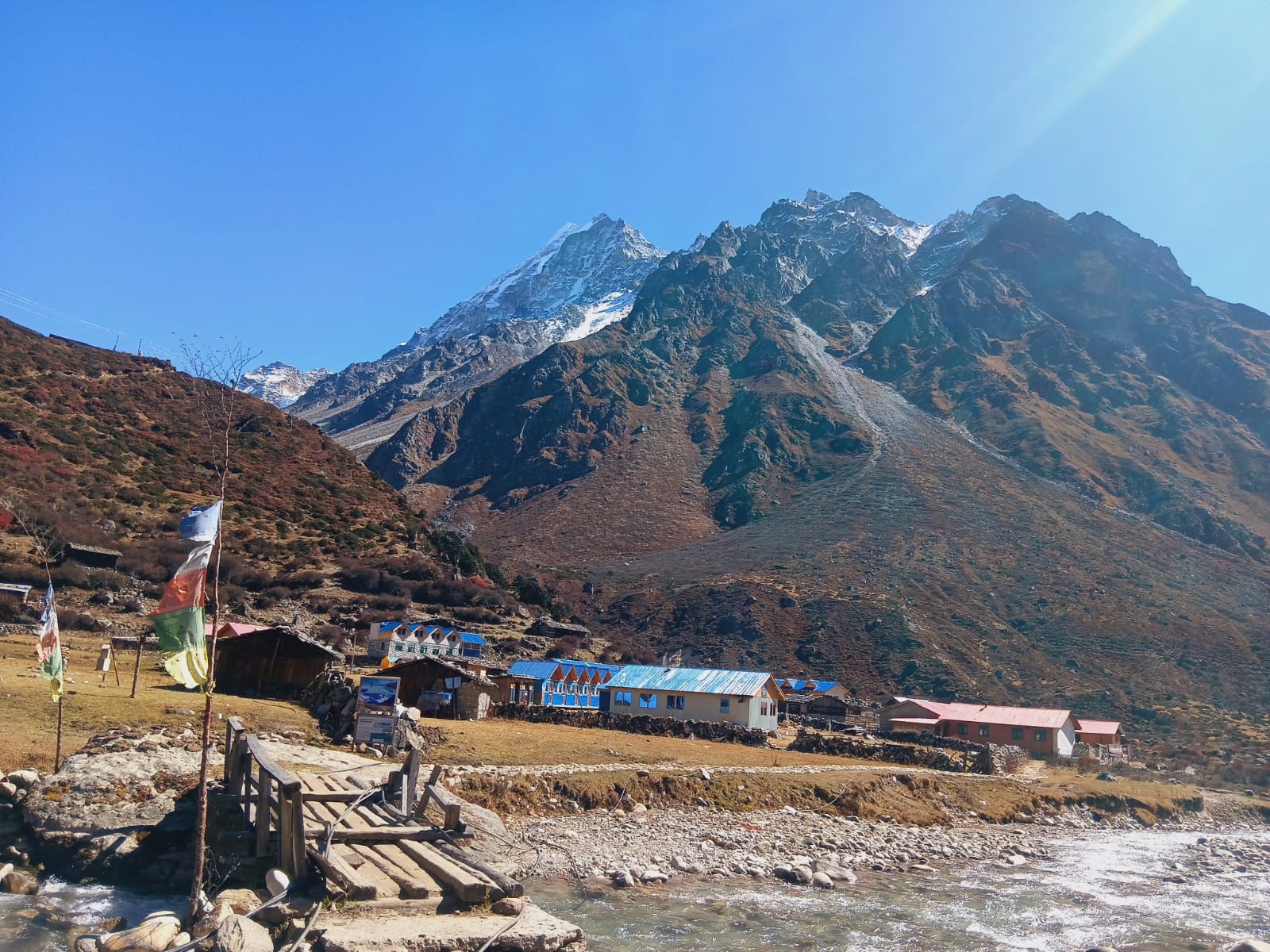
Kanchenjunga Trek Route: Village-by-Village Trail Guide
Madan NeupaneNovember 26, 20265 min read
The Kanchenjunga trek route explained: the northern trail to Pangpema, the southern trail to Oktang, the Sele La crossing that links them, and the altitude and distance of every stop.