Trek Guide
Kanchenjunga Peak Names: The Five Main Summits Explained
Kanchenjunga means "Five Treasures of the Great Snow". Meet its five great summits, from the 8,586 m main peak to Yalung Kang and Kangbachen, and where to see them on the trek.

On this page
- 1.The Five Main Peaks at a Glance
- 2.1. Kanchenjunga Main (8,586 m)
- 3.2. Yalung Kang / Kanchenjunga West (About 8,505 m)
- 4.3. Kanchenjunga South (About 8,476–8,494 m)
- 5.4. Kanchenjunga Central (About 8,473–8,482 m)
- 6.5. Kangbachen (About 7,903 m)
- 7.Which Peaks Can You See on the Trek?
- 8.Kanchenjunga in Local Culture
- 9.Other Peaks of the Kanchenjunga Range
- 10.See the Five Treasures for Yourself
- 11.Frequently Asked Questions
The name Kanchenjunga comes from the Tibetan Kang-chen-dzö-nga, usually translated as the "Five Treasures of the Great Snow". The five treasures are said to be gold, silver, gems, grain and holy scriptures, and they are linked to the mountain's five great summits. Here is what those peaks are, how high they are, and which ones you can see on the trek.
The Five Main Peaks at a Glance
- Kanchenjunga Main: 8,586 m, the third-highest point on Earth
- Kanchenjunga West (Yalung Kang): about 8,505 m
- Kanchenjunga South: about 8,476–8,494 m
- Kanchenjunga Central: about 8,473–8,482 m
- Kangbachen: about 7,903 m, often counted as the fifth summit
Heights for the subsidiary summits vary slightly between surveys and sources.
1. Kanchenjunga Main (8,586 m)
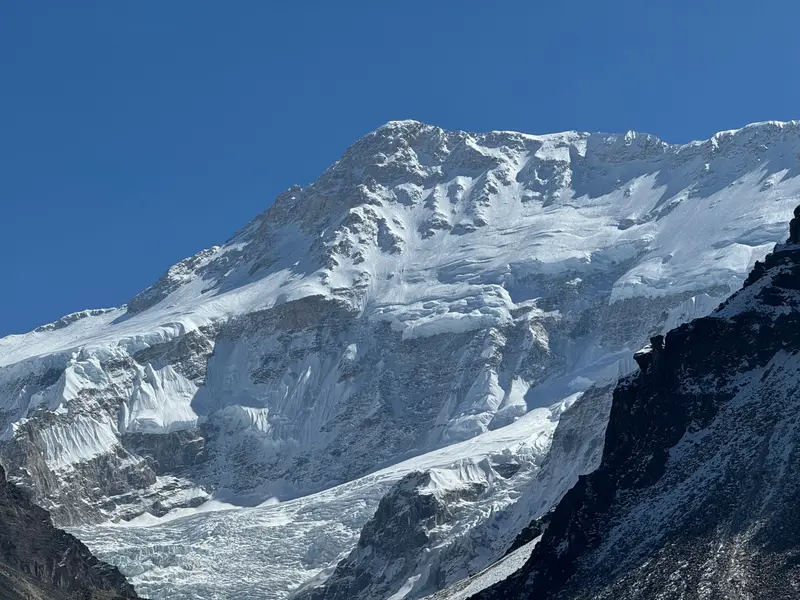
The highest summit of the massif and the third-highest mountain in the world, after Everest and K2. It sits on the border between Nepal and Sikkim (India). The summit was first reached in 1955, when the climbers deliberately stopped just below the very top out of respect for local beliefs. See the story of the first ascent.
2. Yalung Kang / Kanchenjunga West (About 8,505 m)
The western summit rises above the Yalung Glacier, which you see from the Oktang viewpoint on the south route. In 2026, Nepal asked the international climbing community to recognise Yalung Kang as a separate 8,000 m peak. Read more in our post on Nepal's six proposed 8,000 m peaks.
3. Kanchenjunga South (About 8,476–8,494 m)
On the main ridge south of the main summit. It is part of the huge south face seen from Oktang and Ramche.
4. Kanchenjunga Central (About 8,473–8,482 m)
Between the main and south summits, so close in height that from the trail it is hard to tell them apart. Like the south summit, it is now proposed for separate recognition.
5. Kangbachen (About 7,903 m)
A massive western outlier above the Kambachen valley on the north route, and the fifth of the "five treasures" in many lists. It was first climbed in 1974 by a Polish expedition.
The four highest summits all stand above 8,400 m. No other mountain has so many summits this high.
Which Peaks Can You See on the Trek?
- From Pangpema (North Base Camp): the main summit, the huge north face and the north ridges, with Kangbachen rising to the west
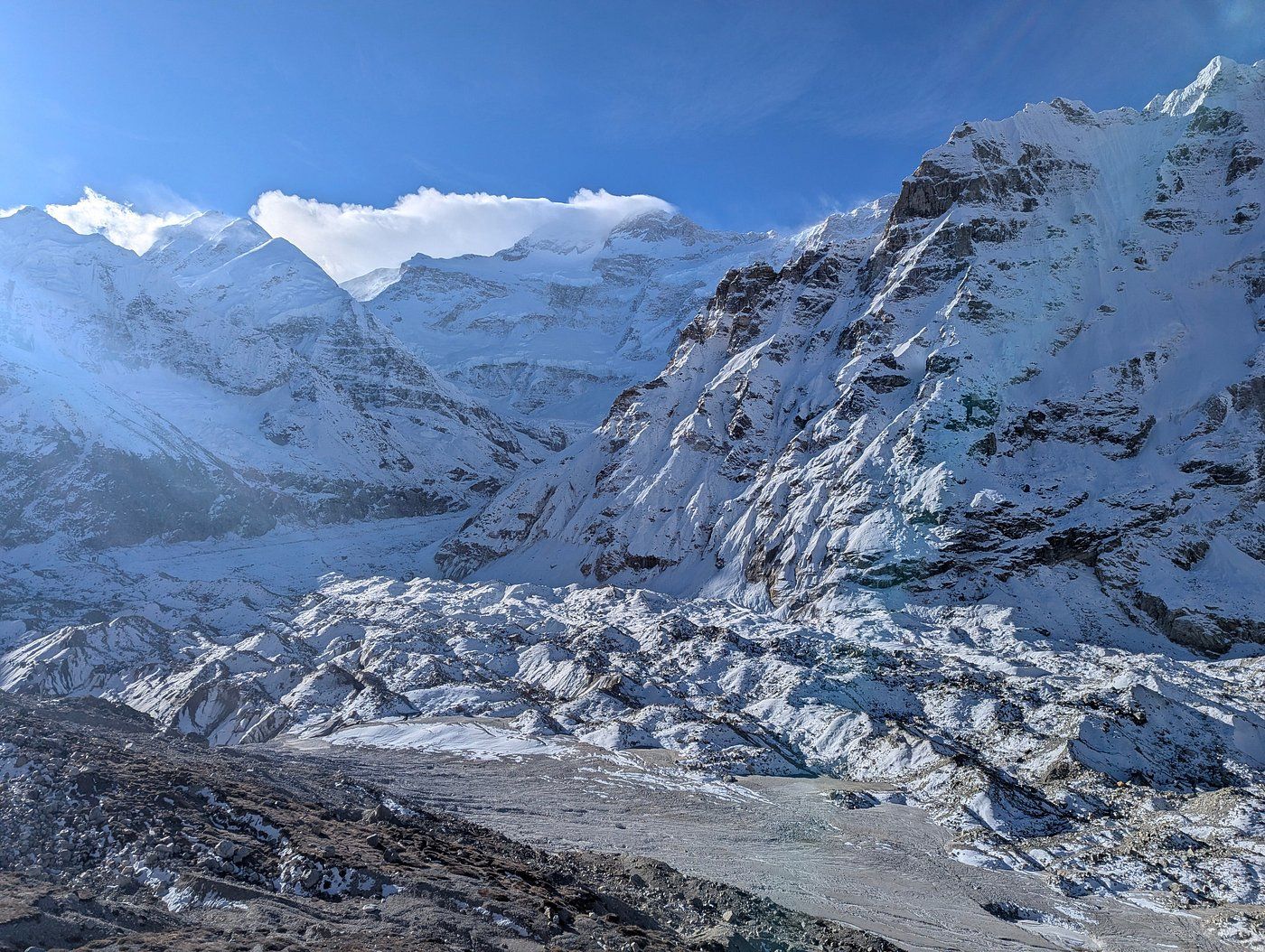
- From Oktang (South Base Camp): the broad south face, with the main, central and south summits, and Yalung Kang above the Yalung Glacier
- From the Sele La passes: wide panoramas of the massif, and on clear days Makalu and Everest far to the west
Kanchenjunga in Local Culture
For the Limbu people of Taplejung, the mountain is sacred and known as Sewalungma. For Sikkim, Kanchenjunga is a guardian deity. That is why the first climbers stopped short of the summit, and why mountaineers today still traditionally do not stand on the very top.
Other Peaks of the Kanchenjunga Range
Searches for Kanchenjunga peak names often mean the whole range, not just the five summits of the massif. These are the main neighbouring peaks you can see and name from the trek:
- Kumbhakarna (Jannu): the 7,710 m giant west of the massif, best seen from the northern trail.
- Kabru: a long ridge of summits, including Kabru North, Kabru Central, Kabru South and Kabru Dome, seen on the southern side.
- Rathong: the peak at the southern end of the Kabru ridge.
- Talung: the steep summit between Kanchenjunga and the Kabru peaks.
- Forked Peak and Koktang: smaller summits further south along the border ridge.
See the Five Treasures for Yourself
The best way to see all sides of the massif is the North and South Base Camp Trek, which visits both Pangpema and Oktang. Not sure which side to choose? Read North vs South Base Camp.
Related reading: Why Kanchenjunga's location is unique · Reading the moraine and glaciers
Frequently Asked Questions
What are the five peaks?
The Kanchenjunga massif has five main summits, often called the five treasures of the snows.
Which is highest?
Kanchenjunga Main is the highest, at 8,586 m.
Ready to see it yourself? Explore our Kanchenjunga Base Camp Trek with local guides.
Plan with local guides
Ready to walk the Kanchenjunga trail?
Tell us your dates and pace. We’ll sort permits, guides and a route that fits — straight from the people who live here.
Keep reading
Other Blogs
Remote Trekking in Nepal: The Best Off-the-Beaten-Path Treks
Madan NeupaneNovember 26, 20264 min read
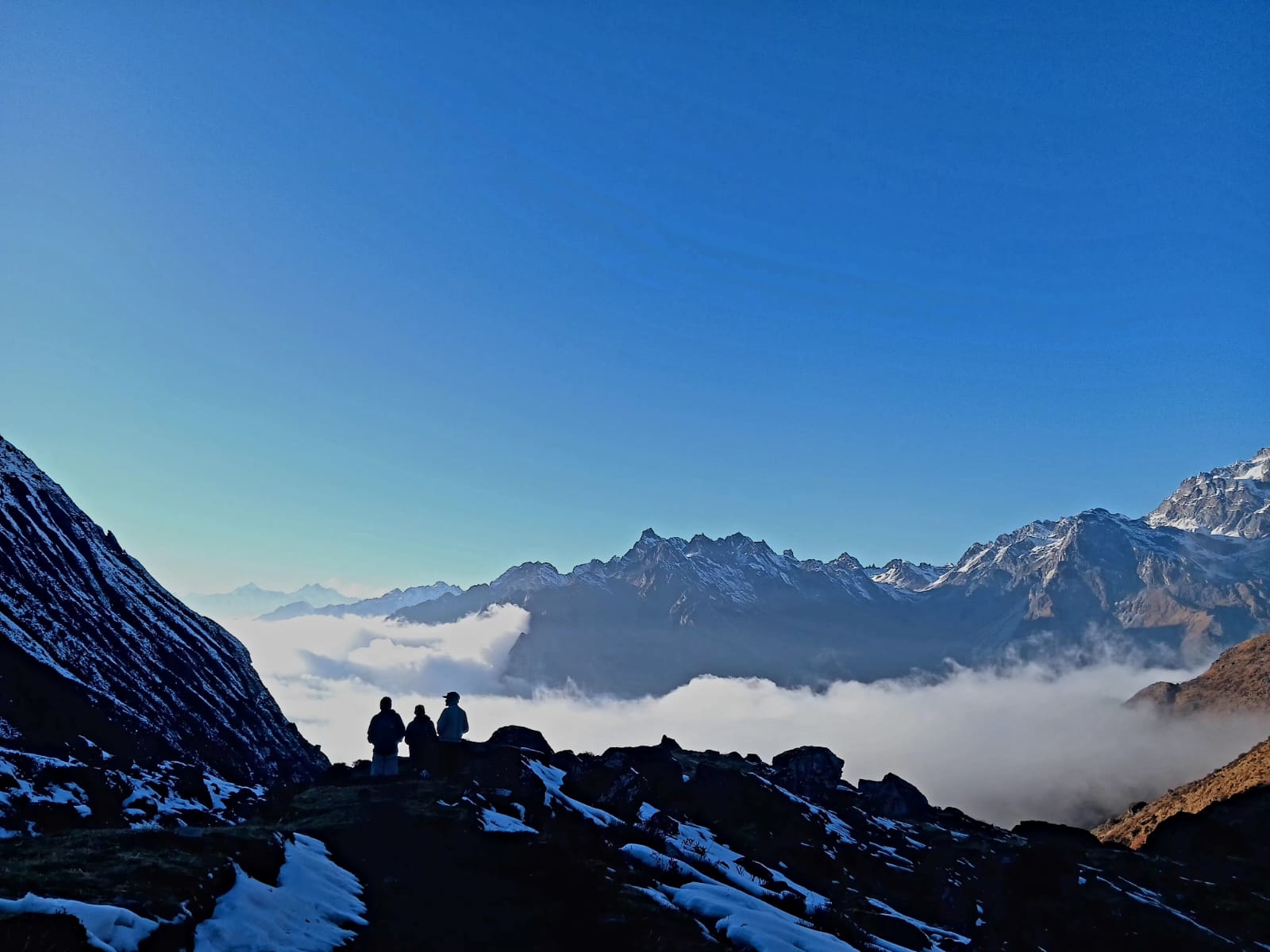
Remote trekking in Nepal beyond Everest and Annapurna: why Kanchenjunga leads the list, the other remote treks of eastern Nepal compared, and how to prepare for permits, seasons and days offline.
Kanchenjunga Trek Map: Route Maps for Every Itinerary
Madan NeupaneNovember 26, 20263 min read
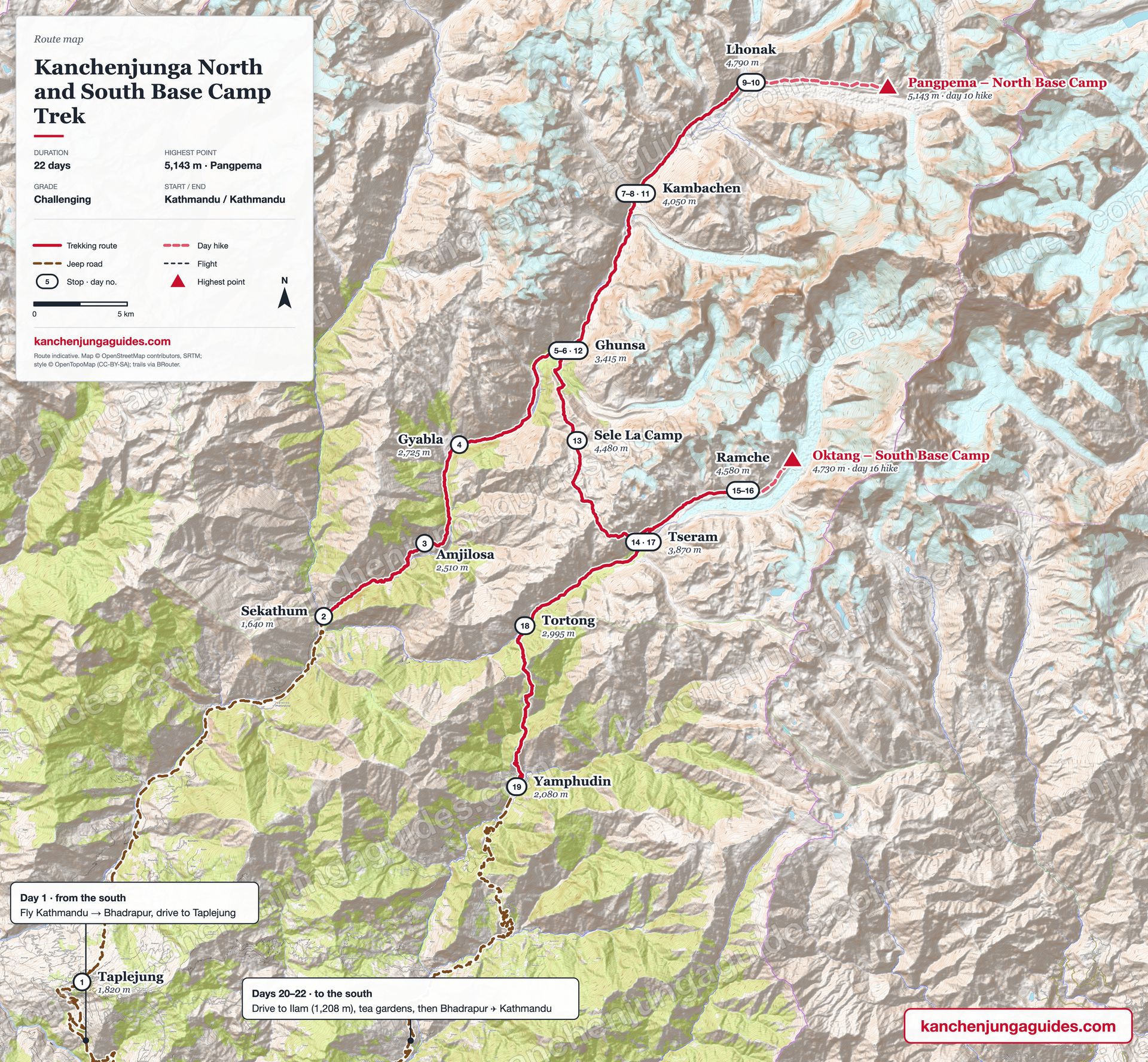
Kanchenjunga trek maps for the North Base Camp, South Base Camp, full circuit and express routes, with an altitude profile, the trail signs you will meet and tips for navigating offline.
Kanchenjunga Trek Route: Village-by-Village Trail Guide
Madan NeupaneNovember 26, 20265 min read
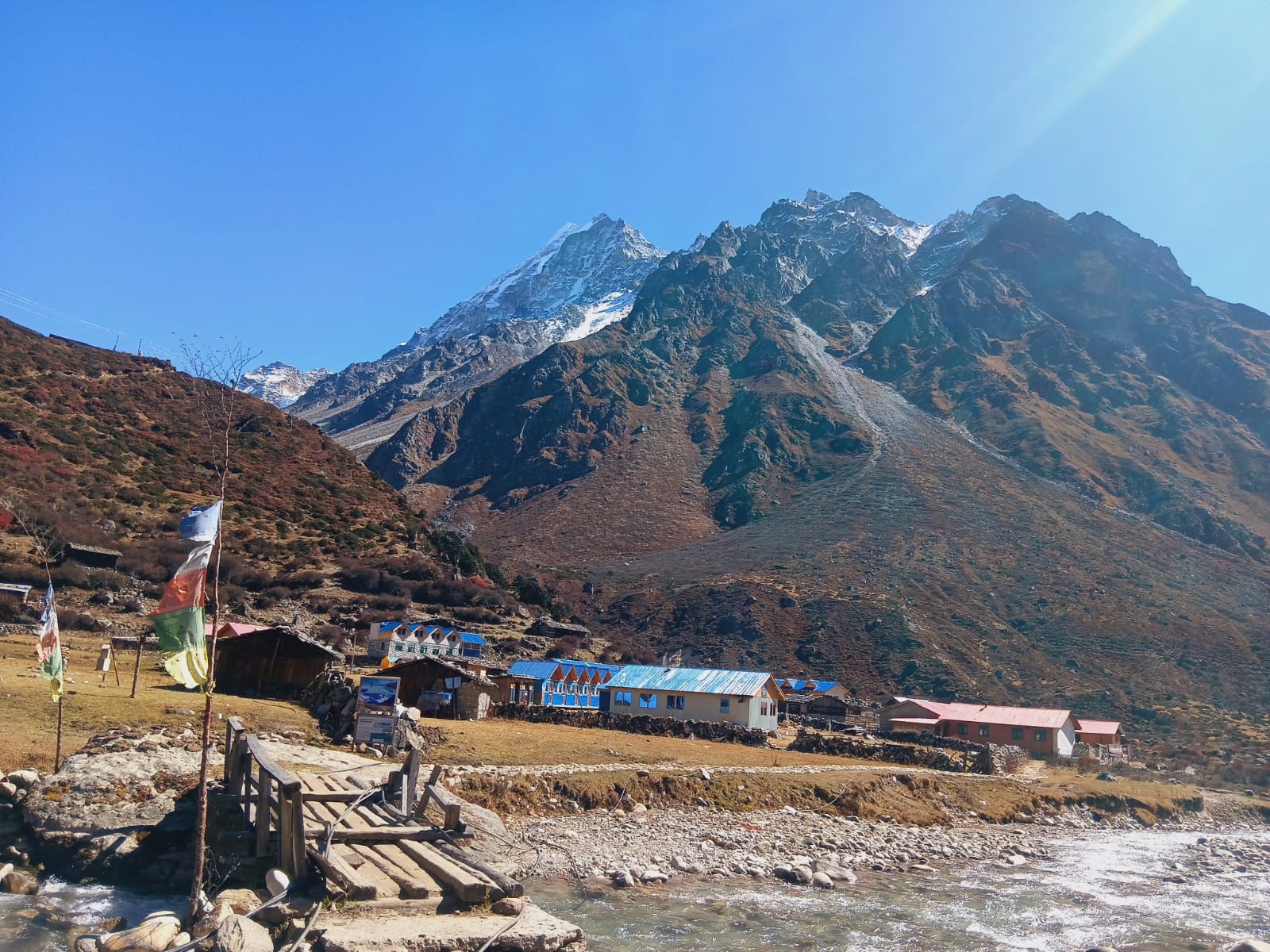
The Kanchenjunga trek route explained: the northern trail to Pangpema, the southern trail to Oktang, the Sele La crossing that links them, and the altitude and distance of every stop.