

Kanchenjunga Trek 2027: Cost, Permits, Route & Best Time to Visit Both Base Camps
Kanchenjunga Trek 2027: Route, Permits, Cost and Best Season for Both Base Camps
You can hover over the link to preview the page.
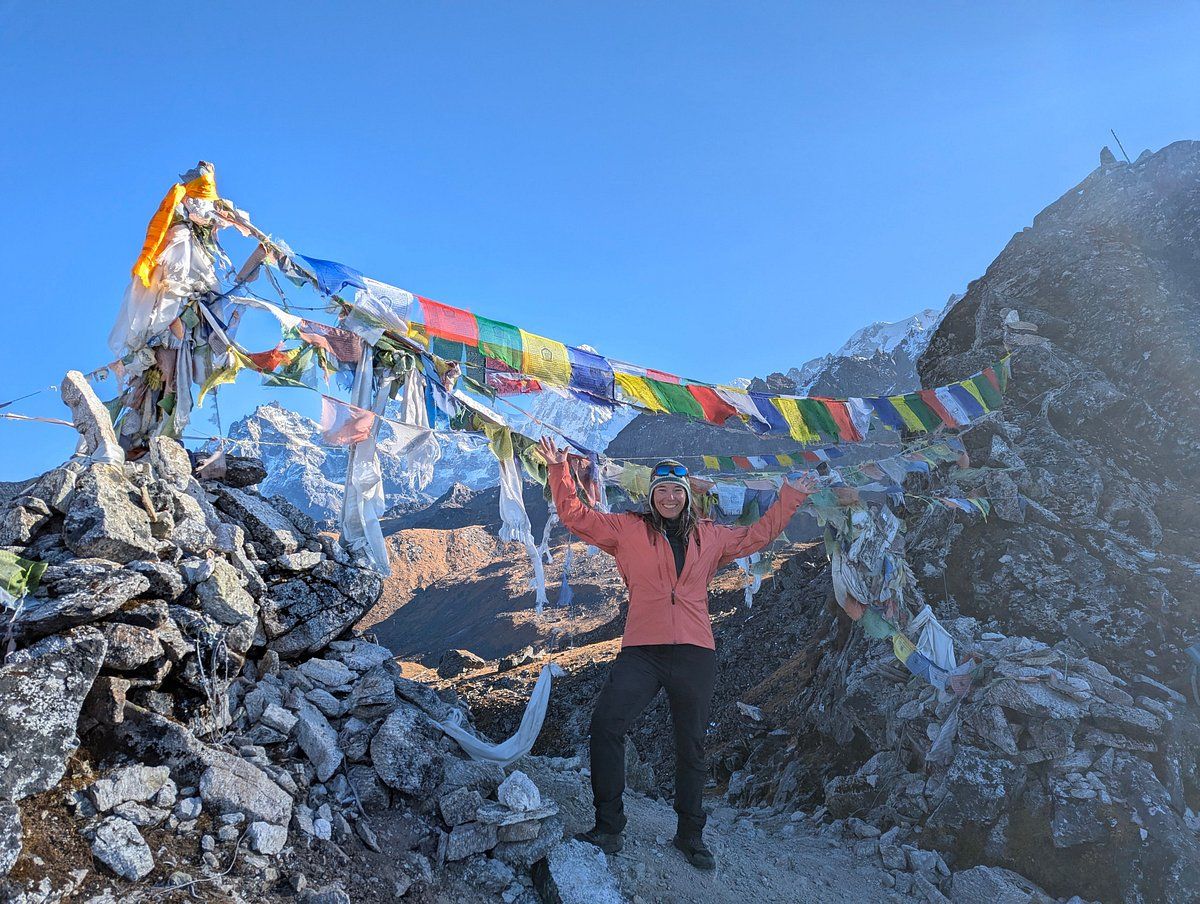
The Kanchenjunga Trek in 2027 is an unforgettable journey into one of Nepal’s most remote Himalayan regions. Home to Mount Kanchenjunga, the world’s third-highest mountain at 8,586 metres, this spectacular trekking destination offers dramatic mountain views, traditional Himalayan villages, ancient monasteries, forests, glaciers, and peaceful trails far from Nepal’s busiest trekking routes.
For trekkers looking for a more remote Himalayan adventure, the Kanchenjunga Base Camp Trek offers the opportunity to explore both the northern and southern sides of the mountain. With proper preparation, the right season, the required permits, and an experienced local guide, you can plan a rewarding journey through this extraordinary region.
At Kanchenjunga Guides Nepal, our connection to the region helps us understand the local trails, village communities, mountain conditions, and practical challenges of travelling in this remote area.
In this guide, we explain the Kanchenjunga Trek 2027 route, permits, estimated costs, best season, accommodation, difficulty, and important preparation tips.
Kanchenjunga Trek 2027 at a Glance
- Destination: Kanchenjunga region, Taplejung, eastern Nepal
- Highest mountain: Mount Kanchenjunga, 8,586 metres
- Main highlights: North Base Camp and South Base Camp viewpoint
- North Base Camp: Pangpema, approximately 5,140 metres
- South-side highlight: Oktang viewpoint, approximately 4,740 metres
- Typical duration: Around 18–25 days, depending on the route and itinerary
- Best seasons: Spring and autumn
- Trek difficulty: Challenging to strenuous
- Accommodation: Local teahouses and basic mountain lodges, with facilities becoming limited at higher elevations
- Permits: Kanchenjunga Restricted Area Permit and Kanchenjunga Conservation Area Permit
- Guide: A licensed guide and registered trekking agency are required for the restricted area
Actual trekking duration, elevations, permit fees, and package inclusions should be confirmed when arranging your trip.
Why Choose the Kanchenjunga Trek in 2027?
Kanchenjunga is ideal for travellers who want to experience a quieter side of the Himalayas. Compared with popular routes such as Everest Base Camp and the Annapurna Circuit, the Kanchenjunga region has fewer trekkers and more limited infrastructure.
The journey passes through diverse landscapes, from warm lower valleys and forested hills to alpine meadows, rocky mountain terrain, and glacial valleys.
Highlights include:
- Spectacular views of the Kanchenjunga massif and surrounding Himalayan peaks.
- Traditional villages and local cultures influenced by Limbu, Sherpa, and other Himalayan communities.
- The northern approach towards Pangpema and views of the mountain’s immense north face.
- The southern approach towards Ramche and the Oktang viewpoint.
- Remote trails with a strong sense of wilderness and adventure.
- Opportunities to learn about local traditions, mountain life, and conservation.
The region is especially rewarding for trekkers who appreciate natural scenery, cultural experiences, and journeys that require careful planning.
North Base Camp vs South Base Camp: Which Route Should You Choose?
The Kanchenjunga region offers different trekking options. Some itineraries focus on one side of the mountain, while longer routes connect the northern and southern approaches.
1. Kanchenjunga North Base Camp Trek
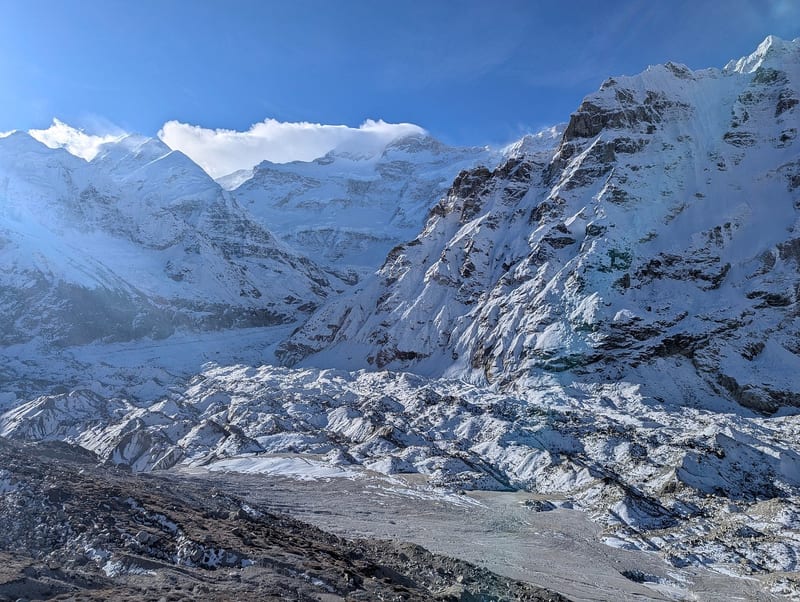
The northern route typically passes through villages and settlements such as Sekathum, Amjilosa, Gyabla, Ghunsa, Kambachen, and Lhonak before reaching Pangpema.
Pangpema, at approximately 5,140 metres, is the principal North Base Camp viewpoint and offers impressive views of Kanchenjunga and the surrounding glacier landscape.
This route is suitable for trekkers whose main goal is to experience the northern side of the mountain without completing the full circuit.
2. Kanchenjunga South Base Camp Route
The southern approach passes through settlements such as Yamphudin, Tortong, Tseram (Cheram), and Ramche, depending on the selected itinerary.
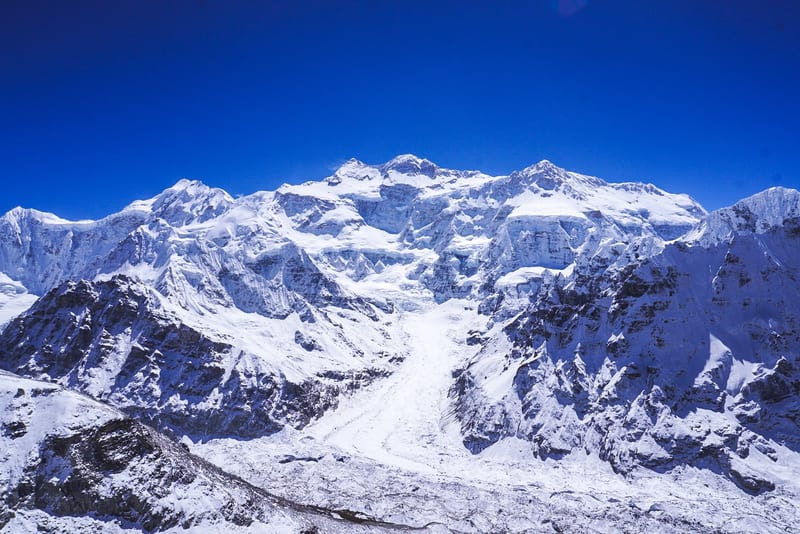
From Ramche, trekkers can continue towards Oktang viewpoint, which provides outstanding views of Kanchenjunga’s southern face and surrounding peaks.
Unlike the northern route, the main southern highlight is generally a viewpoint rather than a comparable walk-in base camp.
3. Kanchenjunga North and South Base Camp Circuit
For trekkers who have enough time and experience, a combined itinerary offers a more complete exploration of the region.
Depending on trail conditions and the itinerary, the route links the northern and southern approaches via the high passes around Sele La. This involves additional walking days, significant altitude changes, and potentially demanding mountain conditions.
The full circuit is a strong option for experienced trekkers who want to explore both sides of Kanchenjunga on one trip.
Which route is best? Choose the northern route for the North Base Camp experience, the southern route for the southern mountain views, or the combined circuit if you have more time and are prepared for a longer, more challenging journey.
Kanchenjunga Trek Route and Itinerary
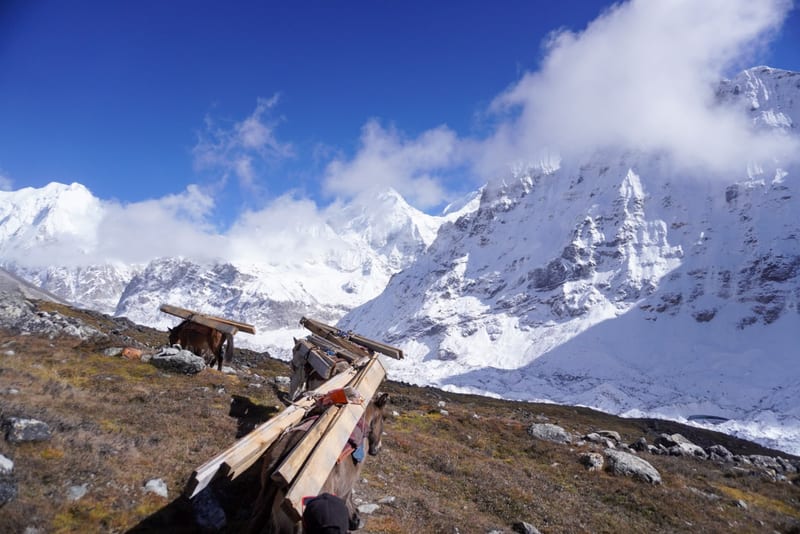
A typical itinerary begins in Kathmandu and travels to eastern Nepal before reaching the trailhead in Taplejung District. The precise transport arrangements and walking route depend on the package and current road conditions.
A combined North and South Base Camp itinerary may follow this general outline:
Days 1–3: Arrival and travel to eastern Nepal
Arrive in Kathmandu, prepare your trekking equipment, complete permit arrangements, and travel towards the Kanchenjunga region. Depending on the itinerary, this involves a domestic flight and a road journey.
Days 4–7: Trek through the lower valleys
Begin trekking through forested trails, river valleys, suspension bridges, and traditional settlements. Gradually gain altitude as you travel towards Ghunsa.
Days 8–11: Ghunsa, Kambachen, Lhonak and Pangpema
Continue into the high mountain landscape, allowing sufficient time for acclimatization. The walk towards Pangpema is one of the major highlights of the northern route.
Days 12–15: Return and cross towards the southern route
Retrace part of the northern trail before approaching the Sele La pass area. The crossing is demanding and must be planned according to snow, visibility, weather, and trail conditions.
Days 16–18: Tseram, Ramche and Oktang viewpoint
Explore the southern side of the Kanchenjunga massif and visit the Oktang viewpoint when conditions permit.
Remaining days: Descend and return to Kathmandu
Descend through the southern valleys and arrange road transport and domestic flights as required. Additional time may be needed for weather or transport delays.
This is an illustrative outline, not a confirmed day-by-day itinerary. A northern-only or southern-only trek will have a different schedule. Ask our team for the itinerary that best matches your available time and trekking experience.
Kanchenjunga Trek Permits for 2027
Kanchenjunga includes a restricted trekking area, so foreign trekkers must arrange the appropriate permits through a registered trekking agency.
The main permits are:
1. Kanchenjunga Restricted Area Permit (RAP)
This permit is required for the applicable restricted areas along the trekking route. The Department of Immigration lists the Taplejung restricted-area fee as US$20 per person per week for the first four weeks and US$25 per person per week beyond four weeks.
2. Kanchenjunga Conservation Area Permit (KCAP)
Trekkers also need the applicable conservation-area entry permit. Confirm the current fee and requirements with your trekking agency before departure.
Permit costs and regulations can change. Confirm the latest official requirements for your dates before booking.
You should prepare your passport details, valid Nepal visa where applicable, insurance information, and the itinerary documents requested by your trekking agency.
For official information, consult the Department of Immigration Nepal and the Department of National Parks and Wildlife Conservation.
How Much Does the Kanchenjunga Trek Cost in 2027?
The cost of the Kanchenjunga Trek depends on the route, number of days, group size, transport, guide and porter arrangements, accommodation, meals, and services included in the package.
A longer trek covering both sides of the mountain generally costs more than a shorter itinerary because it requires additional days of staff support, food, accommodation, and logistics.
Your total budget may include:
- Restricted-area and conservation-area permits.
- Domestic flights and road transportation.
- Accommodation in Kathmandu and along the trekking route.
- Meals and drinking-water arrangements during the trek.
- Licensed guide and porter services.
- Staff insurance and necessary trekking logistics.
- Personal trekking equipment and clothing.
- Travel insurance covering high-altitude trekking and emergency evacuation.
- Tips, snacks, drinks, and personal expenses.
- Additional accommodation or transport if delays occur.
When comparing trekking packages, check the full list of inclusions rather than choosing solely by the advertised price.
Explore our Kanchenjunga Trek Packages to find an option that suits your group size, preferred route, and travel dates. Compare our trekking packages and itineraries to choose the right adventure for your group before planning your Kanchenjunga Trek 2027.
Best Season for the Kanchenjunga Trek 2027
Spring and autumn are generally the preferred trekking seasons in the Kanchenjunga region. Conditions vary by altitude and year, so the final departure decision should always consider the weather and trail conditions.
Spring: March to May
Spring brings longer days, gradually warming temperatures, and rhododendron blooms in the lower forests.
It is a rewarding time for trekkers who want to enjoy mountain scenery and seasonal plant life. Snow can still affect high passes early in the season, so route conditions should be checked before departure.
Autumn: September to November
Autumn is another popular season, often offering clear mountain views after the monsoon.
October and early November are commonly attractive months for trekking, although temperatures drop as winter approaches. The high passes on a combined circuit require particular attention to weather and snow conditions.
Winter: December to February
Winter brings colder temperatures, snow, and more challenging conditions at high elevations. Some lodges may close seasonally, and high-pass crossings may become unsafe or impassable.
A winter itinerary should only be considered after a careful assessment of current conditions with an experienced local operator.
Monsoon: June to August
Heavy rainfall can bring landslides, slippery trails, poor visibility, and road disruptions. These conditions can complicate travel in a remote region with limited alternatives.
For most trekkers planning a standard Kanchenjunga Base Camp Trek, spring or autumn is the sensible starting point.
How Difficult Is the Kanchenjunga Trek?
The Kanchenjunga Trek is challenging because of its remoteness, altitude, long walking days, and limited facilities.
Trekkers may encounter steep ascents and descents, rocky paths, glacier terrain, landslide-prone sections, and exposed high passes on the combined circuit.
You should be comfortable walking for several hours a day on consecutive days and carrying a daypack over uneven ground. Previous high-altitude trekking experience is strongly recommended, especially for the full circuit.
Prepare with regular hill walking, cardiovascular exercise, strength training, and long walks on consecutive days. Training should also include downhill walking because steep descents can place considerable strain on your knees.
Good fitness is important, but it does not eliminate the risk of altitude sickness.
Why Trek with Local Kanchenjunga Guides?
Local knowledge is particularly valuable in a remote region such as Kanchenjunga, where trail conditions, weather, accommodation availability, and transport arrangements can change.
Guides familiar with the region can help you understand the local environment, communicate with village communities, plan the day's walk, and respond to changing conditions.
When you trek with Kanchenjunga Guides Nepal, you can learn about the region from people who have a direct connection with the mountains and local communities.
A responsible guide should also monitor how the group is coping with altitude, encourage a suitable walking pace, communicate potential hazards, and be prepared to adjust the itinerary when conditions require it.
Before booking, ask about your guide's qualifications, experience, communication equipment, first-aid training, and emergency procedures.
Altitude Safety and Emergency Preparation
The trek reaches elevations above 5,000 metres, where altitude-related illness can become serious. Ascend gradually, follow your acclimatization schedule, and tell your guide immediately if you develop symptoms such as a headache, nausea, dizziness, unusual fatigue, or difficulty breathing.
Severe symptoms, including confusion, loss of coordination, or breathlessness at rest, require urgent action. Do not continue ascending when altitude sickness is suspected. Your guide should help arrange an appropriate response, which may include descent and medical assistance.
Because Kanchenjunga is remote, helicopter evacuation is not guaranteed. It depends on factors such as weather, visibility, landing conditions, aircraft availability, and the precise location of the emergency.
Arrange travel insurance that explicitly covers high-altitude trekking and emergency helicopter evacuation at the maximum elevation of your itinerary. Understand the insurer's approval procedures and keep emergency contact details accessible.
Read our Kanchenjunga Trek Safety Guide for more information about preparation, local guiding, and emergency planning.
Accommodation and Food During the Trek
Accommodation is generally in local teahouses and basic mountain lodges. Facilities become simpler as you travel farther into the high valleys, and room availability may be limited during busy periods.
Meals commonly include traditional Nepali dishes such as dal bhat, noodles, soups, rice, potatoes, and other locally available foods. Menu choices become more limited at higher elevations.
Carry any essential personal medication, suitable cold-weather clothing, a power bank, and water-treatment supplies. Do not assume that mobile coverage, electricity, hot showers, or a wide selection of food will be available throughout the route.
What Should You Pack for Kanchenjunga in 2027?
Your packing list should reflect the season, route, and highest elevation you will reach.
Essential items include:
- Broken-in trekking boots and comfortable walking socks.
- Layered clothing, including thermal layers and an insulating jacket.
- Waterproof jacket and trousers.
- Warm gloves, hat, and sun protection.
- A suitable sleeping bag for expected temperatures.
- Trekking poles and a comfortable daypack.
- Headlamp, spare batteries, and power bank.
- Personal medication and a basic first-aid kit.
- Water bottles and a reliable water-treatment method.
- Passport copies, permits, insurance documents, and emergency contacts.
Your guide or trekking agency should provide an itinerary-specific packing list before departure.
Frequently Asked Questions About the Kanchenjunga Trek 2027
How many days are needed for the Kanchenjunga Trek?
A northern-only or southern-only itinerary may take fewer days than the full circuit. Allow approximately 18–25 days for many itineraries, including travel, acclimatization, and the return journey. Your exact schedule depends on the route and transport arrangements.
Can I visit both Kanchenjunga Base Camps on one trek?
Yes. A combined itinerary can explore the northern approach towards Pangpema and the southern approach towards Oktang viewpoint, linking the routes via the high passes when conditions permit.
Do I need a guide for the Kanchenjunga Trek?
Yes. The restricted-area trek requires arrangements through an authorized trekking agency and a licensed guide. Confirm the latest rules before travelling.
What is the best month for the Kanchenjunga Trek?
October is a popular autumn choice, while April and May are attractive spring options. Actual conditions vary, particularly around high passes.
Is the Kanchenjunga Trek suitable for beginners?
It is generally better suited to trekkers with good fitness and previous trekking experience. Its remoteness, altitude, and limited infrastructure make it more demanding than many established routes.
Is helicopter rescue available in Kanchenjunga?
Helicopter evacuation may be possible in an emergency, but it cannot be guaranteed. Weather, visibility, location, aircraft availability, and insurance arrangements all affect whether a flight can operate.
How much does the Kanchenjunga Trek cost in 2027?
The price depends on your itinerary, group size, transport, duration, and included services. Contact Kanchenjunga Guides Nepal for an updated quotation.
Plan Your Kanchenjunga Trek 2027 with Local Guides
A journey to Kanchenjunga requires more than choosing a route. You need time to acclimatize, suitable equipment, the correct permits, reliable local logistics, and a realistic plan for changing mountain conditions.
Whether you want to visit the North Base Camp, explore the southern side, or complete a longer circuit, Kanchenjunga Guides Nepal can help you plan your journey around your experience, schedule, and preferences.
Contact Kanchenjunga Guides Nepal to discuss your 2027 trekking dates, route options, and a personalized itinerary.
Explore the remote Himalayas with careful preparation, respect for local communities, and a team that understands the Kanchenjunga region.
Other Blogs
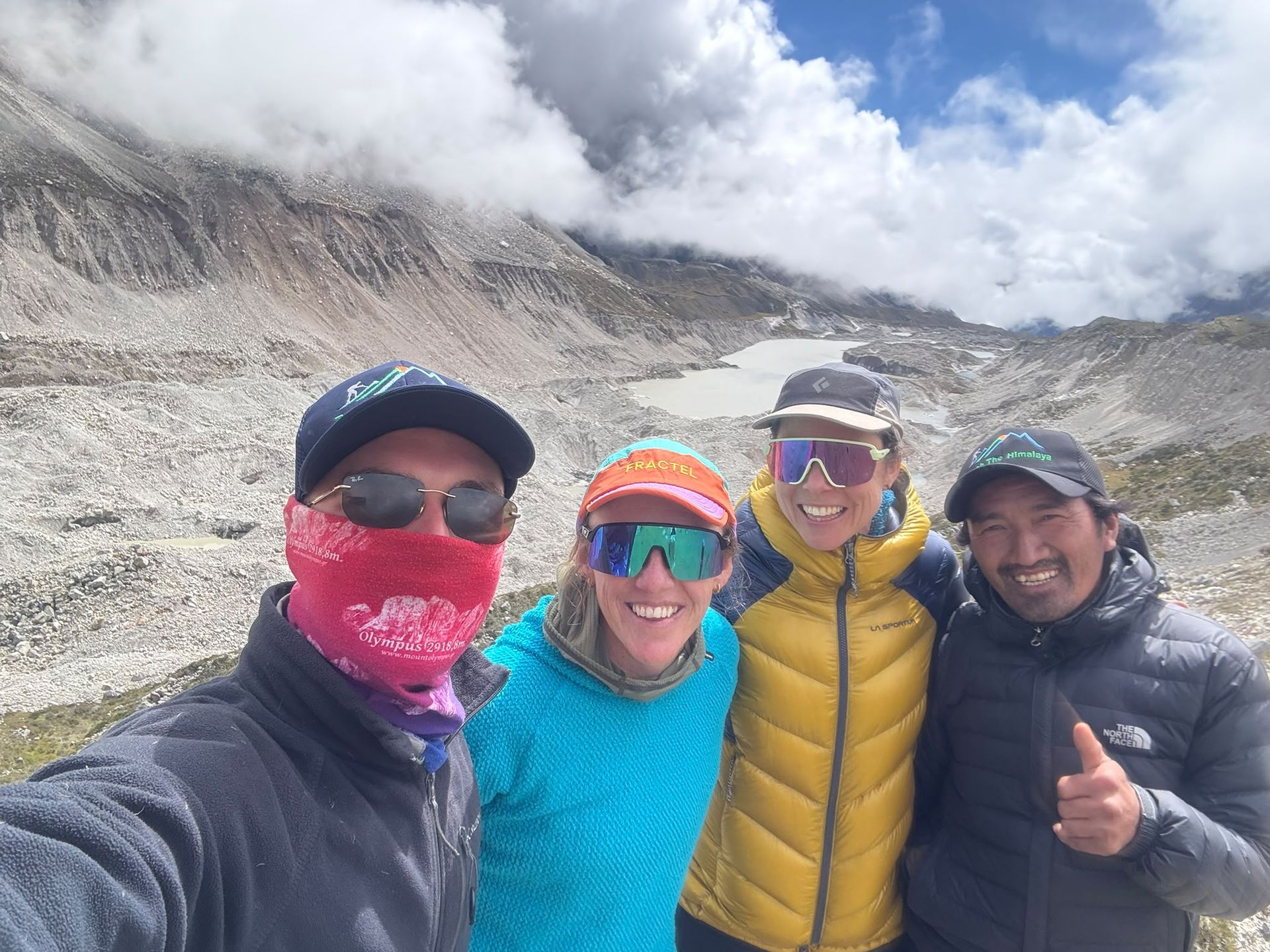
Local Guides and Porters for the Kanchenjunga Trek
Discover why hiring local guides and porters makes your Kanchenjunga trek safer, smoother, and more authentic, with experienced professionals who know the region, trails, culture, and mountain conditions.
Continue Reading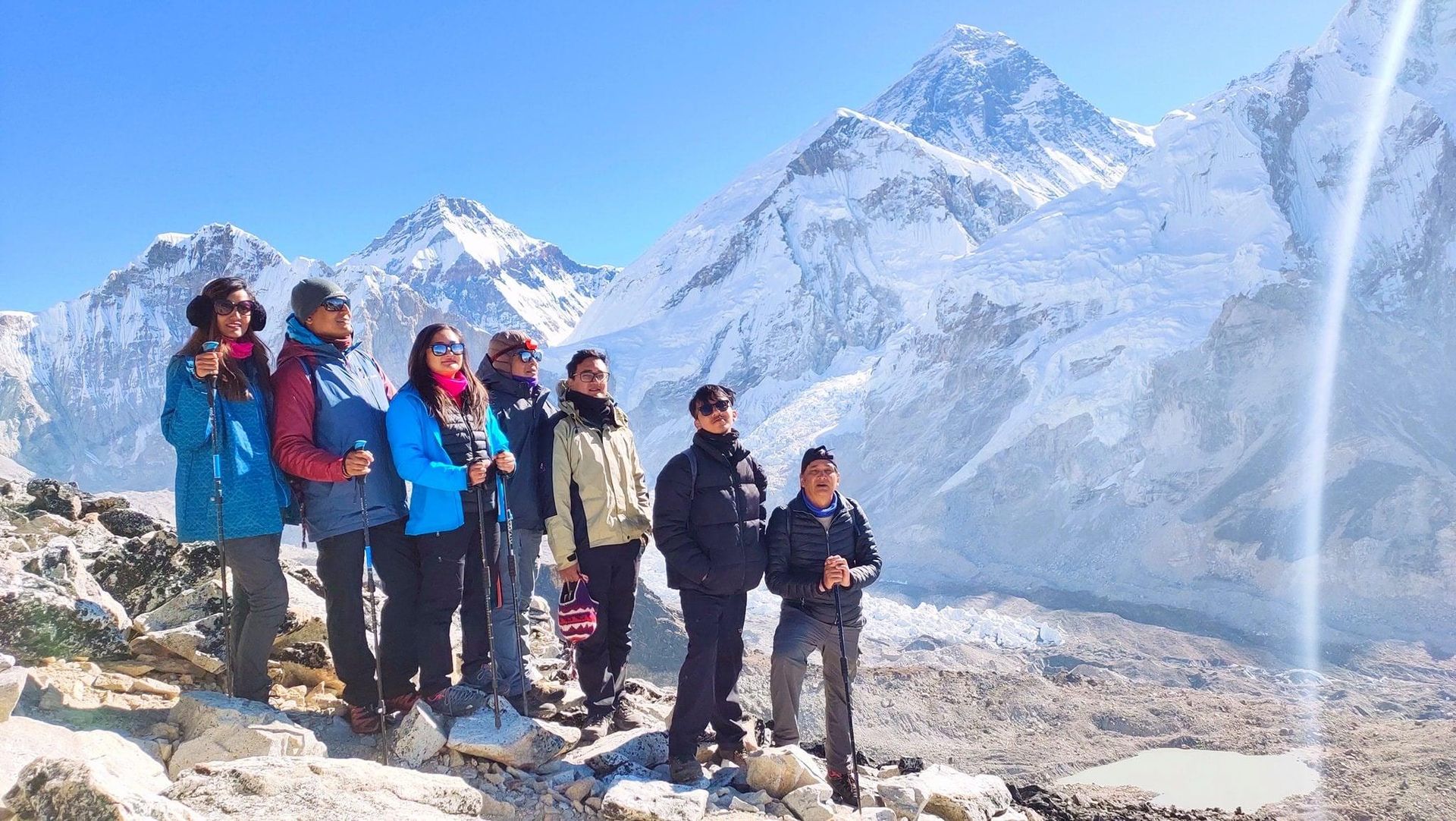
Why Are So Many of Our Guides Named Pasang?
Madan NeupaneOctober 27, 2026
Ever noticed how many Himalayan trekking guides are named Pasang? Discover the cultural roots of this familiar name, its connection to Sherpa traditions, and the people whose knowledge, dedication, and hospitality make every mountain journey special.
Continue Reading
Kanchenjunga Trek Packing List - What to Pack for the Himalayas
September 28, 2026
Packing for the Kanchenjunga Trek requires careful planning. From warm lower valleys to cold, high-altitude landscapes, you’ll face changing weather and challenging terrain. The right clothing, trekking gear, and essentials can make your Himalayan adventure safer, more comfortable, and more easy.
Continue Reading